Tour In North India

Program Preview

Delhi-Haridwar-Rishikesh-Chandigarh-Dharamshala-Amritsar-Srinagar-Phalagam-Gulmarg-Dudapatri-Sonmarh-Kargil-Lamayaruh-Kargil-Khardungla-Nubra-Pangong-Thiksy-Hamis-Tso-Delhi
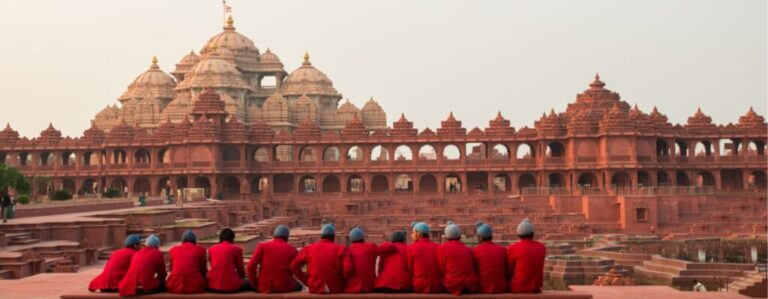
Tour In North India
Tour In North India

DAY 1, Arrival in Delhi (Hotel booked from the previous day) – Tour In North India

Arrival at New Delhi international airport. Following the habits, the immigration formalities, and the baggage collection, ours will surely come out of the arrival terminal building after which it will be transferred to your hotel.
Capital of India and an important entrance to the country, contemporary Delhi is a vibrant metropolis, which successfully combines in its folds – the ancient with the modern. Among the fast-spiraling skyscrapers, the remains of a time gone by in the form of silent historical reminders of the ancient influence of the region. First impressions for each visitor are a species, city of the garden, lined with numerous beautiful parks.
Upon arrival at the hotel, proceed to check-in at the hotel. Standard Check-in Time at the hotel 1400 hours / Check out 1200 hours. In time proceed to the tour of Old Delhi and New Delhi, the Red Fort (external photo stop), Jama Mosque, Chandni Chowk, and Raj Ghat ..
Brief information on the monuments
In the 17th century, the Mughal emperor, Shah Jahan, made his capital at Shahjahanabad, the area that covers present-day Delhi also called the walled city.
Jama Masjid is the largest and best-known mosque in India. It is flanked by a red fort on one side and the old town Chandni Chowk on the other side. Built by Shah Jahan in the 17th century, Jama Masjid is one of the busiest in Delhi for pilgrims and tourists.
Red Fort (Photo stop) was built by the Mughal emperor Shah Jahan in the seventeenth century, which took about 9 years to complete this magnificent structure and about 10 million rupees to build the fort.
Chandani Chowk The Delhi bazaar novel can best be experienced at Chandni Chowk and around the streets. According to legend, the Chandni Chowk market was established during the reign of the Mughal emperor Shah Jahan.
Raj Ghat, resting place of Mahatma Gandhi. Raj Ghat remembers the man who is known as the Father of the Nation for his tireless and pacifist work to recover the independence of India.
Overnight at hotel in Delhi

DAY 2, Delhi – Rishikesh by Train – Tour In North India

After breakfast, the day starts at 6:00
Departure to Haridwar (by train in the morning)
Early morning train to Haridwar, then departure for Rishikesh by car
we will proceed to check-in at the hotel.
Thanks to the Himalayan foothills, next to the Ganges river, this city is renowned for being a center for the study of yoga and meditation.
Overnight at the hotel in Rishikesh

DAY 3, A Rishikesh – Tour In North India

After breakfast, the day begins at 8:30
Rishikesh is a city in the northern Indian state of Uttarakhand, at the foot of the Himalayas, near the river Ganges. The river is considered sacred and the city is renowned as a center for the study of yoga and meditation. Temples and ashrams (centers for spiritual studies) flank the eastern shore around Swarg Ashram, a traffic-free, alcohol-free and vegetarian enclave upstream of the city of Rishikesh.
Early in the morning, an hour of Yoga with the teacher. Later, after breakfast, we also visit Haridwar, a visit to Temples, Laxman Jhula and Ashrams. In the evening the magical Aarti ceremony on the Ganges. Overnight in the hotel of the Ashram.
Overnight at the hotel in Rishikesh

DAY 4, Da Rishikesh a Chandigarh (By car to the railway station and then by Train)

After breakfast, the day starts at 8:30
Departure to Haridwar by car (Train to Ambala)
Getting to Haridwar and transfer to the train station
Departure for Ambala
Ambala ad and transfer to Chandigarh (by car)
How to get to Chandigarh and transfer to the hotel
Evening at leisure
Overnight in a hotel in Chandigarh

DAY 5, Chandigarh – Tour In North India

After breakfast,
Visit the city of Chandigarh which includes Rock Garden (it is a unique garden composed of various objects of art, but the best part of the rock garden is that each of its works was made using industrial and urban waste), Leisure Valley (the Chandigarh Leisure valley is like a garland of gardens that beautifies the entire city), Sukhna Lake (Sukhna Lake is a beautiful lake located at the foot of the Shivalik chain. this is an artificial lake), the hand-held monument to Chandigarh is one of the most significant monuments of the city and of the Capitol complex (the capitol complex houses the headquarters of the government), initially, it served only as the seat of the Govt of Punjab, but now it has the headquarters of both, the Punjab Govt and Haryana).
Overnight in a hotel in Chandigarh

DAY 6, Chandigarh a Dharamshala By car 

After breakfast, the day starts at 8:30
Departure for Dharamshala
Arrival in Dharamshala and visit of Dharamshala
Dharamshala is a city in the Indian state of Himachal Pradesh. Surrounded by cedar forests on the edge of the Himalayas, this collective city is home to the Dalai Lama and the Tibetan government in exile. The Thekchen Chöling temple complex is a spiritual center for Tibetan Buddhism, while the Library of Tibetan works and archives holds thousands of precious manuscripts. The rest of the day is dedicated to leisure time or for optional activities.
Overnight at the hotel in Dharamshala

DAY 7, Dharamshala 

After breakfast, the day starts at 9:00
We visit Dharamsala surrounded by cedar forests, on the side of the Himalayas, this city is the home of the Dalai Lama and the Tibetan government in exile. Visit McLeod Ganj, St. Johns in the Wood, the English cemetery, the place of the Dalai Lama, and the Norbulingka-Institute.
Overnight at the hotel in Dharamsala

DAY 8, Da Dharamshala ad Amritsar (4 ore 30 minutes (206.8 kilometers)

After breakfast, The day starts at 8:30
Departure for Amritsar
Amritsar advertisement and hotel transfer
In the afternoon Late Touristic visits In the late afternoon, traveled to a Wagah, the border of India-Pakistan, to watch the changing of the guard ceremony. Soldiers from both countries participate in an interesting ceremony and eventually shake hands. The crowds singing patriotic songs on both sides of the border and the disciplined aggression of soldiers made a fascinating scene.
Overnight at the hotel in Amritsar

DAY 9, Amritsar 

After breakfast, the day starts at 9:00

Visit Harminadir sahib temple and Jaliwalabagh bagh.

Overnight in Amritsar

DAY 10, Amritsar – Srinagar( By flight 1 Hr.) 

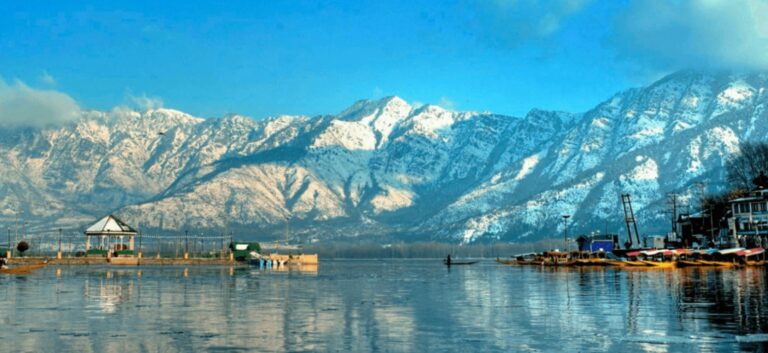
Arrival in Srinagar-Upon your arrival at Srinagar International Airport, you will be met by our representative who will assist you and accompany you to your waiting vehicle. From the airport, it is a 35-minute drive through the heart of the city of New Srinagar. The unit takes you past the Abdullah Bridge that connects the banks of the Jhelum River, taking its path to the northwestern border of Kashmir. We arrive at the houseboat/hotel and check-in. Later it will take a 01-hour shikara tour in the lake since. This boat ride slips you past some wonderful floating vegetable gardens, a center of craftsmanship and lifestyle inherited from people who have lived within the lake for decades.
Overnight on houseboat.

DAY 11, Srinagar-Pahalgam (97 KMS/03 ore)

After breakfast, proceed to Pahalgam, Tour In North India
You drive to Pahalgam via Pampore where you can visit famous saffron fields, Awantipora and the village of Bijbehara which remains famous as the Kashmir breadbasket. It passes from the national 1A highway to Khanabal and crosses the second largest city of Anantnag. Pahalgam is a picturesque valley around 97 km south of Kashmir. Known as Pahalgam (which means the shepherds’ village), the valley is renowned throughout the world for its exotic forests, graceful streams of water, and imposing snow-capped peaks. We arrive in Pahalgam and check in the hotel, after a sightseeing tour around the mountain valley for most of the day,
Overnight at the hotel in Pahalgam

DAY 12, Pahalgam

After breakfast, the day begins
In Pahalgam, you can visit the Aru valley, the Beetab Valley, and Chandanwari (on a direct payment basis) and take a horse ride to the Baisaran meadows. time for leisure
Overnight at Hotel.

DAY 13, Pahalgam-Gulmarg (148 KMS/04 HRS) 

After breakfast proceed to Gulmarg,
Gulmarg (2440 meters above sea level). It is one of the most beautiful hill stations and also called “Meadows of flower”. The drive past colorful villages and rice fields gives you a view of Kashmir’s rich cultural past. We arrive in a small picturesque market town of Tangmarg and continue on a scenic journey of 14 kilometers from Gulmarg. Gulmarg has one of the best ski slopes in the world and the highest golf course with 18 holes. We arrive in Gulmarg in the early hours of the afternoon and begin a brief tour around the meadow, becoming familiar with the beauty of the place.
Overnight at the hotel in Gulmarg

DAY 14, Gulmarg-Srinagar (56 kms/2 ore 30min).

After breakfast proceed to Srinagar.
We arrive in Srinagar then check in Houseboat / Hotel then proceed for a local sightseeing tour which includes a visit to the famous Mughal Gardens, Cheshma Shahi (royal spring), Nishat (pleasure garden), Shalimar (abode of love) Mughal arranged in the XVI century & These fall along the shore of dal-Lake, in the heart of the city of Srinagar & Shankaracharya Temple situated on a Poggio, thus offering a panoramic view of the whole city, together with famous by-the-lake & river Jhelum, en-route visiting the handloom center famous for pashmina/shahtoosh shawls production & world over carpet mats, the evening will take a 01 HR shikara ride into the lake since. This boat ride slips you past some wonderful floating vegetable gardens, a center of craftsmanship and lifestyle inherited from people who have lived within the lake for decades.
Overnight at Hotel.

DAY 15, Srinagar-Doodhpathri-Srinagar

After breakfast, the day begins 
Today your day will be dedicated to a full-day trip to Doodhpathri. The name Doodhpathri means the valley of milk. The water that is currently flowing through the meadows looks like milk from the distance and remains very cold throughout the year.
Overnight at the hotel in Srinagar

DAY 16, Srinagar-Sonmarg (87 KMS/2hr 30min )

After breakfast
Drive to the majestic mountain resort of Sonamarg. The path to Sonamarg takes us to a picturesque country road where we come across rolling hills, green forests, streams of clear water, and fields of rice in bloom. We will zoom beyond the city of Kangan which handles all the local needs of this region. From Kangan, we will drive to mammar, famous for its trout farm before heading to Sonamarg. We will once again get off our vehicles at the tourist point of Gagangir. The place is built in the middle of the Sindh River and looks like an island with snow-covered glaciers covering one or the other point. In Sonamarg we will take a 3-hour walk or a horse-riding / local Union cabin to the Thajwas glacier (based on direct payment).
Overnight at Hotel

DAY 17, Sonamarg – Kargil

After breakfast
Departure for Kargil (8200 + ft) via Srinagar-Leh Highway. Join Kargil via the Zojilla pass & Drass region. Continue the check-in hotel unit,
Overnight at Hotel.

DAY 18, Kargil – Lamayuru – Leh (224 KMS/07 HRS)

After breakfast
Early morning proceed to Leh (10000 ft -234 KMS-10 hours). Visit Mulbek (known for its huge Buddha statue) and the monastery of Lamayuru (10500 + ft slm – the oldest monastery in Ladakh). Enroute pass the confluence of Indus – Zanskar rivers and the effects of the magnetic hill (the challenge of the law of gravity). Visit Gurudwara Patthar Sahib and the Kali Mata Temple and reach Leh in the evening. Rest for the day check-in the hotel.
Overnight at the Hotel

DAY 19, Leh-Khardungla-Nubra

After breakfast, 
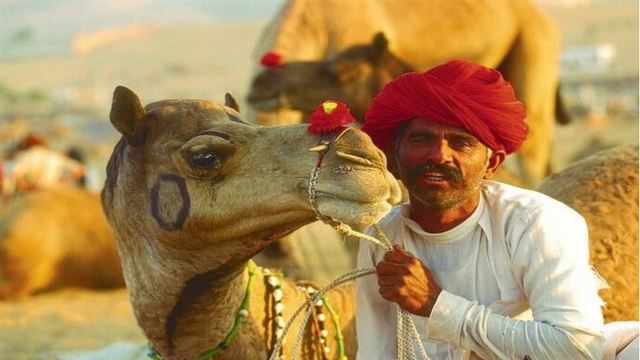
Move to the highest street in the world, Khardungla Pass. Have a cup of tea there, have yourself click the Khardungla sign from BRO & proceed towards Nubra valley covering Deskit Monastery en route. Check-in at the Hotel / Camp, refresh & later you can have a double Hump Bactrian Camel ride. Don’t forget to click on this unique mammal, found in the cold desert. It was once used to transport commercial material on the Silk Road.
Overnight in Hotel.

DAY 20, Nubra – Leh

After breakfast, 
Visit Deskit monastery, hot springs, Panamik via a confluence of Shyok & Nubra River through Sumoor. Return to Leh in the evening. 
Overnight in Leh.

DAY 21, Leh-Pangong

After breakfast, the day begins
Located at an altitude of 4300 meters, the crystal-clear brackish waters of Lake Pangong change its color in many shades of blue and green with the position changing the sun in the sky. About 1/4 of the lake is found in India and the rest flows into the Tibet region of China. It is a breeding point for various migratory birds, such as the bar-headed goose and brahmin ducks. Spangmik Village: located about 7 kilometers along the southern shores, it is the farthest village in the Pangong area. From here, you can enjoy a spectacular view of the Chang-Chenmo Range mountains.
Overnight at the hotel

DAY 22, Leh –Tour of the monastery

After breakfast, the day begins
Today you can make an exciting visit to Stok, Shey, Thiksey, and Hemis monasteries. Shey – located on the eastern bank of the Indus River, the small village of Shey is located about 15 km from Leh. The place is popular for the ancient palace and the monastery. The Shey Palace was the residence of the royal family built in the seventeenth century. Also, you can see the ruins of a fortress above the Palace. Shey Monastery also has a three-story image of Buddha Sakyamuni made of gilded copper. Thiksey Monastery – situated atop a hill, the monastery is an excellent example of Ladakhi architecture. This contains several stupas, statues, thangkas, wall paintings, and a large pillar depicting the teachings of the Buddha. Hemis Monastery – built in 1630, this is the largest and most famous monastery in Ladakh. It is located at a distance of 49 km from Leh and 30 km from Thiksey. Stok – it is a small village located at a distance of 14 km from Leh. The Stok Palace and Stok Monastery are the main attractions of this place. The Stok Palace is now the residence of members of the royal family.
Overnight at the hotel

DAY 23, Leh al Lago Tsomoriri-Leh

After breakfast 
Proceed to Tsomoriri Lago (14,000 ft Above sea level) passing Chumathang (Hot Spring) along the Indus river. 1600 hours of Tsomoriri arr. then take a walk around the lake to enjoy the scenic beauty. 
Overnight in Leh

DAY 24, Leh-Delhi ( Via Volo 1 ora 30 minute)

After breakfast
Transfer to the airport according to the flight schedule for New Delhi
Arrival in Delhi and transfer to the hotel
overnight stay in a hotel in Delhi

DAY 25, Delhi-Your Next Destination

Transfer to the airport according to the flight schedule
Ciao India Tours wishes you a very happy journey
Tour In North India
Tour In North India

Golden Triangle In India
Program Preview
Delhi-Jaipur-Agra-Delhi

Golden triangle in India

DAY 1, Arrival In Delhi – Golden Triangle in India

Arrival at New Delhi international airport. Following the habits, the immigration formalities, and the baggage collection, ours will surely come out of the arrival terminal building after which it will be transferred to your hotel.
Capital of India and an important entrance to the country, contemporary Delhi is a vibrant metropolis, which successfully combines in its folds – the ancient with the modern. Among the fast-spiraling skyscrapers, the remains of a time gone by in the form of silent historical reminders of the ancient influence of the region. First impressions for each visitor are a species, city of the garden, lined with numerous beautiful parks.
Upon arrival at the hotel, proceed to check-in at the hotel. Standard Check-in Time at the hotel 1400 hours / Check out 1200 hours. In time proceed to the tour of Old Delhi and New Delhi, the Red Fort (external photo stop), Jama Mosque, Chandni Chowk, and Raj Ghat ..
Brief information on the monuments
In the 17th century, the Mughal emperor, Shah Jahan, made his capital at Shahjahanabad, the area that covers present-day Delhi also called the walled city.
Jama Masjid is the largest and best-known mosque in India. It is flanked by a red fort on one side and the old town Chandni Chowk on the other side. Built by Shah Jahan in the 17th century, Jama Masjid is one of the busiest in Delhi for pilgrims and tourists.
Red Fort (Photo stop) was built by the Mughal emperor Shah Jahan in the seventeenth century, which took about 9 years to complete this magnificent structure and about 10 million rupees to build the fort.
Chandani Chowk The Delhi bazaar novel can best be experienced at Chandni Chowk and around the streets. According to legend, the Chandni Chowk market was established during the reign of the Mughal emperor Shah Jahan.
Raj Ghat, resting place of Mahatma Gandhi. Raj Ghat remembers the man who is known as the Father of the Nation for his tireless and pacifist work to recover the independence of India.
Overnight at hotel in Delhi

DAY 2, Delhi –Golden Triangle in India

After breakfast, the day starts at 8:30
Visit Humayun’s Tomb, Qutub Minar, Lotus temple, Bangla Sahib
Humayun’s era is the second Mughal Emperor of India who died in 1556 and his widow Hamida Banu Begam, who also called Haji Begam, began the construction of his tomb in 1569, fourteen years after his death. Humayun’s tomb is the first example of a true mogul style, inspired by Persian architecture.
Qutab Minar is among the highest and most famous monuments in the world. This beautiful minaret is 234 feet high and is considered to be the tallest tower in the world. The Qutab Minar is one of many masterpieces depicting the sheer brilliance of Mughal architects.
Parliament House and President’s House (Photo stop)The Parliament of India is the supreme legislative body of the Republic of India. It is a bicameral legislature of the President of India and the two houses: the Rajya Sabha and the Lok Sabha The Rashtrapati Bhavan is the official residence of the President of India located at the Western end of Rajpath in New Delhi, India.
The Lotus Temple, The Lotus Temple, located in Delhi, India, is a Bahá’í House of Worship that was dedicated in December 1986. Notable for its flowerlike shape, it has become a prominent attraction in the city. Like all Bahá’í Houses of Worship, the Lotus Temple is open to all, regardless of religion or any other qualification.
Gurudwara Bangla Sahib is one of the most prominent Sikh gurdwara, or Sikh house of worship, in Delhi, India and known for its association with the eighth Sikh Guru, Guru Har Krishan Sarovar
Overnight at hotel in Delhi

DAY 3, Da Delhi A Jaipur (281 KM, 5 Hours) – Golden Triangle in India

After breakfast at the hotel, the day begins
Departure for Jaipur
Arrival in Jaipur and transfer to the hotel. More You visit Birla Mandir. and local market
Birla Temple, Jaipur At the foot of the fort Moti Dungri is the Birla Temple. This temple constitutes one of the most beautiful attractions of Jaipur. The Birla Temple of Jaipur is gorgeous when it is illuminated during the night. The construction of the temple began in 1977 and continued until 1985. On 22 February 1985, the temple deity was invoked and opened to the public to be visited. the temple was built by Birla Group of Industries, one of India’s business magnates. The Temple is dedicated to Sri Visnu (Narayan), the conservator, and his consort Lakshmi, the Goddess of wealth. For this reason, the Birla Temple is also known as Laxmi Narayan Temple. Birla Mandir is built in the best quality of white marble. The three huge temple domes represent three different approaches to religion. The beautiful temple in white marble enchants the onlookers when it shines at night.
Local Market, Free Time to tour the local market famous for local attired, perfumes, jewelry, etc.

DAY 4, A Jaipur – Golden Triangle in India

After breakfast visit of Amer fort.
Amer Fort is a fort located in Amer, Rajasthan, India. Amer is a town with an area of 4 square kilometers located 11 kilometers from Jaipur, the capital of Rajasthan. Located high on a hill, it is the principal tourist attraction in Jaipur.
City Palace, The City Palace, Jaipur was established at the same time as the city of Jaipur, by Maharaja Sawai Jai Singh II, who moved his court to Jaipur from Amber, in 1727. The most prominent and most visited structures in the complex are the Chandra Mahal, Mubarak Mahal, Shri Govind Dev Temple, and the City Palace Museum.
Jantar Mantar – Jantar Mantar is located in the modern city of New Delhi. It consists of 13 architectural astronomy instruments. The site is one of five built by Maharaja Jai Singh II of Jaipur, from 1723 onwards, revising the calendar and astronomical tables
Hawa Mahal (Photo Stop) is a palace in Jaipur, India. Made with the red and pink sandstone, the palace sits on the edge of the City Palace, Jaipur, and extends to the Zenana, or women’s chambers. The structure was built in 1799 by Maharaja Sawai Pratap Singh, the grandson of Maharaja Sawai Jai Singh, who was the founder of Jaipur.
Overnight in a hotel in Jaipur 

DAY 5, From Jaipur To Agra (240 KM 4 Hours 30 Mins) – Golden Triangle in India

After breakfast, the day starts at 8:30
Departure for Agra
You visit Abha Neri step well Abhaneri step well, Fatahpursikri
The era of Abhaneri originally called Abha Nagri, which means “city of brightness”, is a cause of erroneous declaration, the name has been changed. The city is now in ruins but attracts tourists from all over the world.
Abhaneri is prominent for the ‘Baoris’, wells that were invented by the natives to collect rainwater. These tanks are used as cold storage areas and as water reservoirs during the year. Chand Baori is the most popular of the wells in the region and is one of the deepest and largest of India. There are three ways to reach the water. This colossal and delicately carved well is located in front of the temple of Harshat Mata. It was a ritual to wash your hands and feet at the well before visiting the adjacent temple.
Fatehpur Sikri built by the Mughal emperor Akbar in the mid-16th century, Fatehpur Sikri was to be a new capital for his empire. Built in an almost uniform style, Sikri is a complex sprawling of palaces, mosques, temples, and other structures. It is a splendid fusion of the present Persians and Indian construction.
Overnight at the hotel in Agra

DAY 6,  Agra – Golden Triangle in India

After breakfast at the hotel, the day begins
Taj Mahal It is one of the seven wonders of the world and a place to be seen in India. He is the living example of the romantic life of Shah Jahan and his beautiful wife Mumtaz Mahal. The construction of this beautiful monument was completed in 1653 AD. The Mughal king Sha Jahan built this as a final resting place for Queen Mumtaz.
After the visit of the Taj Mahal, we proceed to visit the Agra Fort.
Agra Fort Immersed in the strong banks of the Yamuna river, this crescent-shaped fort was commissioned by Akbar, one of the greatest emperors of the Mughals, in 1565. Surrounded by mighty bastions, the complex has numerous palaces, gardens, and sales inside the fort. and other historic sites.
Overnight at the hotel in Agra

DAY 7,  From Agra To Delhi ( 238 KM 4 Hours)

After breakfast, the day starts at 9:00 AM
Departure for Delhi
Arrival in Delhi and transfer to the hotel
Rest of the day at leisure.
Overnight at hotel in Delhi

DAY 8, Delhi-Italia

Transfer to the airport according to the flight schedule
Ciao India Tours wishes you a very pleasant journey.

« Incredible tour of India »

Program Preview

Delhi-Amritsar-Srinagar-Pahalgam-Gulmarg-Sonmarg-Kolkata-kochi-Munnar-Aleppy-Mumbai-Delhi

DAY 1, Arrival in Delhi (Hotel booked from the previous day) Incredible tour of India

Arrival at New Delhi international airport. Following the habits, the immigration formalities, and the baggage collection, ours will surely come out of the arrival terminal building after which it will be transferred to your hotel.
Capital of India and an important entrance to the country, contemporary Delhi is a vibrant metropolis, which successfully combines in its folds – the ancient with the modern. Among the fast-spiraling skyscrapers, the remains of a time gone by in the form of silent historical reminders of the ancient influence of the region. First impressions for each visitor are a species, city of the garden, lined with numerous beautiful parks.
Upon arrival at the hotel, proceed to check-in at the hotel. Standard Check-in Time at the hotel 1400 hours / Check out 1200 hours. In time proceed to the tour of old Delhi and New Delhi, the Red Fort (external photo stop), Jama Mosque, Chandni Chowk, and Raj Ghat ..
Brief information on the monuments
In the 17th century, the Mughal emperor, Shah Jahan, made his capital at Shahjahanabad, the area that covers present-day Delhi, also called the walled city.
Jama Masjid is the largest and best-known mosque in India. It is flanked by a red fort on one side and the old town Chandni Chowk on the other side. Built by Shah Jahan in the 17th century, Jama Masjid is one of the busiest in Delhi for pilgrims and tourists.
Red Fort (Photo stop) was built by the Mughal emperor Shah Jahan in the seventeenth century, which took about 9 years to complete this magnificent structure and about 10 million rupees to build the fort.
Chandani Chowk The Delhi bazaar novel can best be experienced at Chandni Chowk and around the streets. According to legend, the Chandni Chowk market was established during the reign of the Mughal emperor Shah Jahan.
Raj Ghat, resting place of Mahatma Gandhi. Raj Ghat remembers the man who is known as the Father of the Nation for his tireless and pacifist work to recover the independence of India.
Overnight at hotel in Delhi

DAY 2, Delhi – Amritsar(By Train 7 Hrs.) – Incredible tour of India

After breakfast, The day starts at 8:30 
Departure for Amritsar
Arrive in Amritsar and transfer to the hotel
In the afternoon Late Touristic visits In the late afternoon, traveled to a Wagah, the border of India-Pakistan, to watch the changing of the guard ceremony. Soldiers from both countries participate in an interesting ceremony and eventually shake hands. The crowds singing patriotic songs on both sides of the border and the disciplined aggression of soldiers made a fascinating scene.
Overnight at the hotel in Amritsar

DAY 3, Amritsar – Incredible tour of India

After breakfast, the day starts at 9:00 
Visit to the city of Amritsar. Visit the beautiful Harmandir Sahib, also known as the Golden Temple. It is the spiritual and cultural center of the Sikh religion. The main sanctuary is in marble and is a center of a picturesque body of water. The sacred book of the Sikhs – the Guru Granth Sahib is housed in this holy and peaceful shrine. The roof of the building is gold leaf, giving the temple its name. The community kitchen – the langar – offers free meals to anyone who wants or needs to eat there (on average, 10,000 pilgrims and visitors eat here every day).
Then visit the Jallianwalah Bagh – a memorial to the ruins of innocent natives who were massacred by General Dyer in 1919. On 13 April thousands of people gathered in a peaceful assembly on the occasion of Baisakhi – a harvest festival – at Jallianwala Bagh in heart of Amritsar. When the crowds do not disperse after the warnings, General Brigadier Reginald Dyer, an officer in the Indian army, ordered his gang of riflemen to open fire on the meeting, killing many. Later he visits the Hindu temple of Durgiana which looks like a replica of the golden temple.
Overnight in Amritsar

DAY 4, Amritsar – Srinagar( By flight 1 ) – Incredible tour of India

After breakfast, transfer to the airport according to the flight schedule for Srinagar 
Arrival in Srinagar-Upon your arrival at Srinagar International Airport, you will be met by our representative who will assist you and accompany you to your waiting vehicle. From the airport, it is a 35-minute drive through the heart of New Srinagar city. The unit takes you over the Abdullah bridge that connects the banks of the Jhelum river, snaking towards the northwestern border of Kashmir. We arrive at the houseboat/hotel and check-in. Later we will take a 1-hour Shikara trip to Lake Dal. This boat ride takes you past some wonderful floating gardens, the Craft Center, and the inherited lifestyle of people who have been living in the lake for decades.
Dinner and overnight at the houseboat/hotel.

DAY 5, A Srinagar – Incredible tour of India

After breakfast proceed to Srinagar 
Today we will continue on a local sightseeing tour which will include a visit to the famous Mughal Gardens, Cheshma Shahi (royal spring), Nishat (Pleasure Garden), Shalimar (Abode of Love) Mughal set up in the 16th century and these fall along the bank of Dal- Lake in the heart of Srinagar City and Shankaracharya Temple located on a small hill, thus offering a panoramic view of the entire city, along with the famous Dal-Lake and River Jhelum, En route by visiting the center of the hand-loom famous for the production of Pashmina shawls / Shahtoos and world-famous rugs, evening return to the houseboat
Dinner and overnight at the houseboat/hotel.

DAY 6, Srinagar-Pahalgam-Srinagar – Incredible tour of India

After breakfast, proceed to Pahalgam, 
Leave after breakfast and proceed to Pahalgam, we drive to Pahalgam via Pampore where you can visit famous saffron fields, Awantipora and the village of Bijbehara which remains famous as the breadbasket of Kashmir. We pass from the national highway 1A to Khanabal and we cross the second largest city of Anantnag. Pahalgam is a picturesque valley about 97 kilometers south of Kashmir. Known as Pahalgam (which means The Shepherds Village), the valley is renowned throughout the world for its exotic forests, graceful streams and imposing snow-capped peaks. At Pahalgam, you can visit the Aru valley, the Beetab valley and Chandanwari (optional) and take a horse ride in the Baisaran meadows. After visiting the mountain valley for most of the day, we will return to Srinagar
Dinner and overnight at the houseboat/hotel.

DAY 7, Srinagar-Sonmarg-Srinagar – Incredible tour of India

After breakfast 
Drive to the majestic mountain resort of Sonamarg. The path to Sonamarg takes us to a picturesque country road where we will meet hills, green forests, clear waterways, and fields of rice in bloom. We will zoom beyond the city of Kangan which handles all the local needs of this region. From Kangan, we will drive to Mammar, famous for its trout farm before heading to Sonamarg. We will descend once again from our vehicles to the tourist spot of Gagangir. The spot is built in the middle of the Sindh River and looks like an island with snow glaciers covering one or the other point. In Sonamarg we will take a 3-hour walk or a horse ride / local taxi on the Thajwas glacier (optional). After our return, we will visit the small town market for some snacks or simply make a visit by observing the local people who go with their daily routine. We will return to Srinagar 
Dinner and overnight stay in a Houseboat in Srinagar

DAY 8, Srinagar-Gulmarg-Srinagar – Incredible tour of India

After breakfast proceed to Srinagar.
We will start the day trip to the countryside towards Gulmarg. Gulmarg (2440 meters above sea level). It is one of the most beautiful hill stations and also called “Prati di Fiori”. The journey through colorful villages and rice fields gives you an idea of ​​Kashmir’s rich cultural past. We arrive at a small and picturesque market town of Tangmarg and continue on a scenic road of 14 kilometers to Gulmarg. Gulmarg has one of the best ski slopes in the world and the highest golf course with 18 holes. We arrive in Gulmarg in the early afternoon and begin a brief tour around the lawn to familiarize ourselves with beauty. In Gulmarg, we will go up to the Gondola cable car system 
Dinner and overnight stay at the Houseboat.

DAY 9, Srinagar-Kolkata By flight – Incredible tour of India

After breakfast, transfer to the airport according to the flight schedule 
Getting to Kolkata International Airport. Following the habits, immigration formalities and baggage collection, our representative will meet you as you exit the terminal building after which you will be transferred to your hotel.
In the afternoon visit Hawrah Bridge
Howrah Bridge is a suspension bridge over the Hooghly River in West Bengal, India. Commissioned in 1943, the bridge was originally called the New Howrah Bridge, because it replaced a bridge of boats in the same position that connected the two cities of Howrah and Calcutta (Calcutta). On June 14, 1965, Rabindra Setu was renamed by the great Bengali poet Rabindranath Tagore, who was the first Indian and Asian Nobel Prize winner. It is still popularly known as the Howrah bridge.
The bridge is one of four on the Hooghly River and is a famous symbol of Kolkata and West Bengal. The other bridges are the Vidyasagar Setu (popularly called the second bridge of Hooghly), the Vivekananda Setu and the new Nivedita Setu. Weathered the storms of the Bay of Bengal region, carrying a daily traffic of around 100,000 vehicles and perhaps more than 150,000 pedestrians, making it easily the most crowded cantilever bridge in the world. The third longest cantilever bridge at the time of its construction, the Howrah Bridge is currently the sixth longest bridge of its kind in the world.
The flower market Near the southeastern end of Howrah Bridge, this flower market is charming and colorful almost 24 hours a day. However, if you visit at dawn, you will see wholesalers arrive with huge flower shipments that are then auctioned off to dealers. Many workers live in makeshift shacks, bathing in the river behind a ghat with the sunset views of Howrah Bridge. Around 7 am, local wrestlers practice their art on a small sand caged area, slightly set back from the river.
Kumortuli (also spelled Kumartuli, or the archaic spelling Coomartolly) is a traditional potters’ neighborhood in northern Kolkata (formerly known as Calcutta), the capital of the eastern Indian state of West Bengal. The city is famous as a hot spot for sculpting that not only produces clay idols for various parties, but also regularly exports them.
College Street is most famous for small and large bookstores, which give it the nickname Boi Para (Colony of Books). People from all over the city and different parts of the state gather here for their books. Many large parts of the Bengali publishing industry (such as: Ananda Publishers, Dey’s Publishing, Rupa & Co., etc.) are located here. The street is dotted with countless tiny book stands that sell new and old books. An article in the Smithsonian magazine described College Street as … half a mile of bookstores and shelves spilling out onto the sidewalk, bringing first editions, pamphlets, paperbacks in every Indian language, with more than a fair smattering of books inside and outside of press from France, Germany, Russia and England. Rare books can be bought at bargain prices and extensive bargaining takes place.
Indian Coffee House – The history of the Coffee House at College Street can be traced back to Albert Hall, founded in April 1876. Later, the Coffee Board decided to start a joint cafe at Albert Hall in 1942. Considerable citizens were regular visitors to the place. In 1947, the central government changed the name of the place to “Coffee House”. The place became a meeting place for poets, artists, writers and people from the world of art and culture. In 1958, the management decided to close the Coffee House, but it was reopened the same year, after the professors of the Presidency College and Calcutta University made a special petition to the government, to save the heritage site. In 2006, a huge financial crisis prevented the cooperative society from renovating the coffee house. Although some companies like Asian Paints have turned to the company with offers to renovate the restaurant, the offers have been rejected due to the clash of rules and conditions.
Overnight at hotel in Kolkata

DAY 10, Kolkata – Incredible tour of India

After breakfast, the day starts at 9:00
Visit the Victoria Memorial
The Victoria Memorial is a large marble building in Kolkata, West Bengal, India, built between 1906 and 1921. It is dedicated to the memory of Queen Victoria (1819-1901) and is now a tourist and museum destination under the auspices of the Ministry of Culture. The memorial lies on the Maidan (land) near the bank of the Hooghly River, near the Jawaharlal Nehru road. In January 1901, at the death of Queen Victoria, George Curzon, first Marquis Curzon of Kedleston and Viceroy of India, suggested the creation of a suitable memorial.
The Cathedral of St. Paul is a CNI, Church of North India Cathedral of Anglican background in Kolkata, West Bengal, India, known for its Gothic architecture. It is the seat of the diocese of Calcutta. The cornerstone was laid in 1839; the building was completed in 1847. It is said to be the largest cathedral in Kolkata and the first Episcopal church in Asia. It was also the first cathedral built in the overseas territory of the British Empire. The building stands on Cathedral Road on the “island of attractions” to offer more space to the growing population of the European community of Calcutta in 1800.
Then we visit the motherhouse of the Missionaries of Charity
The motherhouse of the Missionaries of Charity is a sacred place of pilgrimage and reverence for those in search of a more meaningful existence. It was founded by Blessed Mother Teresa in 1950 with the aim of selflessly serving humanity and elevating the afflicted humanity towards the way of salvation. After Mother Teresa left her mortal body in 1997, she was buried in a tomb inside the house where she lived and served. The site of the tomb is very simple yet exudes an enormous amount of benign and pure vibration that fills the heart with gratitude and peace. Located between the noise and the crowd, Madri’s tomb is a true reflection of her life that has contemplated the example of deep and conscious meditation.
Free time in the evening
Overnight at hotel in Kolkata

DAY 11, Kolkata-Cochin (con Volo) – Incredible tour of India

After breakfast, transfer to the airport according to the flight schedule 
Arrive at Cochin International Airport. Following the customs, immigration formalities and baggage collection, our representative will meet you as you exit the terminal building after which you will be transferred to your hotel.
The evening is free for relaxation and walking alone
Overnight at the hotel in Cochin

DAY 12, Cochin – Incredible tour of India

After breakfast, the day begins 
Cochin, world-famous port and commercial and industrial capital of Kerala. 
Visit the Mattancherry area, 
Palace of the Dutch, but originally built by the Portuguese, with its beautiful wall paintings, which depict mythological episodes in vivid colors. 
The Church of San Francesco, the first European church built in the country, which houses the tombstone of Vasco de Gama, who in fact remained buried here from 1524 until 1538, when his remains were taken to Portugal.
The Jews’ Street – The Jew Street is lined with shops selling antique crockery, carved wooden furniture, bronze and brass sculptures, remains of traditional houses, and jewelry. The antique sellers of these streets are the descendants of a rapidly declining population of Jews who settled here in 52 AD Every piece they sell has its own story to tell: a palace or a house of nobility, journeys through many lands and ages.
The synagogue – The Jewish synagogue here, a mark of exceptional architecture and history, is a fascination for hundreds of visitors every day. There are also other Jewish settlements in the state. But Kochi has made a name with its synagogue and the famous antique shops. The Cochin Jews settled in the kingdom of Cochin in southern India, now part of the state of Kerala. Already in the 12th century, mention is made of the Jews in southern India. … These people later became known as the Jews of Malabari.
The Kathakali show – Later you can witness the spectacle of Kathakali, the traditional dance of Kerala.
Overnight at the hotel in Cochin

DAY 13, Cochin-MunnarIncredible tour of India

After breakfast departure to Munnar at 8:30  
Arrival in Munnar and transfer to the hotel, then sightseeing in Munnar  
Upper station – In the evening, visit the upper station is a tourist destination in the hills of Kannan Devan of Munnar. It is a part of the border between the Idukki-Theni districts in the state of Kerala and Tamil Nadu. The metro station is remarkable, the city is passing through Kannan Devan tea delivered here by Munnar and Madupatty on the railway and then down by cable car to Kottagudi. This area is popular for the rare Neelakurinji flowers. The Kurinjimala Shrine is nearby. The Top Station is the western entrance to the planned Palani National Park.
Ecological point – Munnar – one of the most picturesque cities of Kerala. In this wonderful postcard as fascinating as the city of Munnar, Echo Point rests as an exquisite place to visit. Its uniqueness lies in its natural echo characteristic, where your voice screaming returns to you. The stunning scenery of Echo Point due to clustered tea plantations and spice and coffee gardens determined its popularity among trekkers and nature strollers. In a completely peaceful and regenerating environment, strollers and trekkers can move along the velvety slopes and photograph moments of serenity and rich natural beauty.
C.S.I Christ Church – The old Chiesa del Cristo CSI is the seat of the CSI Munnar Pastorate with over a thousand Tamil families and 18 outstation churches. The church, counted among the most venerated places of Munnar, was built in 1910 by the English. This holy place is popular for its exquisite stained-glass windows. In addition, he engraved brass plates that were made in the cough memory. The site of the church was formally consecrated by Rt. Rev. Noel Hodges on 15 April 1900 on the occasion of Easter. The foundation stone of the church was laid in March 1910 by Sir A.K. Muir was inaugurated on April 16, 1911 by the Rev. W. F. Hoysted, then a priest. When the British left Munnar in 1981, they handed over the charge of the church to the diocese of Kerala of Northern CIS. 
In the evening visit the local market  
Overnight in hotel in Munnar

DAY 14, Munnar – Incredible tour of India

After breakfast, visit Munnar at 8:30 
Sightseeing of Munnar 
Visit Laxmi Hills, Munnar Tea Museum Letchmi Hills We take about 3 kilometers towards Cochin (road) from Munnar, to the starting point of the Letchmi Hills trek. (Usually starting around 08.30 or 09.00.) The route is at a height of 1420 meters, about once around 30-40 minutes, after reaching the top of the hill, the rest of our trekking couple will be on ridge offering stunning views around, it will be across the grasslands, one side will be rocky mountain slope and the other will be tea plantations, Shola forest patch etc …
Also visit the Lllakam Waterfall, Munnar Tea Museum  (Here opportunity to taste tea and see how to make tea)
Munnar is perhaps the most beautiful of places to preserve and think about some of the great boulders of Kerala. Tata Tea has recently opened a museum of tea and tourists, a flagship, seen today in the region. The museum established at the Nallathanni Estate of Tata Tea is a tribute to the obstacles and the rigors of its pioneers, in an important plantation center of Kerala. The Tata Tea Museum diligently depicts the growth of Munnar tea estates, actually transmitted through some of the displays such as the rudimentary tea roll at the modern fully automated tea factory.
Overnight in hotel in Munnar

DAY 15, Munnar-Aleppy – Incredible tour of India

After breakfast departure to Alleppey at 8:30 
Arrival in Alleppey and floating boat transfer (lunch and dinner included) 
Free day to relax in the boat. 
Overnight on a floating boat in Alleppy

DAY 16, Aleppy-Cochin-Mumbai( By Flight) – Incredible tour of India

After breakfast
Transfer to Kochi airport for Mumbai flight
Arrival in Mumbai and transfer to the hotel
Free evening for relaxation
Hotel accommodation in Mumbai

DAY 17,  Mumbai

After breakfast, the day begins at 8:30
We go to visit the caves of Elephanta, Gateway of India, Museum “Prince of whales”, visit Mani Bhawan.
Elephanta caves are a network of sculpted caves located on the island of Elephanta or Gharapuri in the port of Mumbai, 10 kilometers east of the city of Mumbai in the Indian state of Maharashtra. Transfer to the Gateway of India to reach the Elephanta caves (closed on Mondays). These caves are famous for the presence of ancient sculptures and the temple dedicated to the god Shiva. After the visit, return to the city and visit the “Prince Charles” museum, considered a heritage of the city of Mumbai for its admirable architecture (closed on Mondays).
The Prince of Wales Museum, now commonly known as ‘Chhatrapati Shivaji Maharaj Vastu Sangrahalaya’, was founded in the early 20th century. This museum is considered a heritage structure in Mumbai because of its admirable architecture. The Prince of Wales museum is one of the most significant museums in India. The museum houses several collections of ancient works of art, sculptures, and artifacts in its galleries. After the renovation project began in 2008, many new galleries were opened containing works of Indo God Krishna, traditional Indian fabrics and costumes. Inside the museum, there are regular exhibitions and conferences on different topics. The Prince of Wales Museum was originally a building that was used as a military hospital for performances for Welfare children. Tourists from all over the world make it a point to visit this magnificent heritage building and to explore the various ancient artifacts preserved within this museum.
Dhobhi Ghat of Mumbai is located in the heart of Mahalaxmi, Mumbai. This Ghat is famous throughout the world for its rich history, the films shot here, and for being the largest laundry in the world. Dhobi Ghat can be seen from the overpass of Mahalaxmi Ghat.
You see washer-men, known as Dhobis in India, who woke up very early in the morning. They begin to do their work at 4:30 AM work until 22:00. You can see numerous men and women washing their clothes in large sinks with their hands. And this has been going on for centuries.
Mani Bhavan was the headquarters of Gandhi in Mumbai for about 17 years, from 1917 to 1934. It was from Mani Bhavan that Gandhi began the Non-Cooperation movements, Satyagraha, Swadeshi, Khadi, and Khilafat. Gandhi’s association with the charkha began in 1917, while he was staying at Mani Bhavan. Mani Bhavan is also closely associated with Gandhi’s involvement in the Family Government Movement, as well as his decision to refrain from drinking cow’s milk to protest the cruel and inhuman practice of phookans gathered to raise cattle during that time. In 1955, the building was occupied by the Gandhi Smarak Nidhi to keep it as a monument to Gandhi.
Overnight at hotel in Mumbai

DAY 18, Mumbai

After breakfast at 8:30 am
Colaba Market – This market is a maze of roads and lanes, with virtually every inch full of shops and stalls. In some cases, this consisted of a piece of cloth or cardboard on the ground with the goods piled on top. There is also a huge number of street food stalls cooking food on the side of the road and on sidewalks.
This is more a market for the locals but is popular with tourists, it’s worth a visit to enjoy the atmosphere and experience the hustle and bustle of these busy streets. It is a real pleasure for the senses, with the sights, sounds, and smells.
Crowford Market – Crawford Market is one of Mumbai’s oldest markets. Located very close to the Vittoria station (UNESCO World Heritage Site), this market is located in a single building built in Gothic style. Inside the market, there are shops where they sell a lot of items for everyday use or as a curiosity. Maintaining the market is a concern, with security a particular concern, with some incidents recently. It is hoped that the authorities will wake up and restore this historical site at least in part of its past glory.
Victoria Station (UNESCO World Heritage Site) – The Chhatrapati Shivaji Terminus, formerly known as Victoria Terminus Station, in Mumbai, is an exceptional example of Victorian neo-Gothic architecture in India, combined with themes derived from traditional Indian architecture. The building, designed by the British architect F. W. Stevens, became the symbol of Bombay as the “Gothic city” and the main international merchant port of India. The terminal was built over 10 years, starting in 1878, according to a Victorian Gothic design based on Italian models of the late Middle Ages. Its remarkable stone dome, turrets, pointed arches, and eccentric ground floor are close to the traditional architecture of the Indian palace. It is an exceptional example of the encounter between two cultures since British architects have worked with Indian artisans to include the tradition and idioms of Indian architecture, thus creating a new exclusive Bombay style.
Panjrapole The Stable of cows – Bombay Panjrapole was founded in 1834 by businessmen Jamsetjee Jeejeebhoy and Amichand Shah, with the help of the philanthropist Parsi Cowasjee Patel. The intention was to look after stray dogs and pigs, which the British had ordered to shoot at night. The cows were introduced to produce milk to feed the strays and were secondary. However, over time, they have multiplied and become the main attraction. And they are absolutely adorable! The little ones, with their gigantic floppy ears, reminded me of dogs rather than calves. They climbed to attract attention and wanted to be fed manually. These days, Bombay Panjrapole takes care of over 350 cows (some of which are disabled) plus other strays like donkeys, goats, rabbits, parrots and ducks.
Overnight at Hotel at Mumbai

DAY 19, Mumbai-Delhi (by flight)

Transfer to Mumbai airport for the flight to Delhi according to the flight schedule
Arrival in Delhi and transfer to the hotel
Free day for shopping and relaxation.
Overnight at hotel in Delhi

DAY 20, Delhi – Next Destination

After breakfast, we leave for Delhi airport according to your flight schedule
Ciao India Tours wishes you a pleasant journey

incredible tour of india

an incredible tour of India

Tour of Oman

Program Preview

Muscat-Nizwa-Jebel Akhdar-Ras al Hadd-Sur-Muscat

Tour of Oman

DAY 1, Arrive in Muscat – Tour of Oman

Tour in Oman, Welcome to Muscat! Upon arrival in Muscat, after Immigration clearance and baggage collection proceed to the arrival hall to meet the chauffeur and proceed to the Hotel. Overnight in Muscat.

DAY 2, Muscat – Nizwa – Jebel Akhdar 

Today after breakfast, proceed to Nizwa. Nizwa boasts of the famous Round Tower Fort, built in the 17th century, and its Souq renowned for its Friday cattle auction, intricately hand-carved “Khanjars” (daggers) & ornamental silver jewellery. Later, proceed to Jebel Akhdar where there is a check post. From here a 36 km stretch of winding road takes one to Jebel Akhdar (2000 mts above sea level) the green jewel of the Al Hajjar mountain ranges, a truly unique spot in the Arabian Peninsula. Enjoy the cool climate up in the mountains. Al Jabal Al Akhdar is famed for its fruit orchards typically laid out terrace style along the slopes of mountains, which are endowed with natural springs and aflaj. The villages of Saiq, Wadi Bani Habib (the village of the old houses) visit to village roose & Al Ain dot the landscape. The villages overlook a spectacular landscape of dramatic peaks , gorges and wadis. The roses of Jabal Al Akhdar fill the air with fragrance when in full bloom (March / April). Rose water is distilled in the homes of the villagers. Lunch at the Sahab hotel in Jebel Akhdar. (It is advisable to wear light comfortable clothing and walking shoes). Overnight in Jebel Akhdar

DAY 3, Jebel Akhdar – Ras Al Hadd 

Today after breakfast, proceed to The Wahiba Sands, a vast mass of undulating red and white sea of sand and dunes rising up to 200 meters are also host to a variety of flora and fauna. The ever-changing patterns of the dunes are a photographer’s delight. Experience a roller coaster like feeling as our experienced drivers drive you over the dunes. The Wahiba Sands is also home to the traditional Bedouin tribe who are known for their hospitality and their knowledge of the sands. You will stop by a Bedouin family in their traditional and simple habitat.
Enjoy dune driving before leaving the desert. From Mintrib proceed to Bilad Bani Bu Ali and drive along the coastline to Ras Al Junayz the turtle breeding site. Arrive at Ras Al Jinz Scientific Centre and check in. Later head on to a short walk to the beach in the night to watch the turtles nestling on the sands. Overnight stay at Ras Al Jinz Scientific Centre.

DAY 4, Ras Al Hadd – Sur – Muscat 

Today after breakfast, proceed to Muscat enroute stopping at Sur to visit The Dhow factory (photo stop) & fish jetty. Drive via scenic and rugged coastal route to Muscat. Stop at Fins beach. Your next stop is the Bimah Sinkhole, a spectacular limestone crater with blue green water at the bottom. On clear sunny days while driving along the coast one might chance to see sharks in the deep blue water or fleet footed Gazelle sprint across the landscape. Evening is free at leisure in Muscat. Overnight in Muscat.

DAY 5, Muscat 

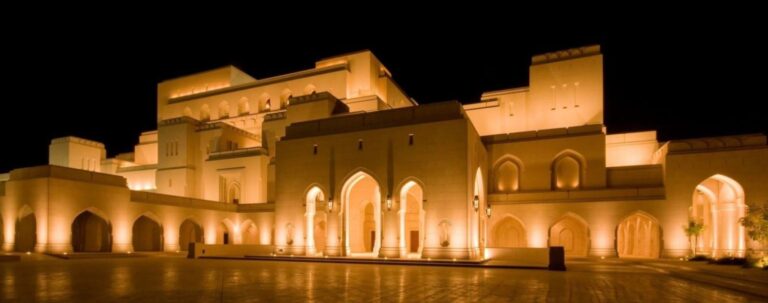
Today after breakfast, you will be pickuped from the hotel to visit the Grand Mosque (not possible on Friday & other public holidays), highlight of the Muscat city. Later visit Royal Opera House Muscat and Bait Al Zubair Museum. Drive along the waterfront Corniche visiting the bustling Muttrah Souq. Later, proceed for a photo stop to the magnificent Al Alam Palace, official palace of His Majesty Sultan Qaboos flanked by the 16th century Portugese forts Mirani & Jalali. Rest of the day at leisure. (Kindly note, ladies to be fully covered and to carry a head scarf and men should wear trousers). Overnight in Muscat.

DAY 6, Muscat

Today after breakfast, you will be transferred from the Muscat hotel to the Marina to embark on a boat as we search the seas for Dolphins and Whales. Watching wild dolphins is a thrilling way to start the day and the lucky may even come across one of the many species of whales that can be found just a few kilometres from Muscat’s rugged coast. Not every trip guarantees a sighting, but you are sure to enjoy a trip out to sea and enhance your knowledge of nature’s most fascinating marine mammals. Rest of the day at leisure. Overnight in Muscat.

DAY 7,Depart Muscat

Today after breakfast, check out of the hotel and transfer to International Airport in Muscat for your flight back home.

Tour in Bhutan

Program Preview

Tour in Bhutan
tour in Bhutan

of Bhutan Package Tour : Punkaha, Punakha Dzong, Wangdue, Dochula Pass, Chimi Lhakhang, Thimphu, Indigenous hospital, Art & Craft school, National Library, Royal goldsmith workshop, Handicraft centers, Memorial Chorten, 15th Century Changangkha monastery, Buddha Point, Motithang mini zoo, Drupthob nunnery temple, Taktshang or Tiger’s Nest monastery

DAY 1, Pick up from Paro Airport / Hasimara Station and transfer to Thimphu

On arrival at Paro Airport for your Bhutan Package Tour you will be greeted by our official and transfer to Thimphu. In case of pickup from Hasimara, first you will be transferred to Phuentsholing (298 Mts /977 Fts), a small town at the Indo-Bhutan border. Have your lunch in an Indian Hotel. Post lunch Immigration formalities transferred to Thimphu, located hillside on the west bank of the Thimphu Chhu River and has a total area of about 1,809 sq kms. Evening at your own leisure. Visitors can enjoy relaxing walk in the valley at evening. Be sure to sink your teeth into Momo Kopi, Steam Dumplings filled with finely chopped cabbage, onions, cheese and butter. Overnight stay at Hotel in Thimphu.

DAY 2, Ex Thimphu Sightseeing – Tour in Bhutan

After breakfast go for morning sightseeing – visit the Indigenous Hospital where traditional old art of healing is still practiced, Art & Craft school, National library, Royal Goldsmith Workshop and Handicraft Centers. Afternoon visit the Memorial Chorten built in the memory of the late King Jigme Dorji Wangchuck, Buddha Park, 15 century Changangkha Monastery, Motithang Mini Zzoo to see the rare “Takin” national animal of Bhutan and drive further down with   of the Thimphu valley. Visit the new Drupthob Nunnery Temple and free time in the market. Overnight at Hotel in Thimphu.

DAY 3, Transfer to Paro

After breakfast transfer to Paro (approx 4 hrs drive) covering some on way sightseeing. Every turn on the way comes with surprise and scenic view of the mountain and nature. Visit the historic ruins of the Drukgyal Dzong, built in 1647. Check in at resort. Paro’s main street features shops on both sides, all crammed with brasswares, silk and cotton scarves, incense sticks, silver filigree jewellery, gho (Bhutanese National Dress for Men) which can be matched with elaborately embroidered boots, kira (wrap-around sarong worn for Bhutanese women) and prayer flags that one could string across any open space to seek blessings for loved ones and friends. Evening at leisure. Overnight at Hotel in Paro.

DAY 4, Ex Paro Sightseeing (Tiger’s Nest)

After breakfast drive 12 kms north of Paro to visit Paro Taktsang or “Tiger’s Nest Monastery” – one of the most famous places to visit in Bhutan and one of the holiest sites. It is perched on a steep granite cliff at 2950 metres overlooking northern paro valley. The place is especially venerated because of its association with Guru Rimpoche and is believed that more merit is gained if we meditate even for a minute in Tasktshang than many months in other places. The main temple was built in 1692 and the temple was badly damaged by fire several times with the most recent one being in 1998. It will take about 2-3hr to hike to the monastery. (One way). Evening at your own leisure. Overnight at Hotel in Paro.

DAY 5, Drop to Paro Airport / Hasimara

After breakfast transfer Paro Airport / Hasimara Railway Station via Phuentsholing (7 HRS drive) and the services end with Sweet Memories.

Receive free quote