Categories
Uncategorized

Unique land of Gujarat

Tour India withNepal

Unique land of Gujarat

from 1570 Euro/PP (min. 2 pax)

13 nights/14 days

Private Tour

Route

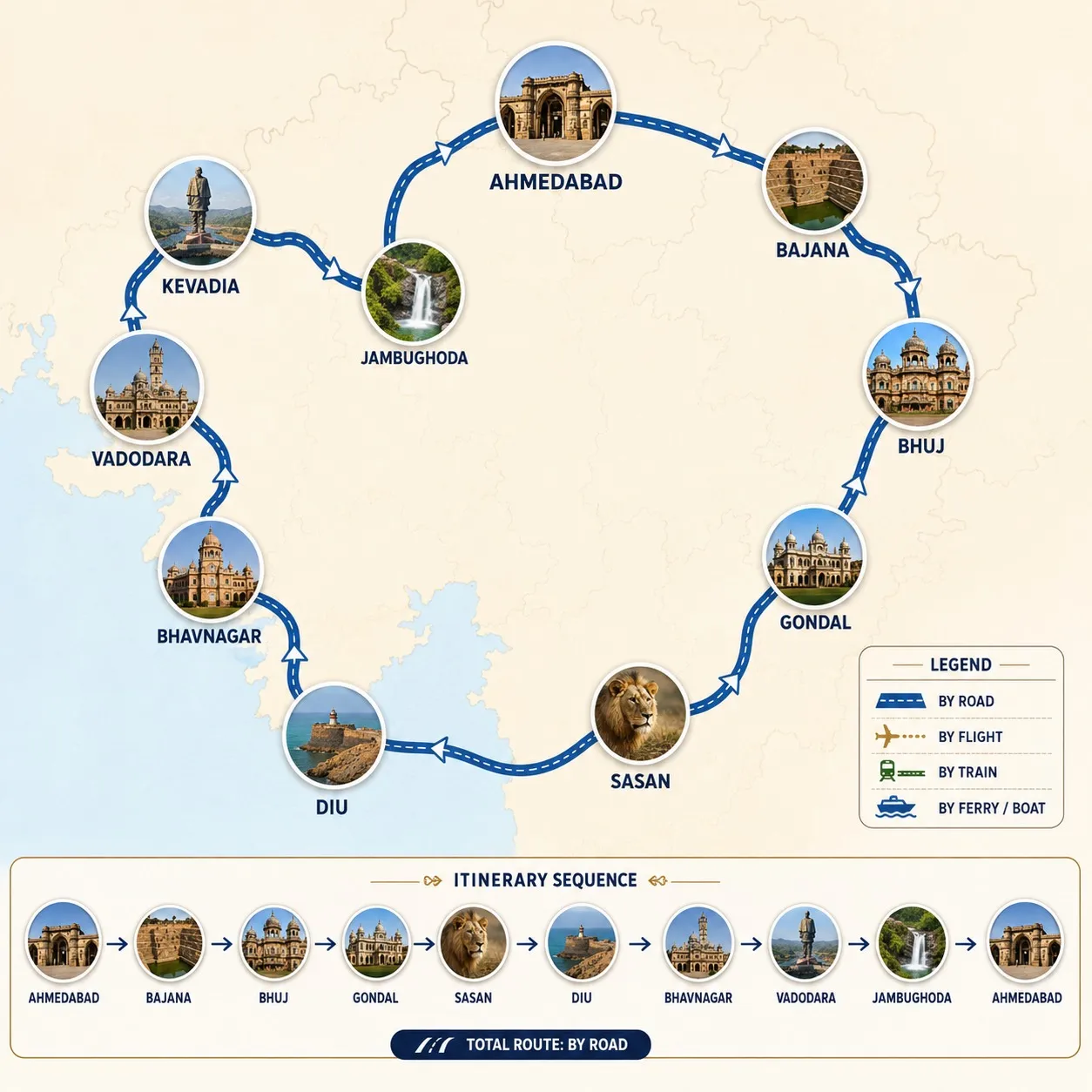
Ahmedabad → Bajana → Ajrakhpur → Bhuj → Anjar → Gondal → Junagadh → Sasan → Gir → Somnath → Diu → Vanakbara → Palitana → Bhavnagar → Lothal → Vadodara → Jambughoda → Champaner → Pavagadh → Ahmedabad

Day 1

Arrival in Ahmedabad

Arrival at Ahmedabad International Airport.

Once immigration procedures are completed and luggage has been collected, our representative will be waiting for you outside the terminal to transfer you to the hotel.

Arrival at the hotel and check-in. Standard check-in at 14:00 / check-out at 12:00.

Gandhi Ashram: Sabarmati Ashram (also known as Gandhi Ashram, Harijan Ashram, or Satyagraha Ashram) is located in the Sabarmati suburb of Ahmedabad, Gujarat, adjacent to Ashram Road.

Adalaj Stepwell: Situated in the quiet village of Adalaj, this stepwell has served as a resting place for many pilgrims and caravans along their trade routes for many years.

Bhadra Fort: Bhadra Fort was built by Ahmed Shah, the founder of the city, in 1411 AD. The fort’s name was derived from the nearby Bhadrakali Temple.

Bhadrakali Temple: It is the oldest temple dedicated to Shri Bhadrakali Maa and is located in the heart of old Ahmedabad, previously known as Karnavati.

Overnight in Ahmedabad.
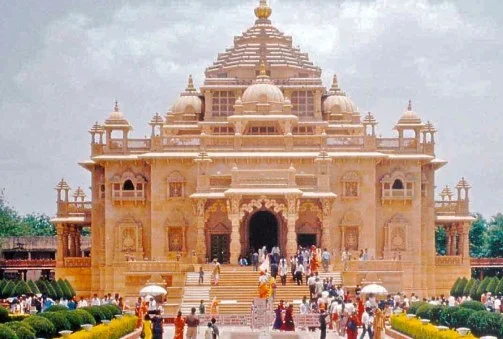
Arrival in Ahmedabad

Day 2

Ahmedabad-Siddhapur-Patan-Modhera-Bajana (Little Rann of Kutch) (240 Km, 5 Hours)

After breakfast, drive to Bajana.

Siddhapur: One goes to Siddhapur to see the beautiful wooden mansions. Its old havelis and villas, some over 100 years old, have a distinctly European flavour, and a walk through the “Bohra Vad” is like a walk through a lantern-lit England at dusk.

Patan Rani ki Vav (Stepwell): It was built by Queen Udaymati, wife of Bhimdev I, between the 11th and 12th centuries. It is the most magnificent and spectacular stepwell and the finest example of this type of water architecture.

Patan Patola: Patan is famous for Patola weaving. The Salvi family is one of the families that has continued this traditional art and preserved it to this day. Patola silk is often called the queen of all silks.

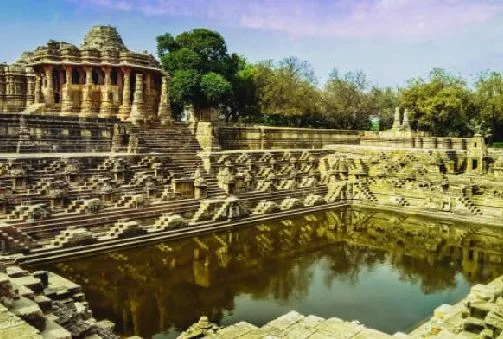
Modhera Sun Temple: The Modhera Sun Temple dates back to the early 11th century AD and was built by King Bhimdev I in 1026 AD. The temple is dedicated to the Sun God.

Overnight in Bajana.

Ahmedabad-Siddhapur-Patan-Modhera-Bajana (Little Rann of Kutch) (240 Km, 5 Hours)

Day 3

Bajana (Little Rann of Kutch)-Ajrakhpur-Bhujodi-Bhuj (275 Km, 5 Hours)

After breakfast, drive to Bhuj.

Ajrakhpur: Established by the Khatri Muslim hand block printers after the 2001 earthquake. Here, the artisans practice the “resist technique” on cotton and silk fabrics using ancient Ajrakh prints and new design motifs.

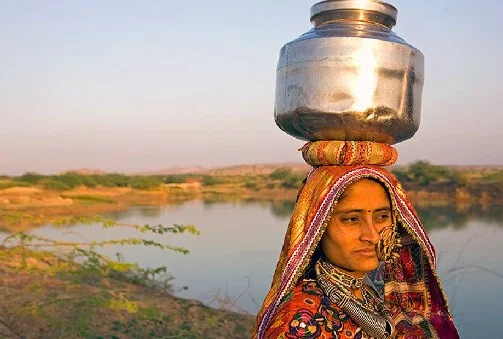
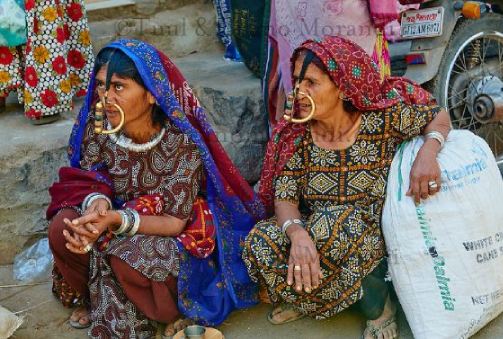
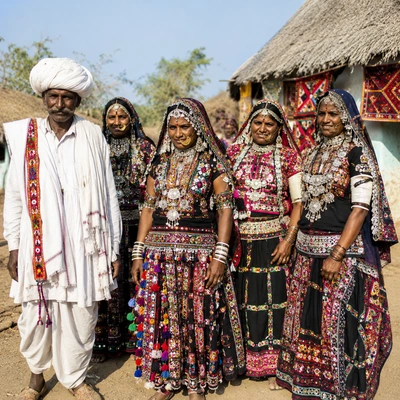
Dhaneti: Visit to see the elaborate embroidery work of the Ahir tribe. Dhaneti is a village entirely inhabited by the Ahir community, and the Ahir women are engaged in this embroidery work.

Bhujodi: A community of master craftsmen, the Vankar weavers, skilled in traditional handloom weaving, including cotton and wool weaving, which you can observe as you walk around the village and explore each house.

Upon arrival, transfer to the hotel.

Overnight in Bhuj.

Bajana (Little Rann of Kutch)-Ajrakhpur-Bhujodi-Bhuj (275 Km, 5 Hours)

Day 4

Bhuj-Banni Villages-Greater Rann of Kutch Festival-Dhordo-Bhuj

After breakfast.

Visit the Banni Villages and the Greater Rann of Kutch.

Hodka: Hodka is also famous for its beautiful embroidery, mud work, and leather handicrafts. Both men and women are actively involved in developing the art and craft traditions of the region.

Ludiya: The main occupations include monsoon agriculture, cattle breeding, intricate wood carving, embroidery, mud work, and wall painting used for decorating houses.

Dhordo: Visit Dhordo to see the beautiful traditional mud houses (Bhungas) adorned with mirror work and to admire the fine Mutwa embroidery featuring tiny mirrors.

Rann of Kutch Festival: Rann Utsav is an amazing festival of Kutch, Gujarat, India. It is a carnival of music, dance, and the natural beauty of the White Rann, where you can experience the luxury of tent cities and much more.

Overnight in Bhuj.

Bhuj-Banni Villages-Greater Rann of Kutch Festival-Dhordo-Bhuj

Day 5

Bhuj-Anjar Market-Gondal (281 Km, 5 Hours and 50 Minutes)

After breakfast, departure for Gondal.

En route, visit Anjar Market: It is impossible to come to Anjar and return home empty-handed, as the markets of the town offer an exciting array of metal handicrafts.

Royal Garages: The Royal Garages house a large collection of vintage and classic cars from 1910 to 1955, limousines and sports cars from the 1950s and 1960s, American cars from the 1940s and 1950s, and a fleet of four-wheel-drive vehicles from the Second World War and the post-war period.

Naulakha Darbargadh Palace: Built in the 17th century, this palace is one of the oldest and most beautiful palaces in Gondal. It is situated on the banks of the river on a large brick foundation, about 30 metres above the riverbed.

Bhuvaneswari Ayurvedics: Bhuvaneswari Ayurvedics belongs to a family of Ayurvedic doctors with a traditional history spanning more than 250 years. They manufacture and export Ayurvedic medicines.

Overnight in Gondal.

Bhuj-Anjar Market-Gondal (281 Km, 5 Hours and 50 Minutes)

Day 6

Gondal-Junagadh-Sasan (140 Km, 3 Hours and 40 Minutes)

After breakfast, drive to Sasan.

En route, visit Junagadh.

Uparkot Fort: Said to have been built in 319 BC, the fort was an architectural work of Chandragupta. However, the fort has changed hands many times over the centuries.

Uparkot Caves: Uparkot Caves, also known as Uperkot Caves, are ancient man-made caves. They form part of the Junagadh Buddhist Cave Group, located in the eastern part of Junagadh in the Indian state of Gujarat.

The Khapra Kodiya Caves: The Khapra Kodiya Caves are part of the Buddhist cave group of Junagadh and are the oldest caves in the group, based on scribbles and short cursive inscriptions found on the walls.

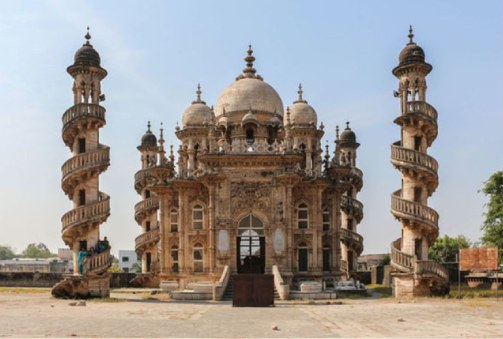
Mahabat Maqbara: Mahabat Maqbara and Bahauddin Maqbara are mausoleums in Junagadh, Gujarat, India. They were completed in 1892 and 1896 respectively and are dedicated to Mahabat Khan II, the Nawab of Junagadh State.

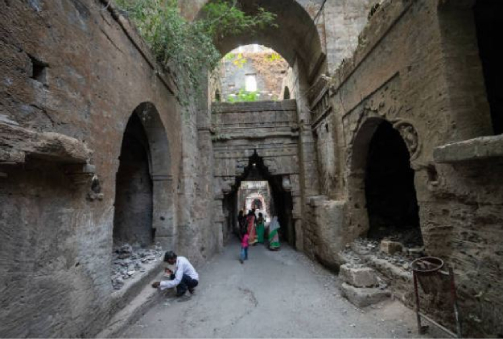
Adi-kadi Vav: Adi-kadi Vav, built in the 15th century, is entirely carved out of hard rock. A narrow flight of 120 steps cuts through the stone to reach the well shaft deep within the rock.

Overnight in Sasan.

Gondal-Junagadh-Sasan (140 Km, 3 Hours and 40 Minutes)

Day 7

Sasan-Gir-Sasan

This day, you will have to get up early in the morning and then proceed for the lion safari.

Morning Safari at Gir National Park: A diverse amalgamation of over 600 species of wildlife, including 41 species of mammals, 47 species of reptiles, and over 300 species of resident and migratory birds, offers visitors serene and mesmerizing experiences in the vast expanses of the forest. The presence of rolling hills and rivers flowing through the landscape makes it appear even more enigmatic.

After the morning safari, you return to the hotel and have breakfast.

Free time to relax.

You then proceed for the afternoon safari.

Evening Gir Safari: As one delves into the heart of Gir, the changing seasons paint the landscape with varying tints and hues, offering a visual spectacle that evolves with the rhythm of nature. Whether witnessing the regal lions in their natural habitat or immersing oneself in the diverse ecosystems, a safari in Sasan Gir promises an unforgettable and truly enriching experience.

Overnight in Sasan.

Sasan-Gir-Sasan

Day 8

Sasan-Somnath-Diu (138 Km, 4 Hours)

After breakfast, the day begins.

En route, you visit the town of Somnath.

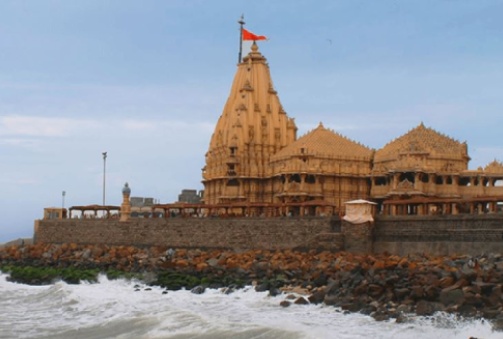
Somnath Temple: Somnath Temple, also called Somanātha Temple or Deo Patan Temple, is a Hindu temple located in Prabhas Patan, Veraval, in Gujarat, India.

Departure for Diu.

Naida Caves: Naida Caves, Diu, are located outside the city walls of Diu Fort. The caves feature a large network of square-step tunnels, which are yet to be fully explored, and were created by the Portuguese.

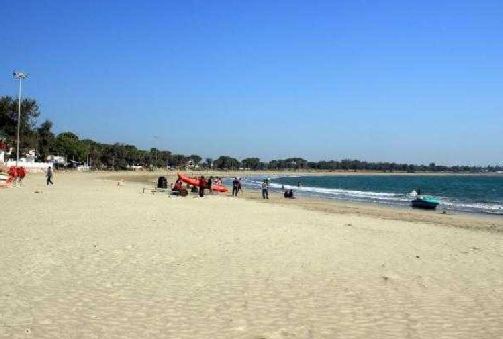
Diu Fort: Diu Fort is a Portuguese-built fortification located on the western coast of India in Diu. The fort was constructed as part of the defensive fortifications of Portuguese India on the eastern end of Diu Island during the 16th century.

Overnight stay in Diu.

Sasan-Somnath-Diu (138 Km, 4 Hours)

Day 9

Diu-Palitana-Bhavnagar (200 Km, 4 Hours)

After breakfast, drive to Bhavnagar.

En route, visit Palitana.

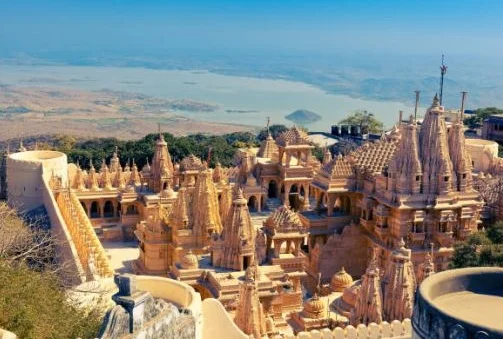
Palitana: It is one of the holiest pilgrimage sites in Jainism and is renowned for its magnificent complex of more than 800 intricately carved Jain temples. The climb to the summit involves ascending approximately 3,500 to 3,900 stone steps over a distance of about 3.5 kilometres. Depending on fitness levels, the ascent usually takes between 1.5 and 3 hours.

Upon arrival in Bhavnagar, transfer to the hotel.

Overnight stay in Bhavnagar.

Diu-Palitana-Bhavnagar (200 Km, 4 Hours)

Day 10

Bhavnagar-Lothal-Vadodara (225 Km, 4 Hours and 35 Minutes)

After breakfast, you visit.

Barton Museum: Barton Museum is located on the ground floor of Gandhi Smriti, where you can find a wide range of artefacts, including religious sculptures and nutcrackers representing the culture of Saurashtra.

Takhteshwar Mahadev Temple: The temple is believed to have been commissioned by Maharaja Takhtsinhji in 1893 AD. He was anointed as the Maharaja of Bhavnagar after the death of his father, Jaswantsinhji, in 1870.

Drive to Vadodara, and along the way, visit the historic city of Lothal.

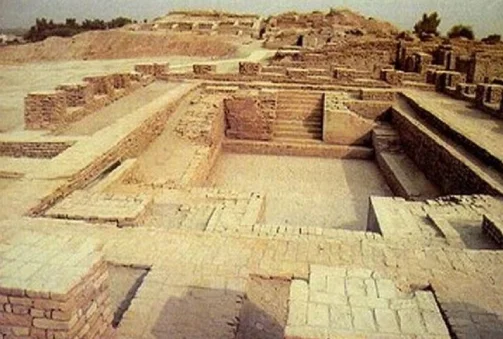
Lothal (closed on Fridays and public holidays): The city was inhabited as early as 3700 BCE and was a thriving trading port. Excavations were carried out by the Archaeological Survey of India (ASI) from 13 February 1955 to 19 May 1960 to unearth the ancient city. The site has been nominated for inclusion on the UNESCO World Heritage List.

Departure for Vadodara.

Upon arrival, transfer to the hotel.

Overnight in Vadodara.

Bhavnagar-Lothal-Vadodara (225 Km, 4 Hours and 35 Minutes)

Day 11

Vadodara-Kevadia (86 Km, 2 Hours)

After breakfast, departure for Kevadia.

Aurobindo Ashram: Built in 1896, the Aurobindo Ashram (also known as Aurobindo Nivas), located in Dandia Bazaar, is the only national memorial in Vadodara. This place was once home to Sri Aurobindo, a renowned Indian philosopher, literary figure, and poet.

Continue to the Statue of Unity and transfer to the hotel.

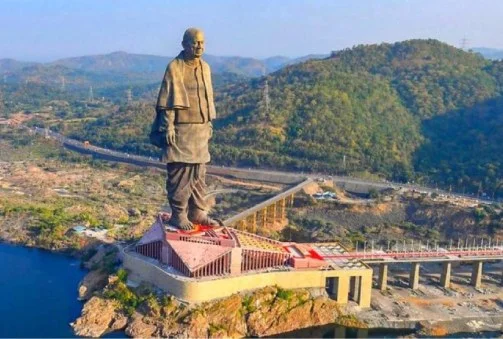
Statue of Unity (closed on Mondays): Situated near the sacred Narmada River, the Statue of Unity is an iconic representation of national unity and is the tallest statue in the world. Dedicated to the Iron Man of India, Sardar Vallabhbhai Patel, who is credited with the unification of India, a visit to this monument evokes a profound sense of patriotism and admiration.

Narmada River Aarti (Optional): Held in Kevadia, near the Statue of Unity, this is a captivating evening ceremony featuring devotional chants, traditional lamps, panoramic river views, and a deeply spiritual atmosphere.

Overnight in Kevadia.

Vadodara-Kevadia (86 Km, 2 Hours)

Day 12

Kevadia-Jambughoda (100 Km, 2 Hours)

After breakfast, drive to Jambughoda.

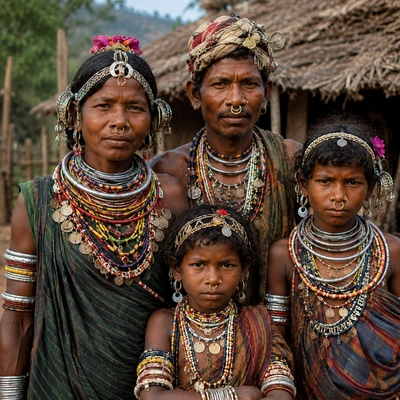
Subsequently, visit the Bhasha Research and Publication Centre (closed on Sundays and public holidays), established in 1996 with the aim of giving a “voice” to the Adivasi communities of India.

Kada Dam: Kada Dam is located near Bodeli in Jambughoda Taluka, Panchmahal District. It is considered one of the most scenic dams in Gujarat. Several beautiful attractions are located nearby, including Targol Dam, Jambughoda Wildlife Sanctuary, Zhand Hanuman Temple, Hathni Waterfall, and the town of Bodeli.

Overnight in Jambughoda.

Kevadia-Jambughoda (100 Km, 2 Hours)

Day 13

Jambughoda-Champaner-Ahmedabad (186 Km, 3 Hours and 45 Minutes)

After breakfast, drive to Ahmedabad.

Chhota Udepur: The haat (weekly market) is the place where most of the Adivasis fulfil their daily needs. Every day of the week, a haat is held at different locations in the areas surrounding Chhota Udepur.

Champaner-Pavagadh Archaeological Park

Champaner: Champaner is an ancient fortified city. Visit one of the UNESCO World Heritage Sites, Champaner Fort, an ancient fort located at the foothills of Pavagadh.

Overnight in Ahmedabad.

Jambughoda-Champaner-Ahmedabad (186 Km, 3 Hours and 45 Minutes)

Day 14

Ahmedabad-Italy

Transfer to Ahmedabad Airport.

Ciao India Tours wishes you a pleasant journey.

Inclusions:

✔ 13 nights accommodation in 3-star/Heritage hotels, with breakfast, including all existing taxes.
✔All airport/station-hotel-airport/station transfers as per the itinerary.
✔ Meet and assist service upon arrival by our representative at the airport.
✔ All transfers and sightseeing as per the itinerary by an air-conditioned vehicle.
✔ The ticket to enter the Statue of Unity.
✔ Morning safari in Sasan Gir.
✔ Evening safari in Sasan Gir.
✔ One bottle of water per person per day.
✔ All applicable taxes included.
✔ Toll taxes, parking fees, fuel, and driver’s accommodation included.

Exclusions:

✘ Visa, international flights, travel insurance, flight/train cancellation or modification charges, alcoholic beverages, lunch, dinner, tips, tour guide services, entrance fees to monuments and activities, personal expenses, camera fees, etc.

✘ Any activity not specifically mentioned in the inclusions, such as tuk-tuk rides, boat rides, elephant rides, camel rides, safaris, etc.

✘ Tips for drivers, waiters, tour guides, etc.

✘ Anything not specifically mentioned under the inclusions.

To book this tour, please contact us via WhatsApp, inquiry form, chat, or email.

📱 WhatsApp: +91 99719 81381
📧 Email: info@ciaoindiatours.com

We remain at your complete disposal for any further information.

Receive free quote