Categories
Festival

Trip to India During the Dev Deepawali Festival

Tour India withNepal

Trip to India During the Dev Deepawali Festival

From – 1128.00 EUR min 2 pax

9 nights/10 days

Minimum 04 persons

Route

Location

Delhi → Jaipur → Abhaneri → Fatehpur Sikri → Agra → Varanasi → Sarnath → Delhi

Day 1

November 18, 2026, - Arrival in Delhi

Arrival at New Delhi International Airport.

After completing immigration formalities and collecting your luggage, our representative will meet you outside the terminal for the transfer to the sightseeing of Delhi and then to the hotel.

Hotel check-in from 14:00 hrs / Check-out before 12:00 hrs.

Jama Masjid: The largest and most famous mosque in India, located not far from the Red Fort and Chandni Chowk, the oldest and busiest market in Old Delhi. Built by Shah Jahan in the 17th century, Jama Masjid is among the most crowded places in Delhi for pilgrims and tourists.

Rickshaw Ride in Old Delhi: The unique atmosphere of Delhi’s markets can best be experienced in Chandni Chowk and in the narrow streets bustling at all hours with vendors and goods of every kind. According to legend, like Jama Masjid and the Red Fort, the Chandni Chowk market was also established during the reign of the Mughal Emperor Shah Jahan.

Red Fort (photo stop): The Red Fort is among the works commissioned by the Mughal Emperor Shah Jahan in the 17th century; its construction took approximately 9 years and cost 10 million rupees.

Raj Ghat: Raj Ghat is the memorial marking the cremation site of Mahatma Gandhi, known as the Father of the Nation and a symbol of world peace.

India Gate: In the center of New Delhi stands India Gate, 42 meters high, a triumphal arch located in the middle of a crossroads. Similar to its French counterpart, it commemorates the 70,000 Indian soldiers who lost their lives fighting for the British Army during World War I.

Rashtrapati Bhavan and Parliament House (photo stop): Designed by Sir Edwin Lutyens and Herbert Baker, these buildings are situated on a 330-acre estate. Conceived in imperial style, Parliament House features an open veranda with 144 columns.

Laxmi Narayan Temple: Dedicated to Lord Narayan and his consort Goddess Laxmi (the goddess of prosperity), it is therefore called the Laxminarayan Temple.

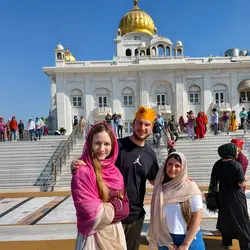
Gurudwara Bangla Sahib: One of the most important Sikh gurdwaras, or Sikh places of worship, associated with the eighth Guru, Guru Har Krishan. It is also known for the sacred pool within its complex, called the Sarovar.

Dinner and overnight stay in Delhi.

Day 2

November 19, 2026, - Delhi – Jaipur (281 km, 5 hours)

After breakfast, departure for Jaipur.

Upon arrival, visit theGemstone Processing Workshop: Observe artisans cutting, polishing, and setting stones such as emeralds, rubies, sapphires, and diamonds. Each jewel is crafted using traditional techniques passed down through generations, preserving the royal heritage of Rajasthan.

The Ancient Art of Hand Block Printing: Block printing is one of Rajasthan’s most iconic textile arts, and Jaipur is its vibrant center. This centuries-old craft uses hand-carved wooden blocks to create unique designs on cotton and silk fabrics.

Birla Mandir: Jaipur’s Birla Temple is located at the foot of Moti Dungri Fort. This temple is one of the city’s most beautiful attractions and is especially stunning when illuminated at night. Construction began in 1977 and continued until 1985. Participation in the evening ceremony at Birla Mandir.

Dinner and overnight stay in Jaipur.

Day 3

November 20, 2026, - Jaipur

After breakfast, the day begins.

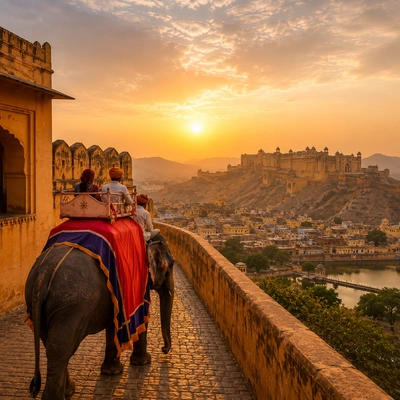
Amer Fort: Amer is a town covering an area of 4 square kilometers (1.5 square miles), located 11 kilometers (6.8 miles) from Jaipur, the capital of Rajasthan. Situated on top of a hill, it is the main tourist attraction in the Jaipur area.

Jal Mahal (photo stop): Jal Mahal is a work of art located in the center of Man Sagar Lake; the palace creates the illusion of floating on the surface of the lake, offering breathtaking views.

City Palace: Jaipur’s City Palace includes the Chandra Mahal, Mubarak Mahal, and other buildings; it is a palace complex in Jaipur, the capital of Rajasthan, India. It was the seat of the Maharaja of Jaipur, head of the Kachwaha Rajput clan.

Jantar Mantar: An equinoctial sundial consisting of a gigantic triangular gnomon with its hypotenuse parallel to the Earth’s axis. The instrument was designed to measure the time of day with an accuracy of up to half a second, as well as the declination of the sun and other celestial bodies.

Hawa Mahal (photo stop): Hawa Mahal (English translation: Palace of Winds or Palace of Breeze) is a palace in Jaipur, India, so named because it was essentially a high screen wall built so that royal women could observe street festivals without being seen from outside.

Dinner and overnight stay in Jaipur.

Day 4

November 21, 2026, - Jaipur – Abhaneri – Fatehpur Sikri – Agra (241 km, 4 hours 30 minutes)

After breakfast, departure for Agra.

En route, visitAbhaneri: Chand Baori is the most famous stepwell in the region and one of the deepest and largest in India. Built with 3,500 narrow steps, it extends over 13 levels and reaches a depth of 30 meters.

Fatehpur Sikri: Built by the Mughal Emperor Akbar in the mid-16th century, Fatehpur Sikri (“City of Victory”) served as the capital of his empire for 15 years. Constructed in Indo-Islamic style, Sikri is a red sandstone complex filled with palaces, mosques, temples, and other structures.

Dinner and overnight stay in Agra.

Day 5

November 22, 2026, - Agra

After breakfast, the day begins.

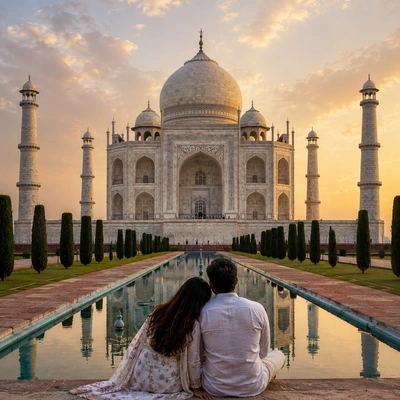
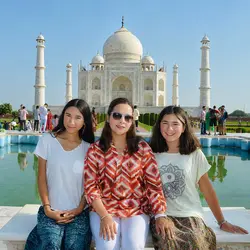
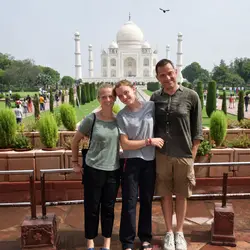
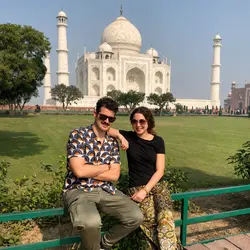
Taj Mahal (closed on Fridays): One of the Seven Wonders of the World and a must-see destination in India. It stands as the living symbol of the romantic story of Shah Jahan and his beloved wife Mumtaz Mahal. Construction of this magnificent monument was completed in 1653 AD.

Agra Fort: Agra Fort is located on the banks of the Yamuna River; this crescent-shaped fort was commissioned by Akbar, one of the greatest Mughal emperors, in 1565. Surrounded by massive walls, the complex contains numerous palaces, gardens, halls, and other historical structures.

Itimad-ud-Daulah: Built by Nur Jahan in memory of her father Ghias-ud-Din Beg, who was granted the title “Itimad-ud-Daulah,” meaning “Pillar of the Government.” It is the first tomb constructed in white marble instead of red sandstone.

Mehtab Bagh: This beautiful garden is located on the western bank of the Yamuna River and is perfectly aligned with the gardens of the Taj Mahal on the opposite bank. Spread across 300 square meters, Mehtab Bagh has been the site of numerous fascinating excavations.

Dinner and overnight stay in Agra.

Day 6

November 23, 2026, - Agra – Varanasi (By train, 7 hours, departure at 06:00 AM and arrival at 01:00 PM)

Early in the morning, transfer to the railway station according to the train schedule for Varanasi.

Breakfast on board the train.

Upon arrival in Varanasi, transfer to the hotel.

Later, attend the evening prayer ceremony known asGanga Aarti: A spiritual ritual that begins with the lighting of multi-tiered brass lamps and synchronized chanting of sacred mantras. While some priests blow conch shells to purify the atmosphere, others wave incense sticks in devotion to Mother Ganga.

Dinner and overnight stay in Varanasi.

Day 7

November 24, 2026, - Varanasi (Day dedicated to the Dev Deepawali Festival)

After breakfast, celebration of the Dev Deepawali Festival.

Dev Deepawali in Varanasi: A grand festival celebrated during Kartik Purnima, when millions of diyas illuminate the banks of the Ganges River. It is believed that the gods descend to Earth on this day, and the city comes alive with Ganga Aarti ceremonies, rituals, and spectacular fireworks.

Walking Tour of the City: Enjoy a guided walking tour starting from Tulsi Ghat, associated with Tulsidas, and continuing into the heart of the old city. Explore sacred and historical sites such as Lolark Kund and traditional akharas, where ancient wrestling and physical training traditions are still preserved.

Dinner and overnight stay in Varanasi.

Day 8

November 25, 2026, - Varanasi

This day requires an early wake-up at 05:00 AM for the boat ride. The best way to experience the Ganges River is by boat. The river flows through the city, and numerous ghats connect the river to the mainland. The day for the people of Varanasi living near the Ganges begins with a sacred dip in the river and the morning “Surya Namaskar,” the worship of the Sun God. People bathe and perform rituals. After the boat ride, enjoy a short heritage walk through the city.

Manikarnika Ghat: One of the most famous, sacred, and ancient ghats in Varanasi; Manikarnika is the main cremation ghat and one of the most auspicious places where a Hindu can be cremated. Bodies are carried to the ghat on bamboo stretchers covered with red cloth and handled by the dom community.

Kashi Vishwanath Temple (photo stop): The Kashi Vishwanath Temple is one of the most famous temples in Varanasi, also known as the Golden Temple, dedicated to Lord Shiva. It was built in 1780 by the Maratha queen Maharani Ahilyabai Holkar of Indore. This makes Varanasi a place of great religious importance for Hindus.

Walk around Vishwanath Temple: Visit one of the city’s finest artistic sites, such as Gautameshwar Mahadev. The Golden Temple, the most important Shiva temple in India, together with historical mosques, hidden ancient alleys, the bazaars of Varanasi, historic architecture, and the world’s largest cremation ground at Manikarnika Ghat, will offer a unique and unforgettable walking experience.

Return to the hotel for breakfast.

Sarnath Archaeological Park: The massive ruins are located within the same complex as the Dhamek Stupa. The excavation sites of Sarnath contain impressive collections of monasteries, stupas, temples, inscriptions, sculptures, and other antiquities dating from the 3rd century BC to the 12th century AD. These sites are now maintained by the Archaeological Survey of India.

Wat Thai Sarnath Temple: Surrounded by beautifully maintained gardens, this Thai temple is built in traditional Thai architectural style and managed by Thai Buddhist monks.

Silk Weaving Workshop: Banarasi Tussar silk sarees are known for their rich texture and elegant designs. They often feature intricate floral motifs and zari work, making them suitable for special occasions such as weddings, festivals, and formal events.

Dinner and overnight stay in Varanasi.

Day 9

November 26, 2026, - Varanasi – Delhi (By flight, 1 hour 25 minutes, departure at 12:20 PM and arrival at 01:45 PM)

After breakfast, departure for Delhi.

Transfer to Varanasi Airport according to the flight schedule for Delhi.

Upon arrival, visit theAkshardham Temple (closed on Mondays): “Akshardham” means the divine abode of God. It is considered an eternal place of devotion, purity, and peace. Swaminarayan Akshardham in New Delhi is a mandir: a place of worship, a spiritual and cultural complex dedicated to devotion, learning, and harmony.

Note: Sleeveless clothing, short pants, and shorts are not permitted. Electronic devices are also not allowed.

Transfer to the hotel.

Dinner and overnight stay in Delhi.

Day 10

November 27, 2026, - Delhi - To Your Next Destination

Transfer to Delhi Airport.

Ciao India Tours wishes you a pleasant journey.

Inclusions:

✔ 09 nights accommodation in 4-star/heritage hotels with half-board basis, including all applicable taxes.
✔ All airport/station-hotel-airport/station transfers as per the program.
✔ All transportation as per the itinerary by air-conditioned minibus.
✔ Train from Agra to Varanasi.
✔ Flight from Varanasi to Delhi.
✔ Breakfast and dinner at the hotels.
✔ Italian-speaking tour guide throughout the trip.
✔ Monument entrance tickets as per the program.
✔ Activity tickets as per the program.
✔ Rickshaw ride in Delhi.
✔ Boat ride in Varanasi.
✔ One bottle of water per person per day.
✔ All taxes included.
✔ Tolls, parking fees, fuel, and driver accommodation.

Exclusions:

✘ Visa, international flights, travel insurance, cancellation/modification charges for flights and trains, alcoholic beverages, lunch, tips, personal expenses, camera fees, etc.

✘ Tips for drivers, waiters, tour guides, and other service staff.

✘ Anything not specifically mentioned under the inclusions section.

To book this tour, please contact us via WhatsApp, inquiry form, chat, or email.

📱 WhatsApp: +91 99719 81381
📧 Email: info@ciaoindiatours.com

We remain at your complete disposal for any further information.

Receive free quote