Categories
Festival Uncategorized

Pushkar fair Rajasthan Tour

Cultural Tour in India During Pushkar Camel Fair

from 1298 Euro/PP (min. 2 pax)

11 Nights / 12 Days

Private Tour

Route

Location

Delhi → Mandawa → Bikaner → Jodhpur → Ranakpur → Udaipur → Pushkar → Jaipur → Abhaneri → Fatehpur Sikri → Agra → Delhi

Day 1

November 13, 2026, - Arrival in Delhi

Arrival at New Delhi International Airport. 

After completing the immigration formalities and collecting your luggage, our representative will be waiting outside the terminal for the journey to Delhi, followed by the transfer to the hotel. 

Arrival at the hotel and check-in. Standard check-in time is 14:00 / check-out time is 12:00. 

Jama Masjid: The largest and most famous mosque in India, located not far from the Red Fort and Chandni Chowk, the oldest and busiest market in Old Delhi. Built by Shah Jahan in the 17th century, Jama Masjid is among the most crowded places in Delhi for pilgrims and tourists. 

Rickshaw ride in Old Delhi: The distinctive atmosphere of Delhi’s markets can best be experienced at Chandni Chowk and, in general, in the narrow streets bustling at all hours with vendors and goods of every kind. According to legend, like Jama Masjid and the Red Fort, the Chandni Chowk market was also established during the reign of the Mughal Emperor Shah Jahan. 

Red Fort (photo stop): The Red Fort is among the monuments commissioned by the Mughal Emperor Shah Jahan in the 17th century; its construction took approximately 9 years and cost 10 million rupees. 

Raj Ghat: Raj Ghat is the memorial marking the cremation site of Mahatma Gandhi, known as the Father of the Nation and a symbol of global pacifism. 

India Gate: In the centre of New Delhi stands India Gate, 42 metres high, a triumphal arch located in the middle of a crossroads. Quite similar to its French counterpart, it commemorates the 70,000 Indian soldiers who lost their lives fighting for the British Army during the First World War. 

Rashtrapati Bhavan and Parliament House (photo stop): Designed by Sir Edwin Lutyens and Herbert Baker, these buildings are situated on a 330-acre estate. Conceived in an imperial style, Parliament House consists of an open veranda with 144 columns. 

Laxmi Narayan Temple: Dedicated to Lord Narayan and his consort, Goddess Laxmi (the goddess of prosperity), it is therefore called the Laxminarayan Temple. 

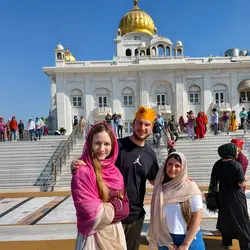
Gurudwara Bangla Sahib: One of the most important Sikh gurdwaras, or Sikh places of worship, associated with the eighth Guru, Guru Har Krishan, and also known for the pool within its complex, called the Sarovar. 

Dinner and overnight stay in Delhi. 

Day 2

November 14, 2026, - Delhi – Mandawa (243 km, 6 hours

After breakfast, departure for Mandawa. 

Visit this small town, known as Mandawa, famous for its painted havelis (mansions). It is located in the heart of the Shekhawati region in Rajasthan, known throughout the state for its decorated havelis. It is also called the “Open Air Gallery of Rajasthan”. Its havelis still display the wealth of the 19th-century Marwari era. Visit the havelis and palaces. 

Dinner and overnight stay in Mandawa. 

Day 3

November 15, 2026, - Mandawa-Deshnok-Bikaner (192 km, 3 ore e 30 minuti)

After breakfast, departure for Bikaner. 

Along the way, visit Fatehpur and Deshnok. 

Rat Temple (Karni Mata) (optional): The temple is famous for the approximately 20,000 black rats that live inside and are worshipped there. The temple attracts visitors from across the country seeking blessings, as well as curious tourists from around the world. 

Arrival in Bikaner in the afternoon. Visit Junagarh Fort and enjoy a tuk-tuk ride. 

Junagarh Fort: The construction of the walls and the associated moat began in 1589 and was completed in 1594. It was built outside the original city fortification, about 1.5 km from the city centre. Some remains of the old fort are still preserved near the Lakshmi Narayan Temple. 

Tuk-tuk Ride: The Old City area of Bikaner consists of traditional neighbourhoods with narrow lanes, historic palaces, residential quarters, and colourful bazaars. During this tour, we will explore the vibrant local culture and the stately havelis, travelling by autorickshaw (tuk-tuk) and on foot. 

Dinner and overnight stay in Bikaner. 

Day 4

November 16, 2026, - Bikaner – Jodhpur (250 km, 4 hours 51 minutes)

After breakfast, departure for Jodhpur. 

Arrival in Jodhpur and city tour. 

Mehrangarh Fort: Mehrangarh holds a unique importance as a repository of the artistic and cultural history of the vast regions of central Rajasthan and Marwar-Jodhpur. 

Jaswant Thada: A beautiful marble monument, often described as the “Taj Mahal of Marwar”, built in memory of Maharaja Jaswant Singh II. 

The Old City of Jodhpur: The old city of Jodhpur, founded by Rao Jodha in 1459 AD, is surrounded by a 10 km-long wall with eight entrance gates. The new city has been built around this fortified enclosure. Jodhpur is a perfect blend of modern and traditional architecture. 

Jodhpur Local Market: Located near the Clock Tower, it is famous for spices, perfumes, handicrafts, footwear, red chillies, and traditional clothing for both men and women. 

Dinner and overnight stay in Jodhpur. 

Day 5

November 17, 2026, - Jodhpur – Ranakpur – Udaipur (259 km, 5 Hours)

After breakfast, departure for Udaipur. 

Bishnoi Village Safari. 

Bishnoi Village of Jodhpur: In Rajasthan, this scenic area is characterised by Khejri trees and blackbucks. The village is also home to Guda Bishnoi Lake. Anyone interested in wildlife and exotic nature should definitely visit this village. 

The Bishnoi and Opium: Although now illegal in India and prohibited by the 29 principles of the Bishnoi community, the sect still uses it and has received special permission from the Indian Government to use opium for religious purposes. 

Departure for Udaipur. 

Along the way, visit the Ranakpur Jain Temple: The temples of Ranakpur are acclaimed worldwide for their intricate and superb architectural style. These temples form one of the five major pilgrimage sites of Jainism. 

Transfer to the hotel upon arrival in Udaipur. 

Dinner and overnight stay in Udaipur. 

Day 6

November 18, 2026, - Udaipur – Pushkar (298 km, 5 Hours)

After breakfast, sightseeing tour of Udaipur. 

City Palace: The largest palace complex in Rajasthan, located on the eastern bank of the serene Lake Pichola. Built in marble and granite in 1725 by Maharana Udai Singh. 

Jagdish Temple: Located next to the City Palace, it houses a black stone image of Lord Vishnu and his vehicle, a powerful bird called Garuda, depicted in brass. 

Saheliyon-ki-Bari: Features elegant lawns, shaded walkways, and impressive fountains. It is one of the best places in Udaipur to relax. Later, enjoy a boat ride on Lake Pichola (subject to water level conditions). 

Lake Pichola: A picturesque lake surrounding the two magnificent structures of Jag Niwas and Jag Mandir, the true soul of the city of Udaipur. 

After sightseeing in Udaipur, departure for Pushkar. 

Upon arrival, transfer to the hotel. 

Dinner and overnight stay in Pushkar. 

Day 7

November 19, 2026, - Pushkar

After breakfast. 

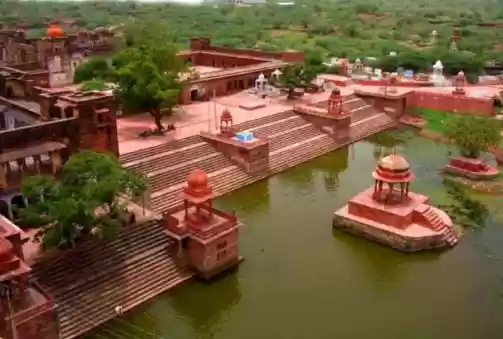
Pushkar Fair (Pushkar Camel Fair): The Pushkar Fair is a vibrant annual festival held in Pushkar, Rajasthan, between October and November. Famous for the trading of camels and livestock, the fair attracts thousands of visitors with cultural performances, traditional music and dance, local handicrafts, traditional competitions, and religious ceremonies at the sacred Pushkar Lake during Kartik Purnima. 

Brahma Temple: The structure dates back to the 14th century. It is said that the temple was built by the sage Vishwamitra after Brahma’s yagna (ritual). It is also believed that Brahma himself chose the site for his temple. 

Pushkar Lake: It is a sacred lake for Hindus. The scriptures describe it as “Tirtha-Guru”, meaning the master of pilgrimage sites associated with water, and it is linked to the mythology of the creator god Brahma, whose most important temple is located in Pushkar. 

Dinner and overnight stay in Pushkar. 

Day 8

November 20, 2026, - Pushkar-Jaipur (148 KM, 3 Hours)

After breakfast, departure for Jaipur. 

Upon arrival, visit the local handicraft activities: 

Gemstone Craftsmanship: Observe artisans as they cut, polish, and set stones such as emeralds, rubies, sapphires, and diamonds. Each piece of jewellery is created using traditional techniques passed down through generations, keeping the royal heritage of Rajasthan alive. 

The Ancient Art of Hand Printing: Block printing is one of the most iconic textile arts of Rajasthan, and Jaipur is its main centre. This technique uses hand-carved wooden blocks to create unique designs on cotton and silk fabrics. 

Birla Mandir: At the foot of Moti Dungri Fort stands Birla Temple, one of the most beautiful attractions in Jaipur. The temple is particularly impressive when illuminated at night. Participation in the evening ceremony. 

Dinner and overnight stay in Jaipur. 

Day 9

November 21, 2026, - Jaipur

After breakfast, the day begins. 

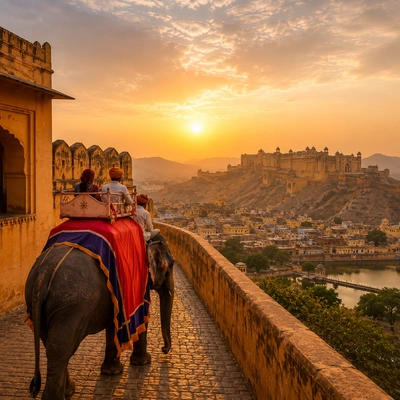
Amer Fort: Amer is a town covering an area of approximately 4 square kilometres, located 11 kilometres from Jaipur, the capital of Rajasthan. Situated on top of a hill, it is one of the major tourist attractions in the Jaipur region. 

Jal Mahal (photo stop): Jal Mahal is an architectural masterpiece located in the middle of Man Sagar Lake. The palace creates the illusion of floating on the water, offering a truly breathtaking view. 

Jantar Mantar: This instrument is used to measure the time of day with remarkable precision, up to half a second, and to determine the declination of the Sun and other celestial bodies. 

Hawa Mahal (photo stop): Built of red and pink sandstone, it is located on the edge of the City Palace of Jaipur and extends to the zenana, or women’s chambers. The structure was built in 1799 by Maharaja Sawai Pratap Singh. 

City Palace: A palace complex that includes Chandra Mahal, Mubarak Mahal, and other buildings. Located in Jaipur, the capital of Rajasthan, it was the residence of the Maharaja, head of the Kachwaha Rajput clan. 

Galtaji Temple: Also known as the Monkey Temple due to the large number of monkeys found there. It is dedicated to Lord Hanuman and was built in the 16th century by Diwan Rao Kriparam, an advisor to Maharaja Sawai Jai Singh II. 

Dinner and overnight stay in Jaipur. 

Day 10

November 22, 2026, - Jaipur – Abhaneri – Fatehpur Sikri – Agra (241 km, 4 hours 30 minutes)

After breakfast, departure for Agra. 

Along the way, visit: 

Abhaneri: This colossal stepwell is located opposite the Harshat Mata Temple. It has become a tradition to wash one’s hands and feet in the stepwell before visiting the adjacent temple. 

Fatehpur Sikri: Built by the Mughal Emperor Akbar in the mid-16th century, Fatehpur Sikri (“City of Victory”) was the capital of his empire for about 15 years. Constructed in the Indo-Islamic style, it is a red sandstone complex filled with palaces, mosques, temples, and other structures. 

Dinner and overnight stay in Agra. 

Day 11

November 23, 2026, - Day 11, Monday 23 Nov 2026

Agra-Delhi (237 KM, 4 hours) 

After breakfast, the day begins. 

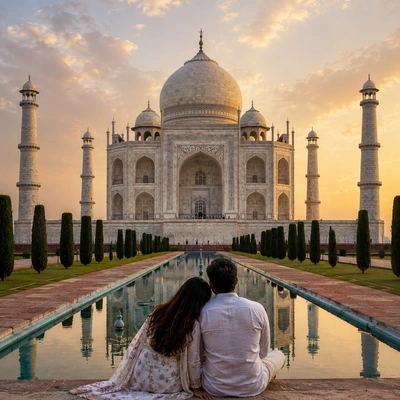
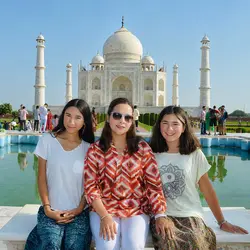
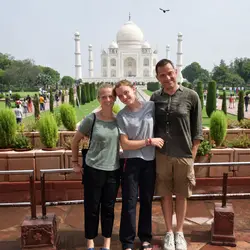
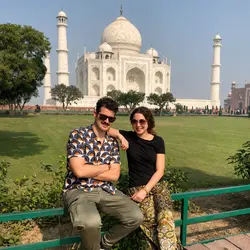
Taj Mahal (closed on Fridays): It is one of the Seven Wonders of the World and a must-visit attraction in India. It stands as a living symbol of the romantic life of Shah Jahan and his beautiful wife Mumtaz Mahal. The construction of this magnificent monument was completed in 1653 AD. 

Agra Fort: Agra Fort is situated on the banks of the Yamuna River. This crescent-shaped fort was commissioned by Akbar, one of the greatest Mughal emperors, in 1565. Surrounded by massive walls, the complex contains numerous palaces, gardens, halls, and other historic structures. 

Mehtab Bagh: This beautiful garden is located on the western bank of the Yamuna River and is perfectly aligned with the gardens of the Taj Mahal on the opposite side of the river. Spread over 300 square metres, Mehtab Bagh has been the site of numerous intriguing excavations. 

After sightseeing in Agra, departure for Delhi. 

Upon arrival, transfer to the hotel. 

Dinner and overnight stay in Delhi.

Day 12

November 24, 2026, - Delhi-To your next destination

Transfer to Delhi Airport. 

Ciao India Tours wishes you a pleasant journey. 

Inclusions:

 11 nights accommodation in 4-star/heritage hotels with half-board basis, including all applicable taxes. 
 All airport/station-hotel-airport/station transfers as per the program. 
 All transportation as per the itinerary by air-conditioned vehicle. 
 Breakfast and dinner at the hotels. 
 Tourist guide throughout the trip. 
 Activity tickets as per the program. 
 Monument entrance tickets as per the program. 
 Rickshaw ride in Delhi. 
 Tuk-Tuk Ride in Bikaner. 
 Bishnoi Village Safari in Jodhpur. 
 Boat ride in Udaipur. 
 One bottle of water per person per day. 
 All taxes included. 
 Tolls, parking fees, fuel, and driver accommodation. 

Exclusions:

 Visa, international flights, travel insurance, cancellation/modification of flights and trains, alcoholic beverages, lunch, tips, personal expenses, camera fees, etc. 
 Any activity not specifically mentioned in the inclusions such as tuk-tuk rides, boat rides, elephant rides, camel rides, safaris, etc. 
 Tips for drivers, waiters, tour guides, etc. 
 Anything not mentioned in the inclusions. 

To book this tour, please contact us via WhatsApp, inquiry form, chat, or email.

📱 WhatsApp: +91 99719 81381
📧 Email: info@ciaoindiatours.com

We remain at your complete disposal for any further information.

Receive free quote