Categories
Uncategorized

Gujarat with Rajasthan

Tour India withNepal

Gujarat with Rajasthan

from 1615 Euro/PP (min. 2 pax)

20 nights/21 days

Private Tour

Route

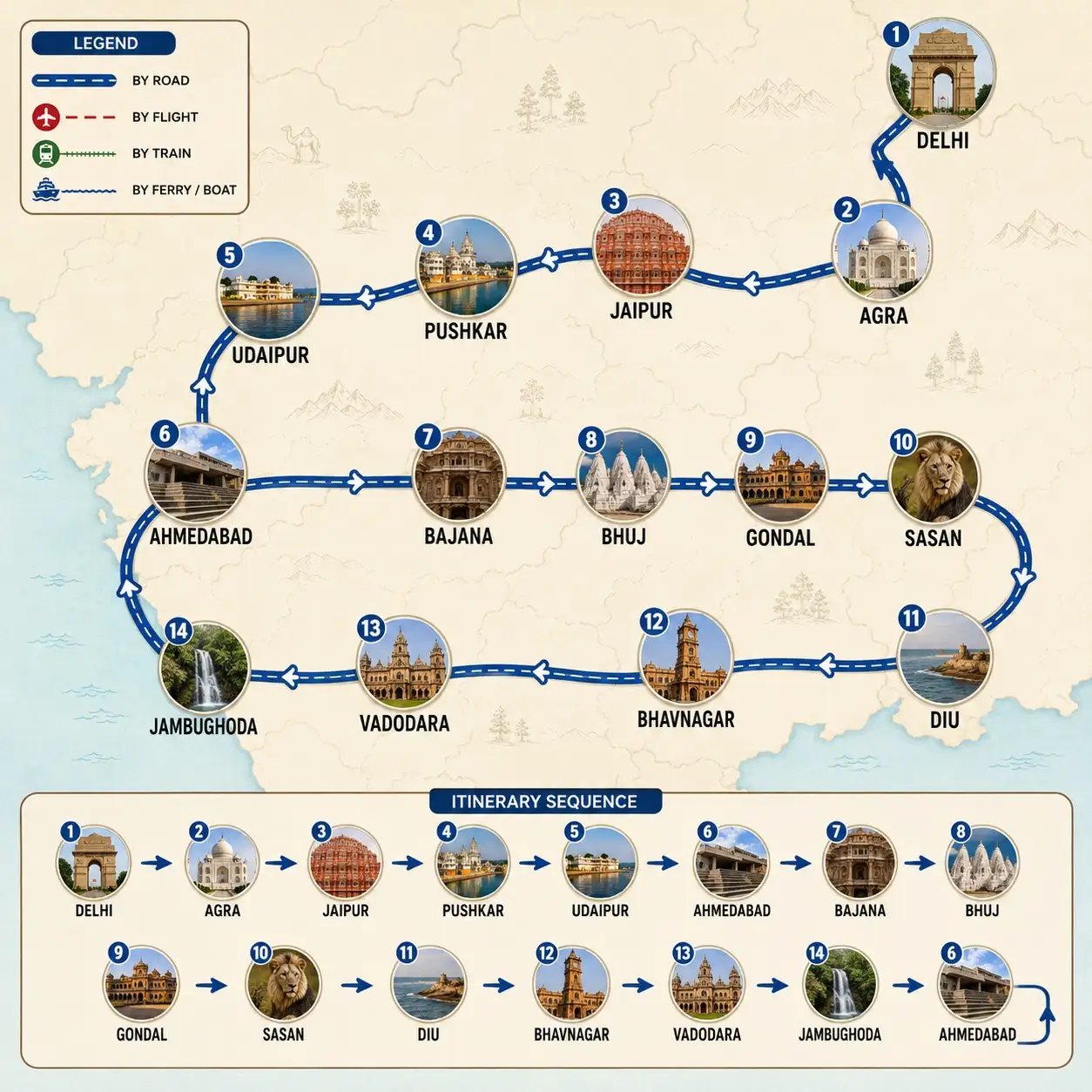
Delhi → Agra → Jaipur → Pushkar → Udaipur → Ahmedabad → Bajana → Bhuj → Gondal → Sasan → Diu → Bhavnagar → Vadodara → Jambughoda → Ahmedabad

gujrat withrajsthan

Day 1

Arrival in Delhi

Arrival at New Delhi International Airport.

Once the immigration procedures have been completed and your luggage has been collected, our operator will wait for you outside the terminal for transfer to the hotel.

Arrival at the hotel and check-in. Standard check-in at 2:00 p.m. / Check-out at 12:00 p.m.

Jama Masjid: – The largest and best-known mosque in India stands not far from the Red Fort and Chandni Chowk, the oldest and busiest market in Old Delhi.

Old Delhi: – The characteristic atmosphere of Delhi’s markets can be best enjoyed in Chandni Chowk and generally in the narrow streets teeming with vendors and goods of all kinds at all hours.

Red Fort (Photo stop): – It is one of the works commissioned by the Mughal emperor Shah Jahan in the 17th century; its construction took approximately 9 years and cost 10 million rupees.

Raj Ghat: – Memorial marking the cremation site of Mahatma Gandhi, a man known as the Father of the Nation and a symbol of world pacifism.

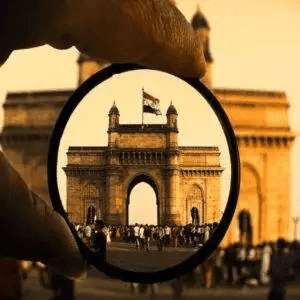
India Gate: – In the centre of New Delhi stands the 42 m high India Gate, an “Arch of Triumph”-like arch in the middle of a crossroads. Almost similar to its French counterpart, it commemorates the 70,000 Indian soldiers who lost their lives fighting for the British Army during the First World War.

Rashtrapati Bhavan and The Parliament Building (Photo stop): – Home to the president of the world’s largest democracy, you can also see the old and new Parliament House.

Laxmi Narayan Temple: – Lord Narayan is with his consort Goddess Laxmi (the goddess of prosperity), so the temple is called Laxminarayan Temple.

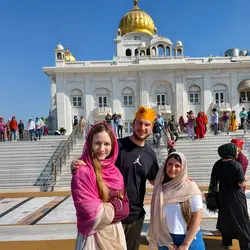
Gurudwara Bangla Sahib: – It is one of the most important Sikh gurdwaras, or houses of worship of the Sikhs, linked to the eighth Guru, Guru Har Krishan. It is also known for the swimming pool inside its complex, known by the name of “Sarovar”.

Overnight stay in Delhi.
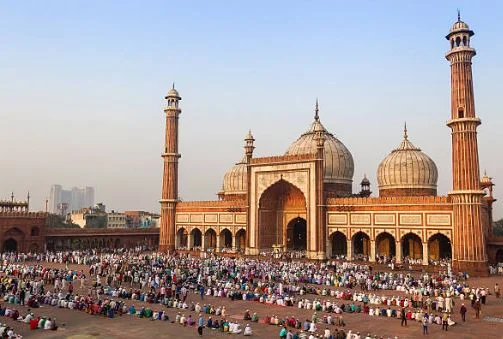
Arrival in Delhi

Day 2

Delhi-Agra (244 km, 4 hours and 15 minutes)

After breakfast, depart to Agra.

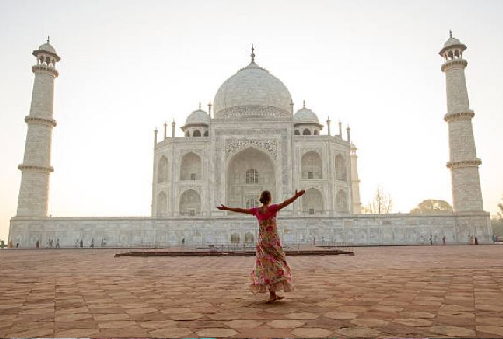
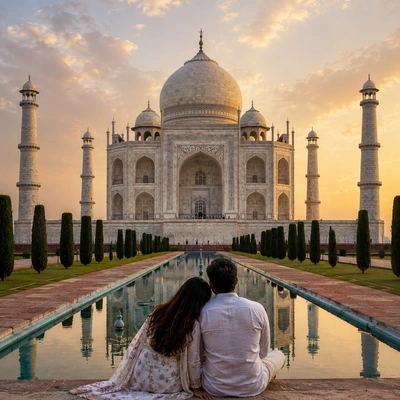
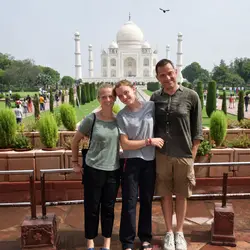
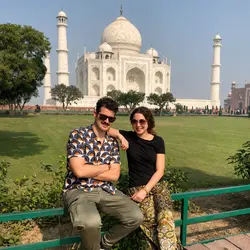
On arrival visit Taj Mahal (Close on Friday):- The construction of this jewelled palace, a symbol of Shah Jahan’s undying love for his beautiful wife Mumtaz Mahal, who died after giving birth to her fourteenth child, was completed in 1653 AD.

Agra Fort – The crescent-shaped Agra Fort lies along the banks of the Yamuna River and was commissioned in 1565 by Akbar, one of the greatest Mughal emperors.

Itimad ud Daula – Built by Nur Jahan in memory of her father Ghias-ud-Din Beg, who was given the title ‘Itimad-ud-Daulah’, meaning ‘Pillar of Government’.

Mehtab Bagh – This beautiful garden is located on the western bank of the Yamuna River and is in perfect alignment with the Taj Mahal gardens located on the other side of the river.

Overnight in Agra.

Delhi-Agra (244 km, 4 hours and 15 minutes)

Day 3

Agra-Fatehpur Sikri-Abhaneri-Jaipur (241 km, 4 hours 30 minutes)

After breakfast, drive to Jaipur.

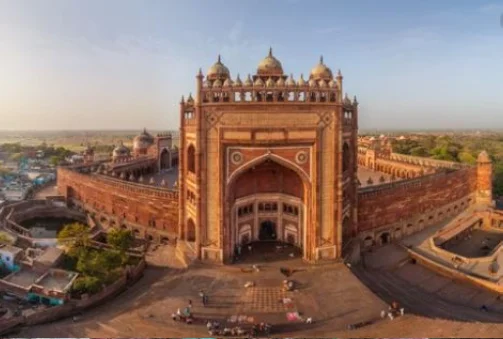
En route you visit Fatehpur Sikri:– Built by the Mughal emperor Akbar in the mid-16th century, Fatehpur Sikri (or City of Victory) was the capital of his empire for 15 years.

Abhaneri:- These structures, depending on the time of year, are used as places to cool off or as water tanks. Chand Baori is the most popular of the wells in the region and is one of the deepest and largest in India.

Overnight in Jaipur.

Agra-Fatehpur Sikri-Abhaneri-Jaipur (241 km, 4 hours 30 minutes)

Day 4

Jaipur

After breakfast

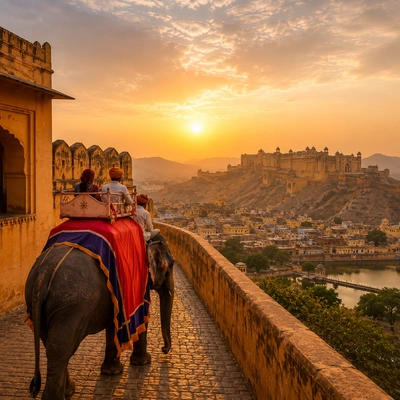
Visit Amer Fort:– Amer is a city with an area of 4 square kilometres (1.5 sq. mi), located 11 kilometers (6.8 mi) from Jaipur, the capital of Rajasthan. Located on top of a hill, it is the main tourist attraction in the Jaipur area.

Jal Mahal (Photo Stop): – Jal Mahal is a work of art located in the centre of Man Sagar Lake. The palace gives the illusion of almost floating on top of the lake, and that is the moment when this sight takes your breath away.

Jantar Mantar: – It is an equinoctial sundial, consisting of a gigantic triangular gnomon with the hypotenuse parallel to the axis of the earth.

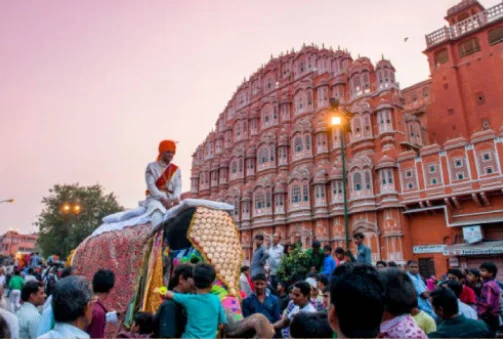
Hawa Mahal (Outdoor Photo Stop): – Hawa Mahal (English translation: “Palace of Winds” or “Palace of Breeze”) is a palace in Jaipur, India.

City Palace, Jaipur, comprising the Chandra Mahal and Mubarak Mahal palaces and other buildings, is a palace complex in Jaipur, the capital of the state of Rajasthan, India.

Local Market: – Jaipur, which is famous for jewellery and clothing, is most visited by people who love both. There are many famous markets in Jaipur selling precious stones, gems, semi-precious stones, and jewellery with limited warranty. Buy all this.

Overnight in Jaipur.

Jaipur

Day 5

Jaipur-Pushkar (148 km, 2 hours 57 minutes)

After breakfast

Visit Galtaji Temple: – The temple is also known as the Monkey Temple, as there are many monkeys in it. The temple is dedicated to the god Hanuman and was built in the 16th century by Diwan Rao Kriparam, who was an advisor to King Sawai Jai Singh II.

Depart to Pushkar.

The Brahma Temple: – The structure dates back to the 14th century. The temple is said to have been built by sage Vishwamitra after the yagna (ritual) of Brahma. It is also believed that Brahma himself chose the site for his temple.

Pushkar Lake: – It is a sacred lake for Hindus. Hindu scriptures describe it as ‘Tirtha-Guru’, the perceiver of pilgrimage sites linked to a body of water, and link it with the mythology of the creator god Brahma, whose most important temple is located in Pushkar.

Overnight in Pushkar.

Jaipur-Pushkar (148 km, 2 hours 57 minutes)

Day 6

Pushkar-Chittorgarh (212 km, 3 hours and 56 mins) Chittorgarh -Udaipur (111 km, 2 hours)

After breakfast, drive to Udaipur.

On the way visit the world-famous city of Chittorgarh.

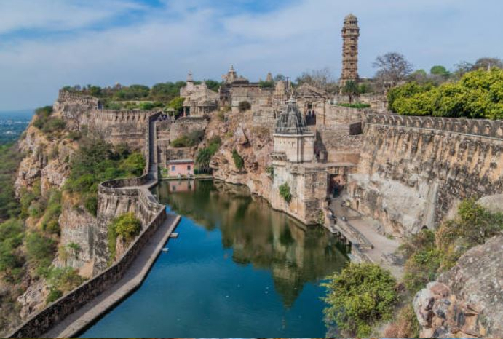
Visit Vijay Stambha: – The Jaya Stambha or Victory Tower, located in Chittorgarh Fort, was erected by Rana Kumbha (ruled 1433–1468) in 1448 to commemorate his victory over the Muslim ruler of Delhi.

Chittorgarh Fort: – The Vijaya Stambha (Victory Tower) or Jaya Stambha, called the symbol of Chittorgarh and a particularly bold expression of triumph, was erected by Rana Kumbha between 1458 and 1468 to commemorate his victory over Mahmud Shah Khalji, the Sultan of Malwa, in 1440 AD.

Rana Kumbha Palace: – It is one of the major attractions located inside Chittorgarh Fort near Vijaya Stambha. Originally, the palace was built by Bappa Rawal in 734 AD and later rebuilt by Maharana Kumbha.

Rana Ratan Singh Palace: – Ratan Singh Palace is attributed to Rana Ratan Singh II (1528–31 AD). It has a rectangular plan and is enclosed by a high wall.

Kirti Stambha: – The 22-meter (72 ft) tower was built by a Jain merchant, Jeeja Bhagerwala, during the reign of Rawal Kumar Singh in c. 1179–1191 AD.

Upon arrival in Udaipur, transfer to the hotel.

Overnight in Udaipur.

Pushkar-Chittorgarh (212 km, 3 hours and 56 mins) Chittorgarh -Udaipur (111 km, 2 hours)

Day 7

Udaipur

After breakfast visit Udaipur.

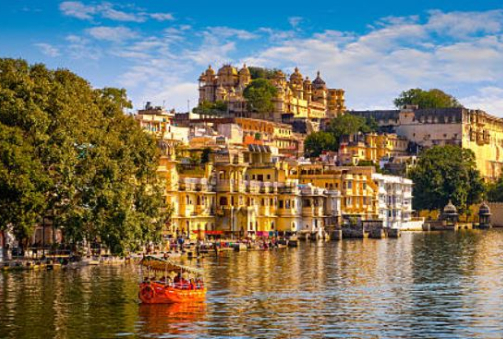
Visit City Palace – Built of marble and granite in 1725 by Maharana Udai Singh. A fine blend of medieval Indo-European architecture, you will be amazed by the small luxuries of its courtyards, stacked walls, terraces, walkways, and lush green gardens.

The Jagdish Temple – Next to the City Palace, it enshrines a black stone image of Lord Vishnu and his vehicle, a powerful bird called Garuda, in a bronze image.

Saheliyon-ki-Bari – It features expansive lawns, shady sidewalks, and impressive fountains. It is one of the best places in Udaipur to relax.

Lake Pichola – The beautiful expanse of water surrounding the two marvellous structures of Jag Niwas and Jag Mandir is the lifeline of the city of Udaipur.

Overnight in Udaipur.

Udaipur

Day 8

Udaipur-Ahmedabad (257 km, 5 hours)

After breakfast, departure to Ahmedabad.

Upon arrival visit Adalaj Stepwell: Situated in the quiet village of Adalaj, this has served as a resting place for many pilgrims and caravans along their trade routes for many years.

Jama Masjid (literally Friday Mosque), also known as Jumah Mosque, a mosque in Ahmedabad built in 1424 during the reign of Ahmed Shah I, situated in the old walled city.

Overnight stay in Ahmedabad.

Udaipur-Ahmedabad (257 km, 5 hours)

Day 9

Ahmedabad-Siddhapur-Patan-Modhera-Bajana (Little Rann of Kutch) (240 km, 5 hours)

After breakfast, the day begins.

Siddhapur: – Their old havelis and mansions, some over 100 years old, have a distinctly European feel, and a walk through the ‘Bohra Vad’ is like a walk through an old English town at dusk.

Patan, Rani ki Vav (stepwell):- It was built by Queen Udaymati, wife of Bhimdev, between the 11th and 12th centuries.

Patan Patola: – Patan is famous for Patola weaving. The Salvi family is one of those who have continued this traditional art and preserved it even today.

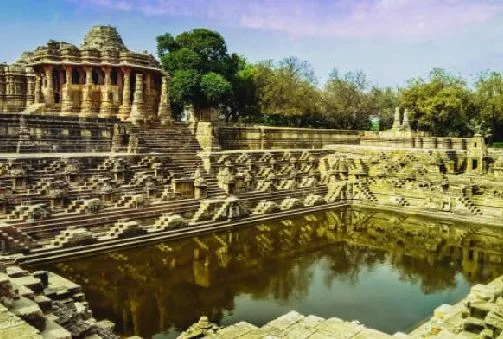
Modhera Sun Temple: – The Modhera Sun Temple dates back to the early 11th century AD and was built by King Bhimdev I in 1026 AD.

Overnight in Bajana.

Ahmedabad-Siddhapur-Patan-Modhera-Bajana (Little Rann of Kutch) (240 km, 5 hours)

Day 10

Bajana (Little Rann of Kutch)-Ajrakhpur-Bhujodi-Bhuj (275 km, 5 hours)

After breakfast, drive to Bhuj.

Ajrakhpur: – Here the artisans practice the “resist technique” on cotton/silk fabrics using ancient Ajrakh prints and new design motifs.

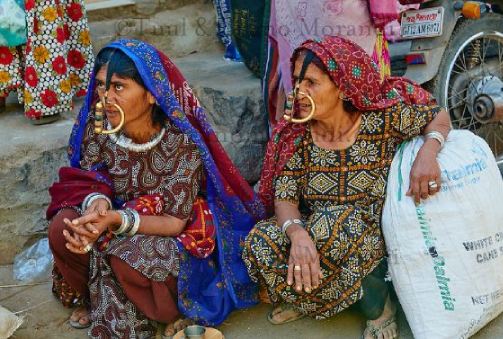
Dhaneti: – Visit to see the elaborate embroidery work of the Ahir tribe. Dhaneti is a complete Ahir community village, and the Ahir women are engaged in this embroidery.

Bhujodi: – A community of master craftsmen – Vankar weavers – skilled in traditional handloom weaving including cotton and wool weaving, which you can see as you walk around the village and explore each house.

Upon arrival, transfer to the hotel.

Overnight stay in Bhuj.

Bajana (Little Rann of Kutch)-Ajrakhpur-Bhujodi-Bhuj (275 km, 5 hours)

Day 11

Bhuj-Banni Villages-Greater Rann of Kutch Festival-Dhordo-Bhuj

After breakfast.

Visit Banni Villages and the Greater Rann of Kutch.

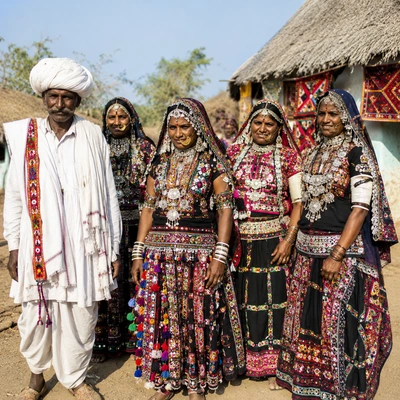
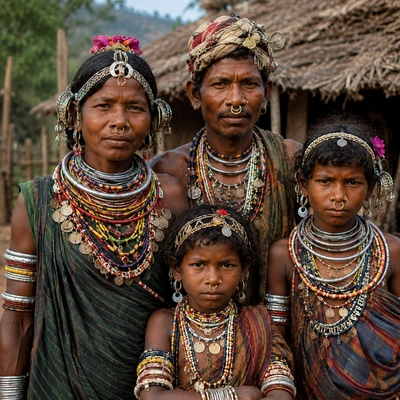
Proceed to visit Banni villages:- See various communities like Jat, Harijan, Meghwal, and Mutwa in villages such as Hodka, Ludiya, and Dhordo. Banni means “a cluster of villages”.

Hodka: – Hodka is derived from the Gujarati word “Hodi,” which means “boat.” Since the villages here are called jheels, drinking water is available.

Ludiya: – main occupations are monsoon agriculture, cattle breeding, intricate wood carving, embroidery, mud work, and wall painting for decorating houses.

Dhordo: – Visit Dhordo to see the beautiful traditional mud houses (Bhungas) with mirror work and fine Mutwa embroidery with tiny mirrors.

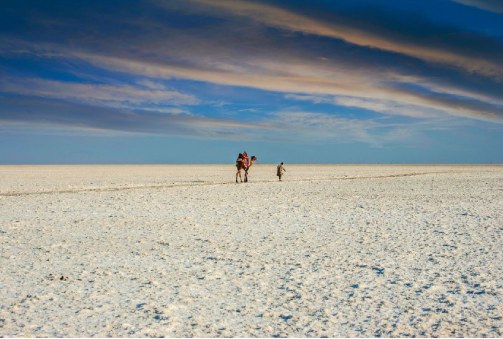
Rann of Kutch Festival: – It is a carnival of music, dance, and the beauty of nature of the White Rann, where you can experience luxury tent cities and much more.

Overnight stay in Bhuj.

Bhuj-Banni Villages-Greater Rann of Kutch Festival-Dhordo-Bhuj

Day 12

Bhuj-Anjar Market-Gondal (281 km, 5 hours and 50 minutes)

After breakfast, departure for Gondal.

En route visit Anjar Market: – It is impossible to come to Anjar and go back home empty-handed, as the markets of the town offer an exciting array of metal handicrafts

Royal Garages: – Royal Garages have a large collection of vintage and classic cars from 1910 to 1955, limousines and sports cars from the 1950s and 1960s, American cars from the 1940s and 1950s, and a fleet of four-wheel-drive vehicles from the Second World War and post-war period.

Naulakha Darbargadh Palace: – Built in the 17th century, this palace is one of the oldest and most beautiful palaces in Gondal.

Bhuvaneswari Ayurvedics: – Bhuvaneswari Ayurvedics belongs to a family of Ayurvedic doctors with a traditional history of more than 250 years.

Overnight stay in Gondal.

Bhuj-Anjar Market-Gondal (281 km, 5 hours and 50 minutes)

Day 13

Gondal-Junagadh-Sasan (140 km, 3 hours and 40 minutes)

After breakfast, departure for Sasan.

En route visit Junagadh.

Uparkot Fort: – Said to have been built in 319 BC, the fort was the architectural work of Chandragupta. The fort has changed hands many times, and remains of different rulers can be seen in parts of the structure.

Uparkot Caves: – Ancient artificial caves that are part of the Junagadh Buddhist Cave Group located in the eastern part of Junagadh in Gujarat.

Khapra Kodiya Caves: – Part of the Buddhist cave group of Junagadh, based on inscriptions, they date back to the 3rd–4th century BC during the rule of Emperor Ashoka.

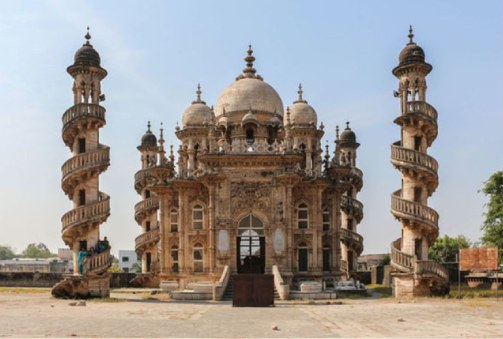
Mahabat Maqbara: – Mahabat Maqbara and Bahauddin Maqbara are mausoleums in Junagadh, completed in 1892 and 1896 respectively, dedicated to Mahabat Khan II and his minister Bahauddin Hussain Bhar.

Adi Kadi Vav: – Built in the 15th century, this stepwell is entirely carved out of hard rock. A narrow flight of 120 steps leads down to the well shaft.

Overnight in Sasan.

Gondal-Junagadh-Sasan (140 km, 3 hours and 40 minutes)

Day 14

Sasan-Gir-Sasan

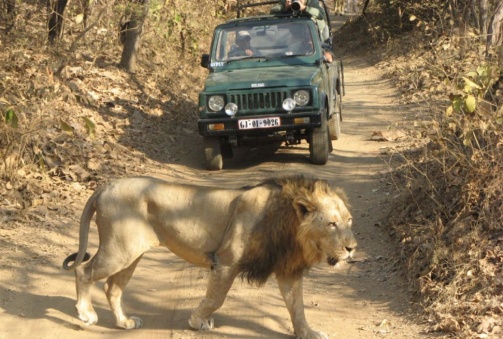
After breakfast, proceed for the lion safari.

Gir National Park has been synonymous with the majestic Asiatic lions since time immemorial. A diverse range of over 600 species of wildlife, including 41 species of mammals, 47 species of reptiles, and over 300 species of birds, offers visitors a mesmerizing experience.

Overnight in Sasan.

Sasan-Gir-Sasan

Day 15

Sasan-Somnath-Diu (138 km, 4 hours)

After breakfast, the day begins.

On the way, visit the town of Somnath.

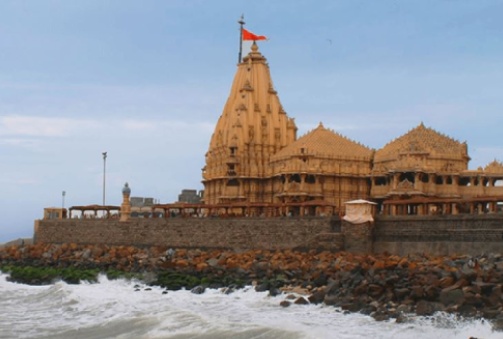
Somnath Temple: – Also called Somanatha Temple or Deo Patan Temple, it is a Hindu temple located in Prabhas Patan, Veraval, Gujarat.

Departure for Diu.

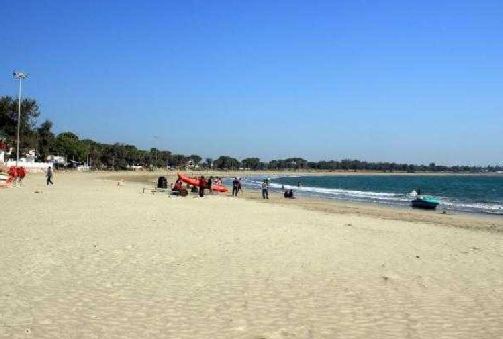
Naida Caves: – These caves feature a large network of square-step tunnels built by the Portuguese and are yet to be fully explored.

Diu Fort: – A Portuguese-built fortification located on the western coast of India at Diu, constructed in the 16th century as part of the defensive fortifications of Portuguese India.

Overnight stay in Diu.

Sasan-Somnath-Diu (138 km, 4 hours)

Day 16

Diu – Palitana – Bhavnagar (200 km, 4 hours) (Half board with buffet dinner)

After breakfast, depart for Bhavnagar.

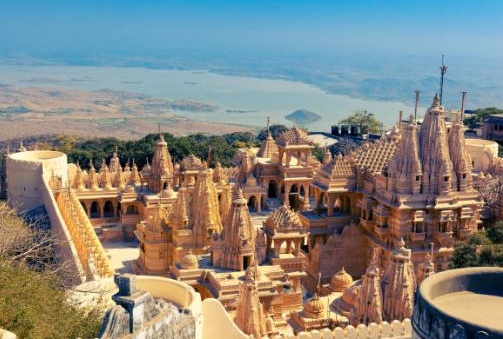
En route visit Palitana town: – It is one of the holiest pilgrimage sites in Jainism and is renowned for its magnificent complex of more than 800 intricately carved Jain temples. The climb to the summit involves ascending approximately 3,500 to 3,900 stone steps over a distance of about 3.5 kilometers. Depending on fitness levels, the ascent usually takes between 1.5 and 3 hours.

On arrival in Bhavnagar, transfer to the hotel.

Overnight stay in Bhavnagar.

Diu – Palitana – Bhavnagar (200 km, 4 hours) (Half board with buffet dinner)

Day 17

Bhavnagar (Half board with buffet dinner)

After breakfast, the day begins.

Takhteshwar Mahadev Temple: – Brief history: The temple is believed to have been commissioned by Maharaja Takhtsinhji in 1893 A.D.

Barton Museum: – Barton Museum is located on the ground floor of Gandhi Smriti, where you can find a wide range of artefacts such as religious sculptures and nutcrackers representing the culture of Saurashtra.

The Market: – This city of Gujarat offers a variety of souvenirs such as embroidered clothes, jewellery, intricate woodwork, and handicrafts.

Overnight stay in Bhavnagar.

Bhavnagar (Half board with buffet dinner)

Day 18

Bhavnagar-Lothal-Vadodara (225 km, 4 hours and 35 minutes)

After breakfast, drive to Vadodara.

Along the way, you will visit the archaeological site of Lothal (closed on Fridays and public holidays):- One of the most important cities of the ancient Indus Valley Civilization, located in the Bhal region of the modern state of Gujarat and dating back to 3700 BC. Discovered in 1954.

On arrival in Vadodara visit Aurobindo Ashram: – Built in 1896, Aurobindo Ashram (also known as Aurobindo Nivas) in Dandia Bazaar is the only national memorial in Vadodara.

Khanderao Market: – Khanderao Market is a famous and palatial building located in the city of Vadodara in Gujarat, western India.

Overnight stay in Vadodara.

Bhavnagar-Lothal-Vadodara (225 km, 4 hours and 35 minutes)

Day 19

Vadodara-Jambughoda (100 km, 2 hours)

After breakfast, drive to Jambughoda.

Subsequently, visit Bhasha Research and Publication Centre (closed on Sundays and holidays). The Adivasi Academy was established by Bhasha at Tejgadh in Chhota Udepur district of Gujarat.

Overnight stay in Jambughoda.

Vadodara-Jambughoda (100 km, 2 hours)

Day 20

Jambughoda – Champaner – Ahmedabad (205 km, 4 hours)

After breakfast, drive to Ahmedabad.

Along the way, you will visit Champaner-Pavagadh Archaeological Park.

Champaner is an ancient fortified city. There are two stories about the origin of the name of this city. Some believe that it was named after Champaraj, who was the founder of the city.

Nagina Masjid (meaning “jewel mosque”):- It has minarets, globe-shaped domes, and narrow staircases. It is part of the Champaner-Pavagadh Archaeological Park, a UNESCO World Heritage Site.

Overnight stay in Ahmedabad.

Jambughoda – Champaner – Ahmedabad (205 km, 4 hours)

Day 21

Ahmedabad-Next Destination

Transfer to the international airport as per the flight schedule.

Ciao India Tours wishes you a pleasant journey.

Inclusions:

✔ 20 nights’ accommodation in 3-star/Heritage hotels with breakfast, including all existing taxes.
✔ All transfers from the airport to the hotel and vice versa.
✔ Meet and assist upon arrival/departure by our representative at the airport.
✔ Transfers, sightseeing, and excursions as per the program with an air-conditioned Innova Crysta car or similar.
✔ Lion safari in Gir.
✔ One bottle of water per person per day.
✔ All taxes included.
✔ Toll, parking, fuel, and driver’s accommodation.

Exclusions:

✘ Visa, international flight

✘ Health insurance

✘ Cancellation of flights/trains

✘ Tips, tour guide

✘ Monument tickets, activities, personal expenses, camera, etc.

✘ Everything that is not included in the inclusions.

To book this tour, please contact us via WhatsApp, inquiry form, chat, or email.

📱 WhatsApp: +91 99719 81381
📧 Email: info@ciaoindiatours.com

We remain at your complete disposal for any further information.

Receive free quote