Minimum 4 people
Double Room – 1500 EUR/Person
Single Room – 2145 EUR/Person
Itinerary: Delhi-Mandawa–Bikaner-Jaisalmer-Jodhpur-Udaipur–Pushkar-Jaipur–Agra-Varanasi-Delhi
Minimum 4 people
Double Room – 1500 EUR/Person
Single Room – 2145 EUR/Person
Itinerary: Delhi-Mandawa–Bikaner-Jaisalmer-Jodhpur-Udaipur–Pushkar-Jaipur–Agra-Varanasi-Delhi
Day 1: Friday, July 31, 2026 - Arrival in Delhi
Arrival at New Delhi International Airport. After completing immigration procedures and collecting your luggage, our representative will welcome you outside the terminal and assist with the transfer to your hotel. Check-in is at 2:00 PM / Check-out is at 12:00 PM.
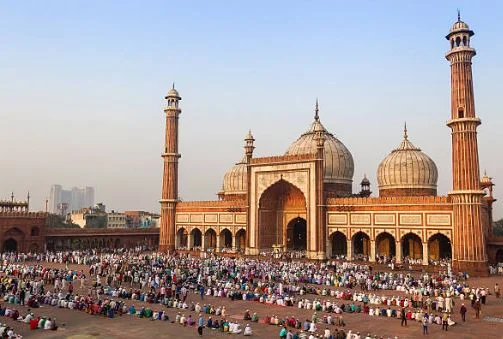
Delhi’s Jama Masjid is one of the largest mosques in India, built in the 17th century by Emperor Shah Jahan. With its magnificent domes and vast courtyard, it offers impressive views over Old Delhi.
Pedal Rickshaw Ride in Old Delhi: The vibrant atmosphere of Delhi’s traditional markets can best be experienced in Chandni Chowk, where narrow lanes are filled with colorful shops, street vendors, and local life throughout the day.
Red Fort (Photo Stop): The Red Fort is one of the grand architectural masterpieces commissioned by Mughal Emperor Shah Jahan in the 17th century. Its construction took about 9 years and required an investment of 10 million rupees.
Raj Ghat: The Raj Ghat Memorial marks the cremation site of Mahatma Gandhi, known as the Father of the Nation and a global symbol of peace.
India Gate: In the center of New Delhi stands the 42-meter-high India Gate, a triumphal arch resembling the Arc de Triomphe. It commemorates the 70,000 Indian soldiers who died fighting for the British Army during World War I.
President’s House and old and new Parliament Palace (Photo Stop) – Home to the president of the world’s largest democracy, you can also see the old and new parliament house.
Laxmi Narayan Temple: Dedicated to Lord Narayan and his consort Goddess Laxmi, the temple symbolizes prosperity and devotion.
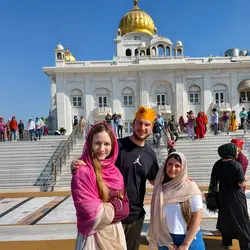
Gurudwara Bangla Sahib: One of the most important Sikh temples, associated with Guru HarKrishan, the eighth Sikh Guru. The complex is famous for its sacred pool known as the Sarovar.
Overnight in Delhi.
Day 2: Saturday, August 1, 2026 - Delhi-Mandawa (243 km, 6 hours)
After breakfast,
Depart for Mandawa.
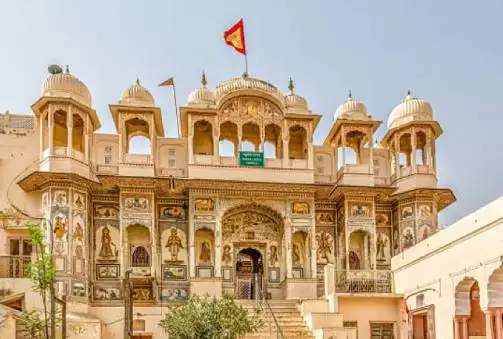
Upon arrival visit the charming town of Mandawa, located in the Shekhawati region of Rajasthan, famous for its beautifully painted havelis. Often referred to as the “Open-Air Art Gallery of Rajasthan,” the town preserves the grandeur and artistic heritage of the 19th-century Marwari merchants. Here you can visit the famous Havelis of Mandawa.
Overnight in Mandawa.
Day 3: Sunday, August 2, 2026 - Mandawa-Deshnok-Bikaner (192 km, 3:30 hours)
After breakfast.
Depart for Bikaner. En route, visit the Rat Temple (Karni Mata Temple)
Karni Mata Temple – Those who wish may choose not to enter). The temple is famous for approximately 20,000 black rats that are worshipped here.
Arrival in Bikaner, followed by an afternoon visit to Junagarh Fort and a tuk tuk ride.
Junagarh Fort: Built under the supervision of Karan Chand, Prime Minister of Raja Rai Singh, the sixth ruler of Bikaner (1571–1611 AD). Construction of the fort walls and moat began in 1589 and was completed in 1594.
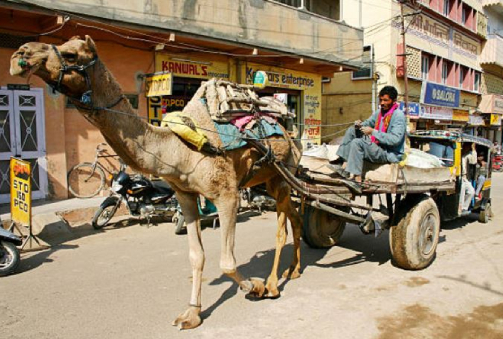
Tuk Tuk Tour: Explore Bikaner’s Old City with its traditional neighborhoods, narrow alleys, historic mansions, and colorful bazaars. Discover the vibrant street culture and historic havelis by autorickshaw and on foot.
Overnight stay in Bikaner.
Day 4: Monday, August 3, 2026 - Bikaner-Ramdevra-Jaisalmer (250 KM, 5 hours)
After breakfast.
Depart for Jaisalmer with visits along the way.
Ramdevra Temple: A revered pilgrimage site dedicated to Baba Ramdevji, a 14th-century saint believed by many Hindus to be an incarnation of Lord Krishna.
Bhaderiya Temple and Library: One of the largest libraries in Asia, with a collection of approximately 900,000 books and seating capacity for 4,000 people. The structure is located about 16 feet underground.
Arrival in Jaisalmer.
Visit Bada Bagh, This garden complex houses royal cenotaphs (chhatris) of the maharajas of Jaisalmer, including that of Jai Singh II, and offers spectacular sunset views.
Overnight in Jaisalmer.
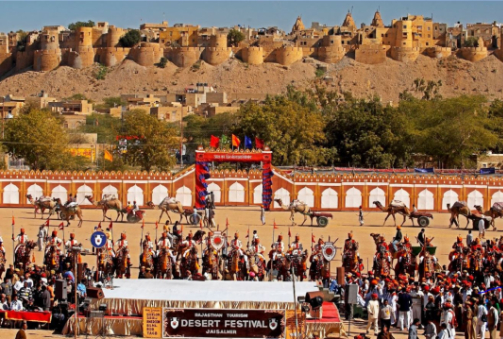
Day 5: Tuesday, August 4, 2026 - Jaisalmer
After breakfast.
Gadisar Lake, built by Maharawal Gadsi in the 14th century as the main water source for the city.
Sónar Fort: Known as the Golden Fort, its honey-colored sandstone walls rise dramatically from the desert landscape. Inside, admire beautifully carved havelis with intricate balconies and windows.
Historical Walk: Walk through the old houses and local markets to experience the culture of the city, followed by a visit to Patwon Ki Haveli, one of the most important architectural landmarks of Jaisalmer.
Return to the hotel to rest before departing for the Thar Desert.
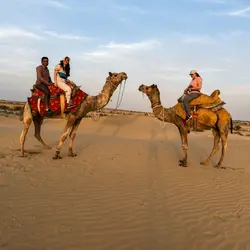
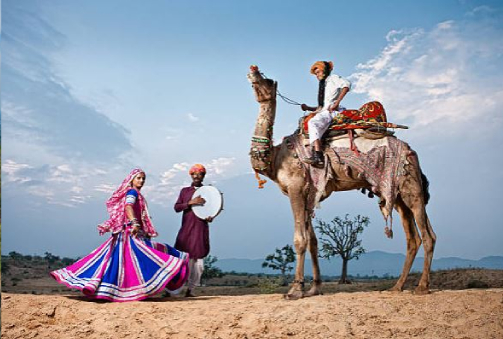
Camel/Jeep Ride: Enjoy an unforgettable experience in the Thar Desert, exploring sand dunes on camel or jeep while witnessing traditional desert life and scenery.
Overnight in Jaisalmer.
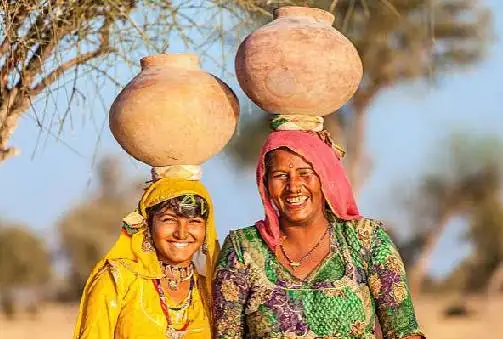
Day 6: Wednesday, August 5, 2026 - Jaisalmer-Jodhpur (286 KM, 5 hours and 30 minutes)
After breakfast.
Depart for Jodhpur. Upon Arrival visit
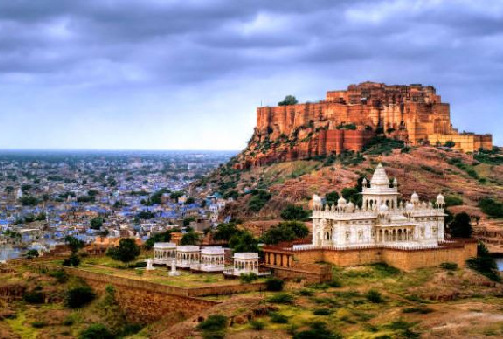
Mehrangarh Fort, one of the most impressive forts in Rajasthan and a symbol of the region’s rich cultural heritage.
Jaswant Thada: A stunning marble monument often referred to as the “Taj Mahal of Marwar,” built in memory of Maharaja Jaswant Singh II.
Old City of Jodhpur and Market: Founded by Rao Jodha in 1459 AD, the old city is surrounded by a 10-kilometer wall with eight gates. The market near the clock tower is famous for spices, handicrafts, perfumes, footwear, and traditional clothing.
Overnight in Jodhpur.
Day 7: Thursday, August 6, 2026 - Jodhpur-Ranakpur-Udaipur (259 km, 5 hours)
After breakfast.
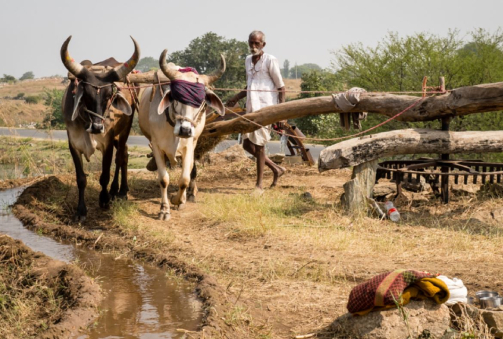
Enjoy a safari in the Bishnoi Village. The Bishnoi region is known for its scenic landscapes, Khejri trees, wildlife such as deer and local life.
The Bishnois and Opium: Although now regulated, the Bishnoi community historically used opium for religious purposes and has received special permission from the Indian government for ritual use.
Continue towards Udaipur on the way visit Ranakpur Jain Temple
Ranakpur Jain Temple, renowned worldwide for its exceptional marble architecture and detailed carvings. It is one of the five major Jain pilgrimage sites.
Arrival and transfer to the hotel.
Overnight in Udaipur.
Day 8: Friday, August 7, 2026 - Udaipur
After breakfast.
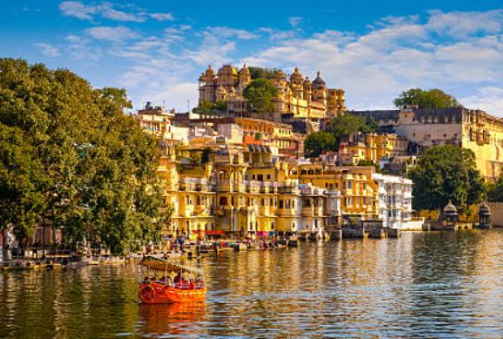
Explore Udaipur, the most romantic city in Rajasthan, located on the shores of Lake Pichola and surrounded by picturesque lakes.
City Palace, the largest palace complex in Rajasthan, built in 1725 by Maharana Udai Singh. The palace combines medieval, European, and Chinese architectural influences.
Jagadish Temple: Located next to the City Palace, this temple houses a black stone statue of Lord Vishnu and is an excellent example of Indo-Aryan architecture.
Saheliyon-ki-Bari: A beautiful garden on the banks of Lake Fateh Sagar, featuring lush lawns, fountains, and shaded walkways.
Boat ride on Lake Pichola (depending on water level), offering views of Jag Niwas and Jag Mandir.
Overnight in Udaipur.
Day 9: Saturday, August 8, 2026 - Udaipur-Chittorgarh-Pushkar (324 Km, 6 hours)
After breakfast,
Depart for Pushkar with a visit to the historic city of Chittorgarh.
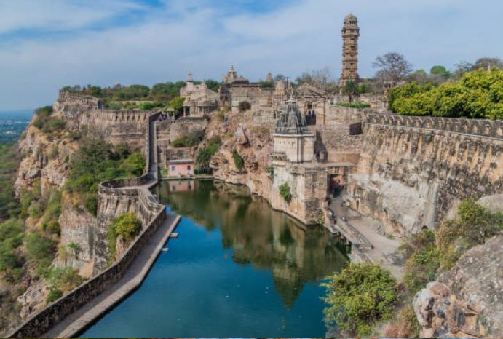
Vijay Stambha: Also known as the Tower of Victory, built by Rana Kumbha in 1448 to commemorate victory over the Sultan of Malwa.
Chittorgarh Fort: One of the largest forts in India, symbolizing Rajput valor and sacrifice.
Rana Kumbha’s Palace: Originally built by Bappa Rawal in 734 AD and later reconstructed by Maharana Kumbha.
Rana Ratan Singh’s Palace: Located near Ratneshwar Talab, this palace is associated with Rana Ratan Singh II.
Kirti Stambha: A 22-meter-high tower built by a Jain merchant between 1179 and 1191 AD.
Arrival in Pushkar and transfer to the hotel.
Overnight in Pushkar.
Day 10: Sunday, August 9, 2026 - Pushkar-Jaipur (148 KM, 2 hours and 57 minutes)
After breakfast, visit Pushkar.
The Brahma Temple: Dating back to the 14th century, dedicated to Lord Brahma, one of the few temples in the world devoted to this deity.
Pushkar Lake: A sacred lake considered highly important in Hindu pilgrimage traditions.
Departure for Jaipur.
Experience gem-cutting – Observe artisans shaping and polishing precious stones such as emeralds, rubies, sapphires, and diamonds using traditional techniques.
The Ancient Art of Hand Printing: Jaipur is famous for block printing, a traditional textile art using hand-carved wooden blocks to create intricate designs on fabrics.
Birla Mandir: Located at the foot of Moti Dungri Fort, this temple is particularly beautiful when illuminated in the evening.
Overnight in Jaipur.
Day 11: Monday, August 10, 2026 - Jaipur
After breakfast begin the city tour.
Amer Fort: Located 11 km from Jaipur, this hilltop fort is one of Rajasthan’s most famous landmarks.
Jal Mahal (Photo Stop): A stunning palace located in the middle of Man Sagar Lake, appearing to float on the water.
City Palace: A historic royal residence including Chandra Mahal and Mubarak Mahal, now partly converted into a museum.
Jantar Mantar: A remarkable astronomical observatory featuring giant instruments used for measuring time and celestial movements.
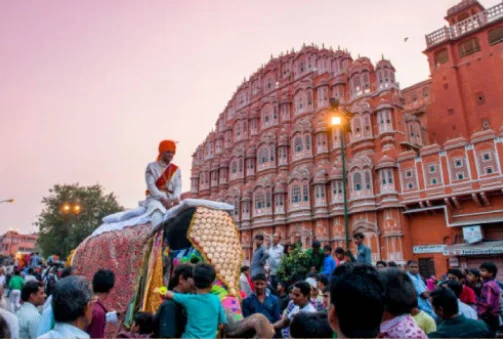
Hawa Mahal (Photo Stop): Known as the “Palace of Winds,” built so royal women could observe street life without being seen.
Galtaji Temple: Also known as the Monkey Temple, dedicated to Lord Hanuman and famous for its natural water tanks and monkeys.
Overnight in Jaipur.
Day 12: Tuesday, August 11, 2026 - Jaipur-Abhaneri-Fatehpur Sikri-Agra (241 km 4 hours 30 minutes)
After breakfast, depart for Agra.
On the way visit Chand Baori in Abhaneri and Fatehpur Sikri
Chand Baori: One of the deepest and largest step wells in India, known for its geometric design.
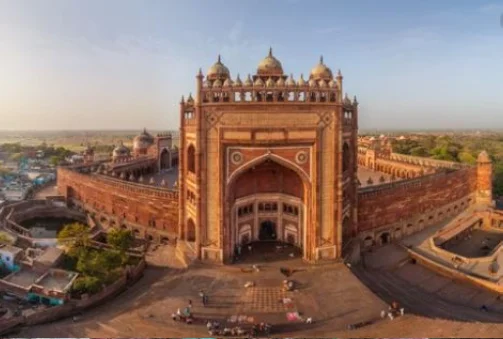
Fatehpur Sikri: Built by Emperor Akbar in the 16th century, this red sandstone city served as the Mughal capital for 15 years and showcases impressive Indo-Islamic architecture.
Overnight in Agra.
Day 13: Wednesday, August 12, 2026 - Agra
After breakfast, visit the main monuments of Agra.
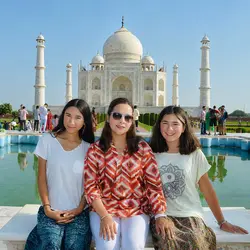
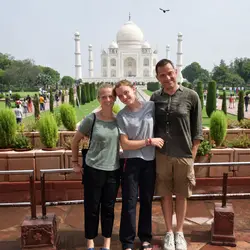
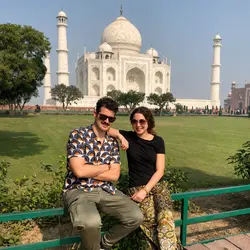
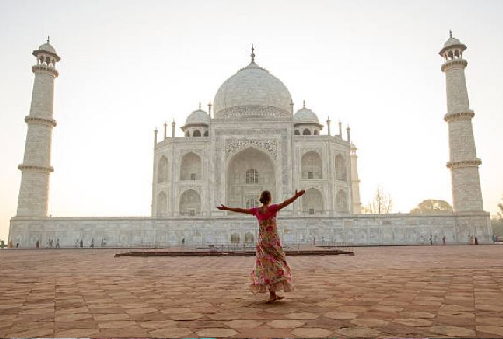
Taj Mahal (Closed on Fridays) – One of the Seven Wonders of the World, built by Shah Jahan in memory of his wife Mumtaz Mahal. The white marble monument is a symbol of eternal love.
Agra Fort – A UNESCO World Heritage Site built by Emperor Akbar in 1565. The fort includes palaces, audience halls and beautiful gardens.
Mehtab Bagh – Garden located on the opposite bank of the Yamuna River offering a beautiful panoramic view of the Taj Mahal.
Itimad-ud-Daula: Known as the “Baby Taj,” this elegant white marble mausoleum was built in the 17th century by Empress Nur Jahan in memory of her father.
Overnight stay in Agra.
Day 14: Thursday, August 13, 2026 - Agra – Varanasi (By train – approx. 7 hours)
Departure for Varanasi. Transfer to Agra railway station according to the train schedule for Varanasi.
Breakfast in Train.
Arrival in Varanasi and transfer to the hotel.
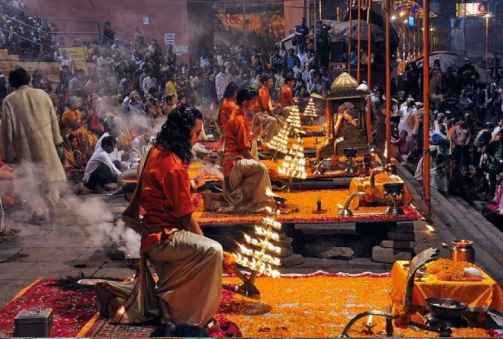
Attend the evening ceremony Ganga Aarti – A spiritual ritual performed on the banks of the River Ganges. The ceremony begins with priests lighting multi-tiered brass lamps, accompanied by the rhythmic chanting of sacred mantras. The sound of conch shells and the fragrance of incense create a deeply spiritual atmosphere while prayers are offered to Mother Ganga.
Overnight in Varanasi.
Day 15: Friday, August 14, 2026 - Varanasi
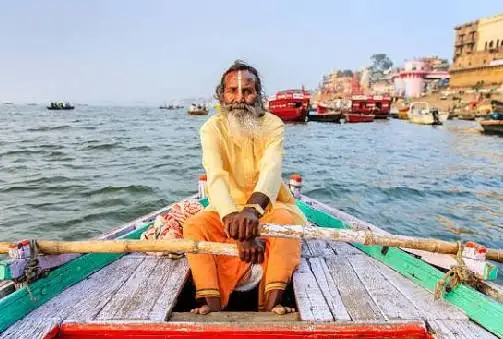
Boat ride – Early morning at 5:00 AM, enjoy a boat ride on the River Ganges. One of the most memorable experiences in Varanasi is witnessing daily life along the ghats at sunrise. The Ganges flows through the city and numerous ghats connect the river to the mainland. For many locals, the day begins with a sacred bath in the holy river.
Get off the boat and visit the following
Manikarnika Ghat – One of the oldest and most sacred ghats in Varanasi, known as the main cremation ghat and considered one of the most auspicious places for Hindu cremation rituals.
Kashi Vishwanath Temple – One of the most famous temples in India, also known as the Golden Temple, dedicated to Lord Shiva and one of the most important pilgrimage sites for Hindus.
Walking tour around the Vishwanath Temple area – The area surrounding the Golden Temple is one of the most important cultural and commercial centres of Varanasi, offering a unique atmosphere filled with traditional shops, temples, and local life.
Return to the hotel for breakfast and time to relax. Later, departure for Sarnath.
Archaeological Park of Sarnath – The impressive ruins are located near the Dhamek Stupa. The archaeological site includes monasteries, stupas, temples, inscriptions, sculptures, and important historical remains dating from the 3rd century BC to the 12th century AD.
Wat Thai Sarnath Temple – Built by Thai dignitaries, this temple is surrounded by beautifully maintained gardens and represents traditional Thai architectural style.
Silk weaving in Varanasi – Varanasi is world-famous for its traditional Banarasi silk saris. This ancient craft has been passed down through generations, using fine silk threads often combined with gold or silver designs, symbolizing elegance and Indian heritage.
Evening Meditation and Yoga session – Experience a peaceful session designed to relax the mind and body in the spiritual atmosphere of Varanasi.
Overnight in Varanasi.
Day 16: Saturday, August 15, 2026 - Varanasi – Delhi (By flight)
After breakfast, transfer to Varanasi airport according to the flight schedule to Delhi.
Akshardham Temple (Closed on Mondays) in Delhi, an impressive cultural and spiritual complex representing devotion, harmony, traditional architecture, and Indian heritage.
Note: Sleeveless dresses and shorts are not permitted. Electronic items are not allowed inside the temple complex.
Overnight in Delhi.
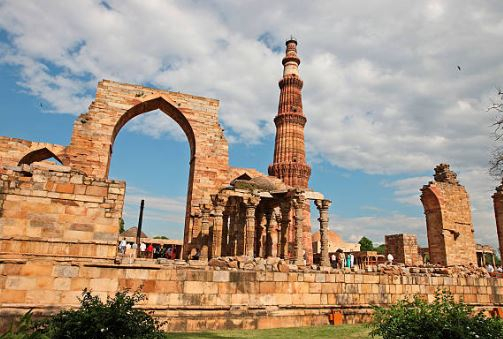
Day 17: Sunday, August 16, 2026 - Delhi – Next destination
After breakfast, transfer to Delhi airport according to your flight schedule.
Ciao India Tours wishes you a pleasant journey.
Inclusions
✔ 16 nights in 4-star and Heritage hotels with half board (Breakfast and Dinner), all taxes included.
✔ All transfers from the airport/station to the hotel and vice versa as per the program.
✔ All transfers by air-conditioned vehicle as per itinerary.
✔ Dinners in hotels
✔ Tickets for monuments as per program
✔ All activities as per the program
✔ Professional English-speaking tour guide throughout the tour.
✔ Rickshaw ride in Old Delhi
✔ Tour in a tuk tuk in Bikaner
✔ Camel or Jeep ride in Jaisalmer
✔ Safari to the Bishnoi village
✔ Boat tour in Udaipur
✔ Boat ride in Varanasi.
✔ Meditation and yoga session in Varanasi.
✔ Train ticket from Agra to Varanasi.
✔ Flight ticket from Varanasi to Delhi.
✔ Wi-Fi in the car
✔ One bottle of water per person per day
✔ All taxes
✔ Tolls, parking, fuel, driver accommodation
Exclusions
✘ Visa (25 USD)
✘ International flight
✘ Health insurance
✘ Cancellation/modification of flights, trains.
✘ All lunches
✘ Alcoholic beverages
✘ Personal expenses
✘ Camera fees etc.
✘ Tips for drivers, tour guides, waiters, etc.
✘ Anything not included in the inclusions
Minimum 4 people
Double Room – 1500 EUR/Person
Single Room – 2145 EUR/Person
Itinerary: Delhi-Mandawa–Bikaner-Jaisalmer-Jodhpur-Udaipur–Pushkar-Jaipur–Agra-Varanasi-Delhi
Day 1: Friday, August 14, 2026 - Arrival in Delhi
Arrival at New Delhi International Airport. After completing immigration procedures and collecting your luggage, our representative will welcome you outside the terminal and assist with the transfer to your hotel. Check-in is at 2:00 PM / Check-out is at 12:00 PM.
Delhi’s Jama Masjid is one of the largest mosques in India, built in the 17th century by Emperor Shah Jahan. With its magnificent domes and vast courtyard, it offers impressive views over Old Delhi.
Pedal Rickshaw Ride in Old Delhi: The vibrant atmosphere of Delhi’s traditional markets can best be experienced in Chandni Chowk, where narrow lanes are filled with colorful shops, street vendors, and local life throughout the day.
Red Fort (Photo Stop): The Red Fort is one of the grand architectural masterpieces commissioned by Mughal Emperor Shah Jahan in the 17th century. Its construction took about 9 years and required an investment of 10 million rupees.
Raj Ghat: The Raj Ghat Memorial marks the cremation site of Mahatma Gandhi, known as the Father of the Nation and a global symbol of peace.
India Gate: In the center of New Delhi stands the 42-meter-high India Gate, a triumphal arch resembling the Arc de Triomphe. It commemorates the 70,000 Indian soldiers who died fighting for the British Army during World War I.
President’s House and old and new Parliament Palace (Photo Stop) – Home to the president of the world’s largest democracy, you can also see the old and new parliament house.
Laxmi Narayan Temple: Dedicated to Lord Narayan and his consort Goddess Laxmi, the temple symbolizes prosperity and devotion.
Gurudwara Bangla Sahib: One of the most important Sikh temples, associated with Guru HarKrishan, the eighth Sikh Guru. The complex is famous for its sacred pool known as the Sarovar.
Overnight in Delhi.
Day 2: Saturday, August 15, 2026 - Delhi-Mandawa (243 km, 6 hours)
After breakfast,
Depart for Mandawa.
Upon arrival visit the charming town of Mandawa, located in the Shekhawati region of Rajasthan, famous for its beautifully painted havelis. Often referred to as the “Open-Air Art Gallery of Rajasthan,” the town preserves the grandeur and artistic heritage of the 19th-century Marwari merchants. Here you can visit the famous Havelis of Mandawa.
Overnight in Mandawa.
Day 3: Sunday, August 16, 2026 - Mandawa-Deshnok-Bikaner (192 km, 3:30 hours)
After breakfast.
Depart for Bikaner. En route, visit the Rat Temple (Karni Mata Temple)
Karni Mata Temple – Those who wish may choose not to enter). The temple is famous for approximately 20,000 black rats that are worshipped here.
Arrival in Bikaner, followed by an afternoon visit to Junagarh Fort and a tuk tuk ride.
Junagarh Fort: Built under the supervision of Karan Chand, Prime Minister of Raja Rai Singh, the sixth ruler of Bikaner (1571–1611 AD). Construction of the fort walls and moat began in 1589 and was completed in 1594.
Tuk Tuk Tour: Explore Bikaner’s Old City with its traditional neighborhoods, narrow alleys, historic mansions, and colorful bazaars. Discover the vibrant street culture and historic havelis by autorickshaw and on foot.
Overnight stay in Bikaner.
Day 4: Monday, August 17, 2026 - Bikaner-Ramdevra-Jaisalmer (250 KM, 5 hours)
After breakfast.
Depart for Jaisalmer with visits along the way.
Ramdevra Temple: A revered pilgrimage site dedicated to Baba Ramdevji, a 14th-century saint believed by many Hindus to be an incarnation of Lord Krishna.
Bhaderiya Temple and Library: One of the largest libraries in Asia, with a collection of approximately 900,000 books and seating capacity for 4,000 people. The structure is located about 16 feet underground.
Arrival in Jaisalmer.
Visit Bada Bagh, This garden complex houses royal cenotaphs (chhatris) of the maharajas of Jaisalmer, including that of Jai Singh II, and offers spectacular sunset views.
Overnight in Jaisalmer.
Day 5: Tuesday, August 18, 2026 - Jaisalmer
After breakfast.
Gadisar Lake, built by Maharawal Gadsi in the 14th century as the main water source for the city.
Sónar Fort: Known as the Golden Fort, its honey-colored sandstone walls rise dramatically from the desert landscape. Inside, admire beautifully carved havelis with intricate balconies and windows.
Historical Walk: Walk through the old houses and local markets to experience the culture of the city, followed by a visit to Patwon Ki Haveli, one of the most important architectural landmarks of Jaisalmer.
Return to the hotel to rest before departing for the Thar Desert.
Camel/Jeep Ride: Enjoy an unforgettable experience in the Thar Desert, exploring sand dunes on camel or jeep while witnessing traditional desert life and scenery.
Overnight in Jaisalmer.
Day 6: Wednesday, August 19, 2026 - Jaisalmer-Jodhpur (286 KM, 5 hours and 30 minutes)
After breakfast.
Depart for Jodhpur. Upon Arrival visit
Mehrangarh Fort, one of the most impressive forts in Rajasthan and a symbol of the region’s rich cultural heritage.
Jaswant Thada: A stunning marble monument often referred to as the “Taj Mahal of Marwar,” built in memory of Maharaja Jaswant Singh II.
Old City of Jodhpur and Market: Founded by Rao Jodha in 1459 AD, the old city is surrounded by a 10-kilometer wall with eight gates. The market near the clock tower is famous for spices, handicrafts, perfumes, footwear, and traditional clothing.
Overnight in Jodhpur.
Day 7: Thursday, August 20, 2026 - Jodhpur-Ranakpur-Udaipur (259 km, 5 hours)
After breakfast.
Enjoy a safari in the Bishnoi Village. The Bishnoi region is known for its scenic landscapes, Khejri trees, wildlife such as deer and local life.
The Bishnois and Opium: Although now regulated, the Bishnoi community historically used opium for religious purposes and has received special permission from the Indian government for ritual use.
Continue towards Udaipur on the way visit Ranakpur Jain Temple
Ranakpur Jain Temple, renowned worldwide for its exceptional marble architecture and detailed carvings. It is one of the five major Jain pilgrimage sites.
Arrival and transfer to the hotel.
Overnight in Udaipur.
Day 8: Friday, August 21, 2026 - Udaipur
After breakfast.
Explore Udaipur, the most romantic city in Rajasthan, located on the shores of Lake Pichola and surrounded by picturesque lakes.
City Palace, the largest palace complex in Rajasthan, built in 1725 by Maharana Udai Singh. The palace combines medieval, European, and Chinese architectural influences.
Jagadish Temple: Located next to the City Palace, this temple houses a black stone statue of Lord Vishnu and is an excellent example of Indo-Aryan architecture.
Saheliyon-ki-Bari: A beautiful garden on the banks of Lake Fateh Sagar, featuring lush lawns, fountains, and shaded walkways.
Boat ride on Lake Pichola (depending on water level), offering views of Jag Niwas and Jag Mandir.
Overnight in Udaipur.
Day 9: Saturday, August 22, 2026 - Udaipur-Chittorgarh-Pushkar (324 Km, 6 hours)
After breakfast,
Depart for Pushkar with a visit to the historic city of Chittorgarh.
Vijay Stambha: Also known as the Tower of Victory, built by Rana Kumbha in 1448 to commemorate victory over the Sultan of Malwa.
Chittorgarh Fort: One of the largest forts in India, symbolizing Rajput valor and sacrifice.
Rana Kumbha’s Palace: Originally built by Bappa Rawal in 734 AD and later reconstructed by Maharana Kumbha.
Rana Ratan Singh’s Palace: Located near Ratneshwar Talab, this palace is associated with Rana Ratan Singh II.
Kirti Stambha: A 22-meter-high tower built by a Jain merchant between 1179 and 1191 AD.
Arrival in Pushkar and transfer to the hotel.
Overnight in Pushkar.
Day 10: Sunday, August 23, 2026 - Pushkar-Jaipur (148 KM, 2 hours and 57 minutes)
After breakfast, visit Pushkar.
The Brahma Temple: Dating back to the 14th century, dedicated to Lord Brahma, one of the few temples in the world devoted to this deity.
Pushkar Lake: A sacred lake considered highly important in Hindu pilgrimage traditions.
Departure for Jaipur.
Experience gem-cutting – Observe artisans shaping and polishing precious stones such as emeralds, rubies, sapphires, and diamonds using traditional techniques.
The Ancient Art of Hand Printing: Jaipur is famous for block printing, a traditional textile art using hand-carved wooden blocks to create intricate designs on fabrics.
Birla Mandir: Located at the foot of Moti Dungri Fort, this temple is particularly beautiful when illuminated in the evening.
Overnight in Jaipur.
Day 11: Monday, August 24, 2026 - Jaipur
After breakfast begin the city tour.
Amer Fort: Located 11 km from Jaipur, this hilltop fort is one of Rajasthan’s most famous landmarks.
Jal Mahal (Photo Stop): A stunning palace located in the middle of Man Sagar Lake, appearing to float on the water.
City Palace: A historic royal residence including Chandra Mahal and Mubarak Mahal, now partly converted into a museum.
Jantar Mantar: A remarkable astronomical observatory featuring giant instruments used for measuring time and celestial movements.
Hawa Mahal (Photo Stop): Known as the “Palace of Winds,” built so royal women could observe street life without being seen.
Galtaji Temple: Also known as the Monkey Temple, dedicated to Lord Hanuman and famous for its natural water tanks and monkeys.
Overnight in Jaipur.
Day 12: Tuesday, August 25, 2026 - Jaipur-Abhaneri-Fatehpur Sikri-Agra (241 km 4 hours 30 minutes)
After breakfast, depart for Agra.
On the way visit Chand Baori in Abhaneri and Fatehpur Sikri
Chand Baori: One of the deepest and largest step wells in India, known for its geometric design.
Fatehpur Sikri: Built by Emperor Akbar in the 16th century, this red sandstone city served as the Mughal capital for 15 years and showcases impressive Indo-Islamic architecture.
Overnight in Agra.
Day 13: Wednesday, August 26, 2026 - Agra
After breakfast, visit the main monuments of Agra.
Taj Mahal (Closed on Fridays) – One of the Seven Wonders of the World, built by Shah Jahan in memory of his wife Mumtaz Mahal. The white marble monument is a symbol of eternal love.
Agra Fort – A UNESCO World Heritage Site built by Emperor Akbar in 1565. The fort includes palaces, audience halls and beautiful gardens.
Mehtab Bagh – Garden located on the opposite bank of the Yamuna River offering a beautiful panoramic view of the Taj Mahal.
Itimad-ud-Daula: Known as the “Baby Taj,” this elegant white marble mausoleum was built in the 17th century by Empress Nur Jahan in memory of her father.
Overnight stay in Agra.
Day 14: Thursday, August 27, 2026 - Agra – Varanasi (By train – approx. 7 hours)
Departure for Varanasi. Transfer to Agra railway station according to the train schedule for Varanasi.
Breakfast in Train.
Arrival in Varanasi and transfer to the hotel.
Attend the evening ceremony Ganga Aarti – A spiritual ritual performed on the banks of the River Ganges. The ceremony begins with priests lighting multi-tiered brass lamps, accompanied by the rhythmic chanting of sacred mantras. The sound of conch shells and the fragrance of incense create a deeply spiritual atmosphere while prayers are offered to Mother Ganga.
Overnight in Varanasi.
Day 15: Friday, August 28, 2026 - Varanasi
Boat ride – Early morning at 5:00 AM, enjoy a boat ride on the River Ganges. One of the most memorable experiences in Varanasi is witnessing daily life along the ghats at sunrise. The Ganges flows through the city and numerous ghats connect the river to the mainland. For many locals, the day begins with a sacred bath in the holy river.
Get off the boat and visit the following
Manikarnika Ghat – One of the oldest and most sacred ghats in Varanasi, known as the main cremation ghat and considered one of the most auspicious places for Hindu cremation rituals.
Kashi Vishwanath Temple – One of the most famous temples in India, also known as the Golden Temple, dedicated to Lord Shiva and one of the most important pilgrimage sites for Hindus.
Walking tour around the Vishwanath Temple area – The area surrounding the Golden Temple is one of the most important cultural and commercial centres of Varanasi, offering a unique atmosphere filled with traditional shops, temples, and local life.
Return to the hotel for breakfast and time to relax. Later, departure for Sarnath.
Archaeological Park of Sarnath – The impressive ruins are located near the Dhamek Stupa. The archaeological site includes monasteries, stupas, temples, inscriptions, sculptures, and important historical remains dating from the 3rd century BC to the 12th century AD.
Wat Thai Sarnath Temple – Built by Thai dignitaries, this temple is surrounded by beautifully maintained gardens and represents traditional Thai architectural style.
Silk weaving in Varanasi – Varanasi is world-famous for its traditional Banarasi silk saris. This ancient craft has been passed down through generations, using fine silk threads often combined with gold or silver designs, symbolizing elegance and Indian heritage.
Evening Meditation and Yoga session – Experience a peaceful session designed to relax the mind and body in the spiritual atmosphere of Varanasi.
Overnight in Varanasi.
Day 16: Saturday, August 29, 2026 - Varanasi – Delhi (By flight)
After breakfast, transfer to Varanasi airport according to the flight schedule to Delhi.
Akshardham Temple (Closed on Mondays) in Delhi, an impressive cultural and spiritual complex representing devotion, harmony, traditional architecture, and Indian heritage.
Note: Sleeveless dresses and shorts are not permitted. Electronic items are not allowed inside the temple complex.
Overnight in Delhi.
Day 17: Sunday, August 30, 2026 - Delhi – Next destination
After breakfast, transfer to Delhi airport according to your flight schedule.
Ciao India Tours wishes you a pleasant journey.
Inclusions
✔ 16 nights in 4-star and Heritage hotels with half board (Breakfast and Dinner), all taxes included.
✔ All transfers from the airport/station to the hotel and vice versa as per the program.
✔ All transfers by air-conditioned vehicle as per itinerary.
✔ Dinners in hotels
✔ Tickets for monuments as per program
✔ All activities as per the program
✔ Professional English-speaking tour guide throughout the tour.
✔ Rickshaw ride in Old Delhi
✔ Tour in a tuk tuk in Bikaner
✔ Camel or Jeep ride in Jaisalmer
✔ Safari to the Bishnoi village
✔ Boat tour in Udaipur
✔ Boat ride in Varanasi.
✔ Meditation and yoga session in Varanasi.
✔ Train ticket from Agra to Varanasi.
✔ Flight ticket from Varanasi to Delhi.
✔ Wi-Fi in the car
✔ One bottle of water per person per day
✔ All taxes
✔ Tolls, parking, fuel, driver accommodation
Exclusions
✘ Visa (25 USD)
✘ International flight
✘ Health insurance
✘ Cancellation/modification of flights, trains.
✘ All lunches
✘ Alcoholic beverages
✘ Personal expenses
✘ Camera fees etc.
✘ Tips for drivers, tour guides, waiters, etc.
✘ Anything not included in the inclusions
Minimum 4 people
Double Room – 1500 EUR/Person
Single Room – 2145 EUR/Person
Itinerary: Delhi-Mandawa–Bikaner-Jaisalmer-Jodhpur-Udaipur–Pushkar-Jaipur–Agra-Varanasi-Delhi
Day 1: Friday, September 4, 2026 - Arrival in Delhi
Arrival at New Delhi International Airport. After completing immigration procedures and collecting your luggage, our representative will welcome you outside the terminal and assist with the transfer to your hotel. Check-in is at 2:00 PM / Check-out is at 12:00 PM.
Delhi’s Jama Masjid is one of the largest mosques in India, built in the 17th century by Emperor Shah Jahan. With its magnificent domes and vast courtyard, it offers impressive views over Old Delhi.
Pedal Rickshaw Ride in Old Delhi: The vibrant atmosphere of Delhi’s traditional markets can best be experienced in Chandni Chowk, where narrow lanes are filled with colorful shops, street vendors, and local life throughout the day.
Red Fort (Photo Stop): The Red Fort is one of the grand architectural masterpieces commissioned by Mughal Emperor Shah Jahan in the 17th century. Its construction took about 9 years and required an investment of 10 million rupees.
Raj Ghat: The Raj Ghat Memorial marks the cremation site of Mahatma Gandhi, known as the Father of the Nation and a global symbol of peace.
India Gate: In the center of New Delhi stands the 42-meter-high India Gate, a triumphal arch resembling the Arc de Triomphe. It commemorates the 70,000 Indian soldiers who died fighting for the British Army during World War I.
President’s House and old and new Parliament Palace (Photo Stop) – Home to the president of the world’s largest democracy, you can also see the old and new parliament house.
Laxmi Narayan Temple: Dedicated to Lord Narayan and his consort Goddess Laxmi, the temple symbolizes prosperity and devotion.
Gurudwara Bangla Sahib: One of the most important Sikh temples, associated with Guru HarKrishan, the eighth Sikh Guru. The complex is famous for its sacred pool known as the Sarovar.
Overnight in Delhi.
Day 2: Saturday, September 5, 2026 - Delhi-Mandawa (243 km, 6 hours)
After breakfast,
Depart for Mandawa.
Upon arrival visit the charming town of Mandawa, located in the Shekhawati region of Rajasthan, famous for its beautifully painted havelis. Often referred to as the “Open-Air Art Gallery of Rajasthan,” the town preserves the grandeur and artistic heritage of the 19th-century Marwari merchants. Here you can visit the famous Havelis of Mandawa.
Overnight in Mandawa.
Day 3: Sunday, September 6, 2026 - Mandawa-Deshnok-Bikaner (192 km, 3:30 hours)
After breakfast.
Depart for Bikaner. En route, visit the Rat Temple (Karni Mata Temple)
Karni Mata Temple – Those who wish may choose not to enter). The temple is famous for approximately 20,000 black rats that are worshipped here.
Arrival in Bikaner, followed by an afternoon visit to Junagarh Fort and a tuk tuk ride.
Junagarh Fort: Built under the supervision of Karan Chand, Prime Minister of Raja Rai Singh, the sixth ruler of Bikaner (1571–1611 AD). Construction of the fort walls and moat began in 1589 and was completed in 1594.
Tuk Tuk Tour: Explore Bikaner’s Old City with its traditional neighborhoods, narrow alleys, historic mansions, and colorful bazaars. Discover the vibrant street culture and historic havelis by autorickshaw and on foot.
Overnight stay in Bikaner.
Day 4: Monday, September 7, 2026 - Bikaner-Ramdevra-Jaisalmer (250 KM, 5 hours)
After breakfast.
Depart for Jaisalmer with visits along the way.
Ramdevra Temple: A revered pilgrimage site dedicated to Baba Ramdevji, a 14th-century saint believed by many Hindus to be an incarnation of Lord Krishna.
Bhaderiya Temple and Library: One of the largest libraries in Asia, with a collection of approximately 900,000 books and seating capacity for 4,000 people. The structure is located about 16 feet underground.
Arrival in Jaisalmer.
Visit Bada Bagh, This garden complex houses royal cenotaphs (chhatris) of the maharajas of Jaisalmer, including that of Jai Singh II, and offers spectacular sunset views.
Overnight in Jaisalmer.
Day 5: Tuesday, September 8, 2026 - Jaisalmer
After breakfast.
Gadisar Lake, built by Maharawal Gadsi in the 14th century as the main water source for the city.
Sónar Fort: Known as the Golden Fort, its honey-colored sandstone walls rise dramatically from the desert landscape. Inside, admire beautifully carved havelis with intricate balconies and windows.
Historical Walk: Walk through the old houses and local markets to experience the culture of the city, followed by a visit to Patwon Ki Haveli, one of the most important architectural landmarks of Jaisalmer.
Return to the hotel to rest before departing for the Thar Desert.
Camel/Jeep Ride: Enjoy an unforgettable experience in the Thar Desert, exploring sand dunes on camel or jeep while witnessing traditional desert life and scenery.
Overnight in Jaisalmer.
Day 6: Wednesday, September 9, 2026 - Jaisalmer-Jodhpur (286 KM, 5 hours and 30 minutes)
After breakfast.
Depart for Jodhpur. Upon Arrival visit
Mehrangarh Fort, one of the most impressive forts in Rajasthan and a symbol of the region’s rich cultural heritage.
Jaswant Thada: A stunning marble monument often referred to as the “Taj Mahal of Marwar,” built in memory of Maharaja Jaswant Singh II.
Old City of Jodhpur and Market: Founded by Rao Jodha in 1459 AD, the old city is surrounded by a 10-kilometer wall with eight gates. The market near the clock tower is famous for spices, handicrafts, perfumes, footwear, and traditional clothing.
Overnight in Jodhpur.
Day 7: Thursday, September 10, 2026 - Jodhpur-Ranakpur-Udaipur (259 km, 5 hours)
After breakfast.
Enjoy a safari in the Bishnoi Village. The Bishnoi region is known for its scenic landscapes, Khejri trees, wildlife such as deer and local life.
The Bishnois and Opium: Although now regulated, the Bishnoi community historically used opium for religious purposes and has received special permission from the Indian government for ritual use.
Continue towards Udaipur on the way visit Ranakpur Jain Temple
Ranakpur Jain Temple, renowned worldwide for its exceptional marble architecture and detailed carvings. It is one of the five major Jain pilgrimage sites.
Arrival and transfer to the hotel.
Overnight in Udaipur.
Day 8: Friday, September 11, 2026 - Udaipur
After breakfast.
Explore Udaipur, the most romantic city in Rajasthan, located on the shores of Lake Pichola and surrounded by picturesque lakes.
City Palace, the largest palace complex in Rajasthan, built in 1725 by Maharana Udai Singh. The palace combines medieval, European, and Chinese architectural influences.
Jagadish Temple: Located next to the City Palace, this temple houses a black stone statue of Lord Vishnu and is an excellent example of Indo-Aryan architecture.
Saheliyon-ki-Bari: A beautiful garden on the banks of Lake Fateh Sagar, featuring lush lawns, fountains, and shaded walkways.
Boat ride on Lake Pichola (depending on water level), offering views of Jag Niwas and Jag Mandir.
Overnight in Udaipur.
Day 9: Saturday, September 12, 2026 - Udaipur-Chittorgarh-Pushkar (324 Km, 6 hours)
After breakfast,
Depart for Pushkar with a visit to the historic city of Chittorgarh.
Vijay Stambha: Also known as the Tower of Victory, built by Rana Kumbha in 1448 to commemorate victory over the Sultan of Malwa.
Chittorgarh Fort: One of the largest forts in India, symbolizing Rajput valor and sacrifice.
Rana Kumbha’s Palace: Originally built by Bappa Rawal in 734 AD and later reconstructed by Maharana Kumbha.
Rana Ratan Singh’s Palace: Located near Ratneshwar Talab, this palace is associated with Rana Ratan Singh II.
Kirti Stambha: A 22-meter-high tower built by a Jain merchant between 1179 and 1191 AD.
Arrival in Pushkar and transfer to the hotel.
Overnight in Pushkar.
Day 10: Sunday, September 13, 2026 - Pushkar-Jaipur (148 KM, 2 hours and 57 minutes)
After breakfast, visit Pushkar.
The Brahma Temple: Dating back to the 14th century, dedicated to Lord Brahma, one of the few temples in the world devoted to this deity.
Pushkar Lake: A sacred lake considered highly important in Hindu pilgrimage traditions.
Departure for Jaipur.
Experience gem-cutting – Observe artisans shaping and polishing precious stones such as emeralds, rubies, sapphires, and diamonds using traditional techniques.
The Ancient Art of Hand Printing: Jaipur is famous for block printing, a traditional textile art using hand-carved wooden blocks to create intricate designs on fabrics.
Birla Mandir: Located at the foot of Moti Dungri Fort, this temple is particularly beautiful when illuminated in the evening.
Overnight in Jaipur.
Day 11: Monday, September 14, 2026 - Jaipur
After breakfast begin the city tour.
Amer Fort: Located 11 km from Jaipur, this hilltop fort is one of Rajasthan’s most famous landmarks.
Jal Mahal (Photo Stop): A stunning palace located in the middle of Man Sagar Lake, appearing to float on the water.
City Palace: A historic royal residence including Chandra Mahal and Mubarak Mahal, now partly converted into a museum.
Jantar Mantar: A remarkable astronomical observatory featuring giant instruments used for measuring time and celestial movements.
Hawa Mahal (Photo Stop): Known as the “Palace of Winds,” built so royal women could observe street life without being seen.
Galtaji Temple: Also known as the Monkey Temple, dedicated to Lord Hanuman and famous for its natural water tanks and monkeys.
Overnight in Jaipur.
Day 12: Tuesday, September 15, 2026 - Jaipur-Abhaneri-Fatehpur Sikri-Agra (241 km 4 hours 30 minutes)
After breakfast, depart for Agra.
On the way visit Chand Baori in Abhaneri and Fatehpur Sikri
Chand Baori: One of the deepest and largest step wells in India, known for its geometric design.
Fatehpur Sikri: Built by Emperor Akbar in the 16th century, this red sandstone city served as the Mughal capital for 15 years and showcases impressive Indo-Islamic architecture.
Overnight in Agra.
Day 13: Wednesday, September 16, 2026 - Agra
After breakfast, visit the main monuments of Agra.
Taj Mahal (Closed on Fridays) – One of the Seven Wonders of the World, built by Shah Jahan in memory of his wife Mumtaz Mahal. The white marble monument is a symbol of eternal love.
Agra Fort – A UNESCO World Heritage Site built by Emperor Akbar in 1565. The fort includes palaces, audience halls and beautiful gardens.
Mehtab Bagh – Garden located on the opposite bank of the Yamuna River offering a beautiful panoramic view of the Taj Mahal.
Itimad-ud-Daula: Known as the “Baby Taj,” this elegant white marble mausoleum was built in the 17th century by Empress Nur Jahan in memory of her father.
Overnight stay in Agra.
Day 14: Thursday, September 17, 2026 - Agra – Varanasi (By train – approx. 7 hours)
Departure for Varanasi. Transfer to Agra railway station according to the train schedule for Varanasi.
Breakfast in Train.
Arrival in Varanasi and transfer to the hotel.
Attend the evening ceremony Ganga Aarti – A spiritual ritual performed on the banks of the River Ganges. The ceremony begins with priests lighting multi-tiered brass lamps, accompanied by the rhythmic chanting of sacred mantras. The sound of conch shells and the fragrance of incense create a deeply spiritual atmosphere while prayers are offered to Mother Ganga.
Overnight in Varanasi.
Day 15: Friday, September 18, 2026 - Varanasi
Boat ride – Early morning at 5:00 AM, enjoy a boat ride on the River Ganges. One of the most memorable experiences in Varanasi is witnessing daily life along the ghats at sunrise. The Ganges flows through the city and numerous ghats connect the river to the mainland. For many locals, the day begins with a sacred bath in the holy river.
Get off the boat and visit the following
Manikarnika Ghat – One of the oldest and most sacred ghats in Varanasi, known as the main cremation ghat and considered one of the most auspicious places for Hindu cremation rituals.
Kashi Vishwanath Temple – One of the most famous temples in India, also known as the Golden Temple, dedicated to Lord Shiva and one of the most important pilgrimage sites for Hindus.
Walking tour around the Vishwanath Temple area – The area surrounding the Golden Temple is one of the most important cultural and commercial centres of Varanasi, offering a unique atmosphere filled with traditional shops, temples, and local life.
Return to the hotel for breakfast and time to relax. Later, departure for Sarnath.
Archaeological Park of Sarnath – The impressive ruins are located near the Dhamek Stupa. The archaeological site includes monasteries, stupas, temples, inscriptions, sculptures, and important historical remains dating from the 3rd century BC to the 12th century AD.
Wat Thai Sarnath Temple – Built by Thai dignitaries, this temple is surrounded by beautifully maintained gardens and represents traditional Thai architectural style.
Silk weaving in Varanasi – Varanasi is world-famous for its traditional Banarasi silk saris. This ancient craft has been passed down through generations, using fine silk threads often combined with gold or silver designs, symbolizing elegance and Indian heritage.
Evening Meditation and Yoga session – Experience a peaceful session designed to relax the mind and body in the spiritual atmosphere of Varanasi.
Overnight in Varanasi.
Day 16: Saturday, September 19, 2026 - Varanasi – Delhi (By flight)
After breakfast, transfer to Varanasi airport according to the flight schedule to Delhi.
Akshardham Temple (Closed on Mondays) in Delhi, an impressive cultural and spiritual complex representing devotion, harmony, traditional architecture, and Indian heritage.
Note: Sleeveless dresses and shorts are not permitted. Electronic items are not allowed inside the temple complex.
Overnight in Delhi.
Day 17: Sunday, September 20, 2026 - Delhi – Next destination
After breakfast, transfer to Delhi airport according to your flight schedule.
Ciao India Tours wishes you a pleasant journey.
Inclusions
✔ 16 nights in 4-star and Heritage hotels with half board (Breakfast and Dinner), all taxes included.
✔ All transfers from the airport/station to the hotel and vice versa as per the program.
✔ All transfers by air-conditioned vehicle as per itinerary.
✔ Dinners in hotels
✔ Tickets for monuments as per program
✔ All activities as per the program
✔ Professional English-speaking tour guide throughout the tour.
✔ Rickshaw ride in Old Delhi
✔ Tour in a tuk tuk in Bikaner
✔ Camel or Jeep ride in Jaisalmer
✔ Safari to the Bishnoi village
✔ Boat tour in Udaipur
✔ Boat ride in Varanasi.
✔ Meditation and yoga session in Varanasi.
✔ Train ticket from Agra to Varanasi.
✔ Flight ticket from Varanasi to Delhi.
✔ Wi-Fi in the car
✔ One bottle of water per person per day
✔ All taxes
✔ Tolls, parking, fuel, driver accommodation
Exclusions
✘ Visa (25 USD)
✘ International flight
✘ Health insurance
✘ Cancellation/modification of flights, trains.
✘ All lunches
✘ Alcoholic beverages
✘ Personal expenses
✘ Camera fees etc.
✘ Tips for drivers, tour guides, waiters, etc.
✘ Anything not included in the inclusions
Minimum 4 people
Double Room – 1500 EUR/Person
Single Room – 2145 EUR/Person
Itinerary: Delhi-Mandawa–Bikaner-Jaisalmer-Jodhpur-Udaipur–Pushkar-Jaipur–Agra-Varanasi-Delhi
Day 1: Friday, September 11, 2026 - Arrival in Delhi
Arrival at New Delhi International Airport. After completing immigration procedures and collecting your luggage, our representative will welcome you outside the terminal and assist with the transfer to your hotel. Check-in is at 2:00 PM / Check-out is at 12:00 PM.
Delhi’s Jama Masjid is one of the largest mosques in India, built in the 17th century by Emperor Shah Jahan. With its magnificent domes and vast courtyard, it offers impressive views over Old Delhi.
Pedal Rickshaw Ride in Old Delhi: The vibrant atmosphere of Delhi’s traditional markets can best be experienced in Chandni Chowk, where narrow lanes are filled with colorful shops, street vendors, and local life throughout the day.
Red Fort (Photo Stop): The Red Fort is one of the grand architectural masterpieces commissioned by Mughal Emperor Shah Jahan in the 17th century. Its construction took about 9 years and required an investment of 10 million rupees.
Raj Ghat: The Raj Ghat Memorial marks the cremation site of Mahatma Gandhi, known as the Father of the Nation and a global symbol of peace.
India Gate: In the center of New Delhi stands the 42-meter-high India Gate, a triumphal arch resembling the Arc de Triomphe. It commemorates the 70,000 Indian soldiers who died fighting for the British Army during World War I.
President’s House and old and new Parliament Palace (Photo Stop) – Home to the president of the world’s largest democracy, you can also see the old and new parliament house.
Laxmi Narayan Temple: Dedicated to Lord Narayan and his consort Goddess Laxmi, the temple symbolizes prosperity and devotion.
Gurudwara Bangla Sahib: One of the most important Sikh temples, associated with Guru HarKrishan, the eighth Sikh Guru. The complex is famous for its sacred pool known as the Sarovar.
Overnight in Delhi.
Day 2: Saturday, September 12, 2026 - Delhi-Mandawa (243 km, 6 hours)
After breakfast,
Depart for Mandawa.
Upon arrival visit the charming town of Mandawa, located in the Shekhawati region of Rajasthan, famous for its beautifully painted havelis. Often referred to as the “Open-Air Art Gallery of Rajasthan,” the town preserves the grandeur and artistic heritage of the 19th-century Marwari merchants. Here you can visit the famous Havelis of Mandawa.
Overnight in Mandawa.
Day 3: Sunday, September 13, 2026 - Mandawa-Deshnok-Bikaner (192 km, 3:30 hours)
After breakfast.
Depart for Bikaner. En route, visit the Rat Temple (Karni Mata Temple)
Karni Mata Temple – Those who wish may choose not to enter). The temple is famous for approximately 20,000 black rats that are worshipped here.
Arrival in Bikaner, followed by an afternoon visit to Junagarh Fort and a tuk tuk ride.
Junagarh Fort: Built under the supervision of Karan Chand, Prime Minister of Raja Rai Singh, the sixth ruler of Bikaner (1571–1611 AD). Construction of the fort walls and moat began in 1589 and was completed in 1594.
Tuk Tuk Tour: Explore Bikaner’s Old City with its traditional neighborhoods, narrow alleys, historic mansions, and colorful bazaars. Discover the vibrant street culture and historic havelis by autorickshaw and on foot.
Overnight stay in Bikaner.
Day 4: Monday, September 14, 2026 - Bikaner-Ramdevra-Jaisalmer (250 KM, 5 hours)
After breakfast.
Depart for Jaisalmer with visits along the way.
Ramdevra Temple: A revered pilgrimage site dedicated to Baba Ramdevji, a 14th-century saint believed by many Hindus to be an incarnation of Lord Krishna.
Bhaderiya Temple and Library: One of the largest libraries in Asia, with a collection of approximately 900,000 books and seating capacity for 4,000 people. The structure is located about 16 feet underground.
Arrival in Jaisalmer.
Visit Bada Bagh, This garden complex houses royal cenotaphs (chhatris) of the maharajas of Jaisalmer, including that of Jai Singh II, and offers spectacular sunset views.
Overnight in Jaisalmer.
Day 5: Tuesday, September 15, 2026 - Jaisalmer
After breakfast.
Gadisar Lake, built by Maharawal Gadsi in the 14th century as the main water source for the city.
Sónar Fort: Known as the Golden Fort, its honey-colored sandstone walls rise dramatically from the desert landscape. Inside, admire beautifully carved havelis with intricate balconies and windows.
Historical Walk: Walk through the old houses and local markets to experience the culture of the city, followed by a visit to Patwon Ki Haveli, one of the most important architectural landmarks of Jaisalmer.
Return to the hotel to rest before departing for the Thar Desert.
Camel/Jeep Ride: Enjoy an unforgettable experience in the Thar Desert, exploring sand dunes on camel or jeep while witnessing traditional desert life and scenery.
Overnight in Jaisalmer.
Day 6: Wednesday, September 16, 2026 - Jaisalmer-Jodhpur (286 KM, 5 hours and 30 minutes)
After breakfast.
Depart for Jodhpur. Upon Arrival visit
Mehrangarh Fort, one of the most impressive forts in Rajasthan and a symbol of the region’s rich cultural heritage.
Jaswant Thada: A stunning marble monument often referred to as the “Taj Mahal of Marwar,” built in memory of Maharaja Jaswant Singh II.
Old City of Jodhpur and Market: Founded by Rao Jodha in 1459 AD, the old city is surrounded by a 10-kilometer wall with eight gates. The market near the clock tower is famous for spices, handicrafts, perfumes, footwear, and traditional clothing.
Overnight in Jodhpur.
Day 7: Thursday, September 17, 2026 - Jodhpur-Ranakpur-Udaipur (259 km, 5 hours)
After breakfast.
Enjoy a safari in the Bishnoi Village. The Bishnoi region is known for its scenic landscapes, Khejri trees, wildlife such as deer and local life.
The Bishnois and Opium: Although now regulated, the Bishnoi community historically used opium for religious purposes and has received special permission from the Indian government for ritual use.
Continue towards Udaipur on the way visit Ranakpur Jain Temple
Ranakpur Jain Temple, renowned worldwide for its exceptional marble architecture and detailed carvings. It is one of the five major Jain pilgrimage sites.
Arrival and transfer to the hotel.
Overnight in Udaipur.
Day 8: Friday, September 18, 2026 - Udaipur
After breakfast.
Explore Udaipur, the most romantic city in Rajasthan, located on the shores of Lake Pichola and surrounded by picturesque lakes.
City Palace, the largest palace complex in Rajasthan, built in 1725 by Maharana Udai Singh. The palace combines medieval, European, and Chinese architectural influences.
Jagadish Temple: Located next to the City Palace, this temple houses a black stone statue of Lord Vishnu and is an excellent example of Indo-Aryan architecture.
Saheliyon-ki-Bari: A beautiful garden on the banks of Lake Fateh Sagar, featuring lush lawns, fountains, and shaded walkways.
Boat ride on Lake Pichola (depending on water level), offering views of Jag Niwas and Jag Mandir.
Overnight in Udaipur.
Day 9: Saturday, September 19, 2026 - Udaipur-Chittorgarh-Pushkar (324 Km, 6 hours)
After breakfast,
Depart for Pushkar with a visit to the historic city of Chittorgarh.
Vijay Stambha: Also known as the Tower of Victory, built by Rana Kumbha in 1448 to commemorate victory over the Sultan of Malwa.
Chittorgarh Fort: One of the largest forts in India, symbolizing Rajput valor and sacrifice.
Rana Kumbha’s Palace: Originally built by Bappa Rawal in 734 AD and later reconstructed by Maharana Kumbha.
Rana Ratan Singh’s Palace: Located near Ratneshwar Talab, this palace is associated with Rana Ratan Singh II.
Kirti Stambha: A 22-meter-high tower built by a Jain merchant between 1179 and 1191 AD.
Arrival in Pushkar and transfer to the hotel.
Overnight in Pushkar.
Day 10: Sunday, September 20, 2026 - Pushkar-Jaipur (148 KM, 2 hours and 57 minutes)
After breakfast, visit Pushkar.
The Brahma Temple: Dating back to the 14th century, dedicated to Lord Brahma, one of the few temples in the world devoted to this deity.
Pushkar Lake: A sacred lake considered highly important in Hindu pilgrimage traditions.
Departure for Jaipur.
Experience gem-cutting – Observe artisans shaping and polishing precious stones such as emeralds, rubies, sapphires, and diamonds using traditional techniques.
The Ancient Art of Hand Printing: Jaipur is famous for block printing, a traditional textile art using hand-carved wooden blocks to create intricate designs on fabrics.
Birla Mandir: Located at the foot of Moti Dungri Fort, this temple is particularly beautiful when illuminated in the evening.
Overnight in Jaipur.
Day 11: Monday, September 21, 2026 - Jaipur
After breakfast begin the city tour.
Amer Fort: Located 11 km from Jaipur, this hilltop fort is one of Rajasthan’s most famous landmarks.
Jal Mahal (Photo Stop): A stunning palace located in the middle of Man Sagar Lake, appearing to float on the water.
City Palace: A historic royal residence including Chandra Mahal and Mubarak Mahal, now partly converted into a museum.
Jantar Mantar: A remarkable astronomical observatory featuring giant instruments used for measuring time and celestial movements.
Hawa Mahal (Photo Stop): Known as the “Palace of Winds,” built so royal women could observe street life without being seen.
Galtaji Temple: Also known as the Monkey Temple, dedicated to Lord Hanuman and famous for its natural water tanks and monkeys.
Overnight in Jaipur.
Day 12: Tuesday, September 22, 2026 - Jaipur-Abhaneri-Fatehpur Sikri-Agra (241 km 4 hours 30 minutes)
After breakfast, depart for Agra.
On the way visit Chand Baori in Abhaneri and Fatehpur Sikri
Chand Baori: One of the deepest and largest step wells in India, known for its geometric design.
Fatehpur Sikri: Built by Emperor Akbar in the 16th century, this red sandstone city served as the Mughal capital for 15 years and showcases impressive Indo-Islamic architecture.
Overnight in Agra.
Day 13: Wednesday, September 23, 2026 - Agra
After breakfast, visit the main monuments of Agra.
Taj Mahal (Closed on Fridays) – One of the Seven Wonders of the World, built by Shah Jahan in memory of his wife Mumtaz Mahal. The white marble monument is a symbol of eternal love.
Agra Fort – A UNESCO World Heritage Site built by Emperor Akbar in 1565. The fort includes palaces, audience halls and beautiful gardens.
Mehtab Bagh – Garden located on the opposite bank of the Yamuna River offering a beautiful panoramic view of the Taj Mahal.
Itimad-ud-Daula: Known as the “Baby Taj,” this elegant white marble mausoleum was built in the 17th century by Empress Nur Jahan in memory of her father.
Overnight stay in Agra.
Day 14: Thursday, September 24, 2026 - Agra – Varanasi (By train – approx. 7 hours)
Departure for Varanasi. Transfer to Agra railway station according to the train schedule for Varanasi.
Breakfast in Train.
Arrival in Varanasi and transfer to the hotel.
Attend the evening ceremony Ganga Aarti – A spiritual ritual performed on the banks of the River Ganges. The ceremony begins with priests lighting multi-tiered brass lamps, accompanied by the rhythmic chanting of sacred mantras. The sound of conch shells and the fragrance of incense create a deeply spiritual atmosphere while prayers are offered to Mother Ganga.
Overnight in Varanasi.
Day 15: Friday, September 25, 2026 - Varanasi
Boat ride – Early morning at 5:00 AM, enjoy a boat ride on the River Ganges. One of the most memorable experiences in Varanasi is witnessing daily life along the ghats at sunrise. The Ganges flows through the city and numerous ghats connect the river to the mainland. For many locals, the day begins with a sacred bath in the holy river.
Get off the boat and visit the following
Manikarnika Ghat – One of the oldest and most sacred ghats in Varanasi, known as the main cremation ghat and considered one of the most auspicious places for Hindu cremation rituals.
Kashi Vishwanath Temple – One of the most famous temples in India, also known as the Golden Temple, dedicated to Lord Shiva and one of the most important pilgrimage sites for Hindus.
Walking tour around the Vishwanath Temple area – The area surrounding the Golden Temple is one of the most important cultural and commercial centres of Varanasi, offering a unique atmosphere filled with traditional shops, temples, and local life.
Return to the hotel for breakfast and time to relax. Later, departure for Sarnath.
Archaeological Park of Sarnath – The impressive ruins are located near the Dhamek Stupa. The archaeological site includes monasteries, stupas, temples, inscriptions, sculptures, and important historical remains dating from the 3rd century BC to the 12th century AD.
Wat Thai Sarnath Temple – Built by Thai dignitaries, this temple is surrounded by beautifully maintained gardens and represents traditional Thai architectural style.
Silk weaving in Varanasi – Varanasi is world-famous for its traditional Banarasi silk saris. This ancient craft has been passed down through generations, using fine silk threads often combined with gold or silver designs, symbolizing elegance and Indian heritage.
Evening Meditation and Yoga session – Experience a peaceful session designed to relax the mind and body in the spiritual atmosphere of Varanasi.
Overnight in Varanasi.
Day 16: Saturday, September 26, 2026 - Varanasi – Delhi (By flight)
After breakfast, transfer to Varanasi airport according to the flight schedule to Delhi.
Akshardham Temple (Closed on Mondays) in Delhi, an impressive cultural and spiritual complex representing devotion, harmony, traditional architecture, and Indian heritage.
Note: Sleeveless dresses and shorts are not permitted. Electronic items are not allowed inside the temple complex.
Overnight in Delhi.
Day 17: Sunday, September 27, 2026 - Delhi – Next destination
After breakfast, transfer to Delhi airport according to your flight schedule.
Ciao India Tours wishes you a pleasant journey.
Inclusions
✔ 16 nights in 4-star and Heritage hotels with half board (Breakfast and Dinner), all taxes included.
✔ All transfers from the airport/station to the hotel and vice versa as per the program.
✔ All transfers by air-conditioned vehicle as per itinerary.
✔ Dinners in hotels
✔ Tickets for monuments as per program
✔ All activities as per the program
✔ Professional English-speaking tour guide throughout the tour.
✔ Rickshaw ride in Old Delhi
✔ Tour in a tuk tuk in Bikaner
✔ Camel or Jeep ride in Jaisalmer
✔ Safari to the Bishnoi village
✔ Boat tour in Udaipur
✔ Boat ride in Varanasi.
✔ Meditation and yoga session in Varanasi.
✔ Train ticket from Agra to Varanasi.
✔ Flight ticket from Varanasi to Delhi.
✔ Wi-Fi in the car
✔ One bottle of water per person per day
✔ All taxes
✔ Tolls, parking, fuel, driver accommodation
Exclusions
✘ Visa (25 USD)
✘ International flight
✘ Health insurance
✘ Cancellation/modification of flights, trains.
✘ All lunches
✘ Alcoholic beverages
✘ Personal expenses
✘ Camera fees etc.
✘ Tips for drivers, tour guides, waiters, etc.
✘ Anything not included in the inclusions
Minimum 4 people
Double Room – 1558 EUR/Person
Single Room – 2246 EUR/Person
Itinerary: Delhi-Mandawa–Bikaner-Jaisalmer-Jodhpur-Udaipur–Pushkar-Jaipur–Agra-Varanasi-Delhi
Day 1: Saturday, October 2, 2027 - Arrival in Delhi
Arrival at New Delhi International Airport. After completing immigration procedures and collecting your luggage, our representative will welcome you outside the terminal and assist with the transfer to your hotel. Check-in is at 2:00 PM / Check-out is at 12:00 PM.
Delhi’s Jama Masjid is one of the largest mosques in India, built in the 17th century by Emperor Shah Jahan. With its magnificent domes and vast courtyard, it offers impressive views over Old Delhi.
Pedal Rickshaw Ride in Old Delhi: The vibrant atmosphere of Delhi’s traditional markets can best be experienced in Chandni Chowk, where narrow lanes are filled with colorful shops, street vendors, and local life throughout the day.
Red Fort (Photo Stop): The Red Fort is one of the grand architectural masterpieces commissioned by Mughal Emperor Shah Jahan in the 17th century. Its construction took about 9 years and required an investment of 10 million rupees.
Raj Ghat: The Raj Ghat Memorial marks the cremation site of Mahatma Gandhi, known as the Father of the Nation and a global symbol of peace.
India Gate: In the center of New Delhi stands the 42-meter-high India Gate, a triumphal arch resembling the Arc de Triomphe. It commemorates the 70,000 Indian soldiers who died fighting for the British Army during World War I.
President’s House and old and new Parliament Palace (Photo Stop) – Home to the president of the world’s largest democracy, you can also see the old and new parliament house.
Laxmi Narayan Temple: Dedicated to Lord Narayan and his consort Goddess Laxmi, the temple symbolizes prosperity and devotion.
Gurudwara Bangla Sahib: One of the most important Sikh temples, associated with Guru HarKrishan, the eighth Sikh Guru. The complex is famous for its sacred pool known as the Sarovar.
Overnight in Delhi.
Day 2: Sunday, October 3, 2027 - Delhi-Mandawa (243 km, 6 hours)
After breakfast,
Depart for Mandawa.
Upon arrival visit the charming town of Mandawa, located in the Shekhawati region of Rajasthan, famous for its beautifully painted havelis. Often referred to as the “Open-Air Art Gallery of Rajasthan,” the town preserves the grandeur and artistic heritage of the 19th-century Marwari merchants. Here you can visit the famous Havelis of Mandawa.
Overnight in Mandawa.
Day 3: Monday, October 4, 2027 - Mandawa-Deshnok-Bikaner (192 km, 3:30 hours)
After breakfast.
Depart for Bikaner. En route, visit the Rat Temple (Karni Mata Temple)
Karni Mata Temple – Those who wish may choose not to enter). The temple is famous for approximately 20,000 black rats that are worshipped here.
Arrival in Bikaner, followed by an afternoon visit to Junagarh Fort and a tuk tuk ride.
Junagarh Fort: Built under the supervision of Karan Chand, Prime Minister of Raja Rai Singh, the sixth ruler of Bikaner (1571–1611 AD). Construction of the fort walls and moat began in 1589 and was completed in 1594.
Tuk Tuk Tour: Explore Bikaner’s Old City with its traditional neighborhoods, narrow alleys, historic mansions, and colorful bazaars. Discover the vibrant street culture and historic havelis by autorickshaw and on foot.
Overnight stay in Bikaner.
Day 4: Tuesday, October 5, 2027 - Bikaner-Ramdevra-Jaisalmer (250 KM, 5 hours)
After breakfast.
Depart for Jaisalmer with visits along the way.
Ramdevra Temple: A revered pilgrimage site dedicated to Baba Ramdevji, a 14th-century saint believed by many Hindus to be an incarnation of Lord Krishna.
Bhaderiya Temple and Library: One of the largest libraries in Asia, with a collection of approximately 900,000 books and seating capacity for 4,000 people. The structure is located about 16 feet underground.
Arrival in Jaisalmer.
Visit Bada Bagh, This garden complex houses royal cenotaphs (chhatris) of the maharajas of Jaisalmer, including that of Jai Singh II, and offers spectacular sunset views.
Overnight in Jaisalmer.
Day 5: Wednesday, October 6, 2027 - Jaisalmer
After breakfast.
Gadisar Lake, built by Maharawal Gadsi in the 14th century as the main water source for the city.
Sónar Fort: Known as the Golden Fort, its honey-colored sandstone walls rise dramatically from the desert landscape. Inside, admire beautifully carved havelis with intricate balconies and windows.
Historical Walk: Walk through the old houses and local markets to experience the culture of the city, followed by a visit to Patwon Ki Haveli, one of the most important architectural landmarks of Jaisalmer.
Return to the hotel to rest before departing for the Thar Desert.
Camel/Jeep Ride: Enjoy an unforgettable experience in the Thar Desert, exploring sand dunes on camel or jeep while witnessing traditional desert life and scenery.
Overnight in Jaisalmer.
Day 6: Thursday, October 7, 2027 - Jaisalmer-Jodhpur (286 KM, 5 hours and 30 minutes)
After breakfast.
Depart for Jodhpur. Upon Arrival visit
Mehrangarh Fort, one of the most impressive forts in Rajasthan and a symbol of the region’s rich cultural heritage.
Jaswant Thada: A stunning marble monument often referred to as the “Taj Mahal of Marwar,” built in memory of Maharaja Jaswant Singh II.
Old City of Jodhpur and Market: Founded by Rao Jodha in 1459 AD, the old city is surrounded by a 10-kilometer wall with eight gates. The market near the clock tower is famous for spices, handicrafts, perfumes, footwear, and traditional clothing.
Overnight in Jodhpur.
Day 7: Friday, October 8, 2027 - Jodhpur-Ranakpur-Udaipur (259 km, 5 hours)
After breakfast.
Enjoy a safari in the Bishnoi Village. The Bishnoi region is known for its scenic landscapes, Khejri trees, wildlife such as deer and local life.
The Bishnois and Opium: Although now regulated, the Bishnoi community historically used opium for religious purposes and has received special permission from the Indian government for ritual use.
Continue towards Udaipur on the way visit Ranakpur Jain Temple
Ranakpur Jain Temple, renowned worldwide for its exceptional marble architecture and detailed carvings. It is one of the five major Jain pilgrimage sites.
Arrival and transfer to the hotel.
Overnight in Udaipur.
Day 8: Saturday, October 9, 2027 - Udaipur
After breakfast.
Explore Udaipur, the most romantic city in Rajasthan, located on the shores of Lake Pichola and surrounded by picturesque lakes.
City Palace, the largest palace complex in Rajasthan, built in 1725 by Maharana Udai Singh. The palace combines medieval, European, and Chinese architectural influences.
Jagadish Temple: Located next to the City Palace, this temple houses a black stone statue of Lord Vishnu and is an excellent example of Indo-Aryan architecture.
Saheliyon-ki-Bari: A beautiful garden on the banks of Lake Fateh Sagar, featuring lush lawns, fountains, and shaded walkways.
Boat ride on Lake Pichola (depending on water level), offering views of Jag Niwas and Jag Mandir.
Overnight in Udaipur.
Day 9: Sunday, October 10, 2027 - Udaipur-Chittorgarh-Pushkar (324 Km, 6 hours)
After breakfast,
Depart for Pushkar with a visit to the historic city of Chittorgarh.
Vijay Stambha: Also known as the Tower of Victory, built by Rana Kumbha in 1448 to commemorate victory over the Sultan of Malwa.
Chittorgarh Fort: One of the largest forts in India, symbolizing Rajput valor and sacrifice.
Rana Kumbha’s Palace: Originally built by Bappa Rawal in 734 AD and later reconstructed by Maharana Kumbha.
Rana Ratan Singh’s Palace: Located near Ratneshwar Talab, this palace is associated with Rana Ratan Singh II.
Kirti Stambha: A 22-meter-high tower built by a Jain merchant between 1179 and 1191 AD.
Arrival in Pushkar and transfer to the hotel.
Overnight in Pushkar.
Day 10: Monday, October 11, 2027 - Pushkar-Jaipur (148 KM, 2 hours and 57 minutes)
After breakfast, visit Pushkar.
The Brahma Temple: Dating back to the 14th century, dedicated to Lord Brahma, one of the few temples in the world devoted to this deity.
Pushkar Lake: A sacred lake considered highly important in Hindu pilgrimage traditions.
Departure for Jaipur.
Experience gem-cutting – Observe artisans shaping and polishing precious stones such as emeralds, rubies, sapphires, and diamonds using traditional techniques.
The Ancient Art of Hand Printing: Jaipur is famous for block printing, a traditional textile art using hand-carved wooden blocks to create intricate designs on fabrics.
Birla Mandir: Located at the foot of Moti Dungri Fort, this temple is particularly beautiful when illuminated in the evening.
Overnight in Jaipur.
Day 11: Tuesday, October 12, 2027 - Jaipur
After breakfast begin the city tour.
Amer Fort: Located 11 km from Jaipur, this hilltop fort is one of Rajasthan’s most famous landmarks.
Jal Mahal (Photo Stop): A stunning palace located in the middle of Man Sagar Lake, appearing to float on the water.
City Palace: A historic royal residence including Chandra Mahal and Mubarak Mahal, now partly converted into a museum.
Jantar Mantar: A remarkable astronomical observatory featuring giant instruments used for measuring time and celestial movements.
Hawa Mahal (Photo Stop): Known as the “Palace of Winds,” built so royal women could observe street life without being seen.
Galtaji Temple: Also known as the Monkey Temple, dedicated to Lord Hanuman and famous for its natural water tanks and monkeys.
Overnight in Jaipur.
Day 12: Wednesday, October 13, 2027 - Jaipur-Abhaneri-Fatehpur Sikri-Agra (241 km 4 hours 30 minutes)
After breakfast, depart for Agra.
On the way visit Chand Baori in Abhaneri and Fatehpur Sikri
Chand Baori: One of the deepest and largest step wells in India, known for its geometric design.
Fatehpur Sikri: Built by Emperor Akbar in the 16th century, this red sandstone city served as the Mughal capital for 15 years and showcases impressive Indo-Islamic architecture.
Overnight in Agra.
Day 13: Thursday, October 14, 2027 - Agra
After breakfast, visit the main monuments of Agra.
Taj Mahal (Closed on Fridays) – One of the Seven Wonders of the World, built by Shah Jahan in memory of his wife Mumtaz Mahal. The white marble monument is a symbol of eternal love.
Agra Fort – A UNESCO World Heritage Site built by Emperor Akbar in 1565. The fort includes palaces, audience halls and beautiful gardens.
Mehtab Bagh – Garden located on the opposite bank of the Yamuna River offering a beautiful panoramic view of the Taj Mahal.
Itimad-ud-Daula: Known as the “Baby Taj,” this elegant white marble mausoleum was built in the 17th century by Empress Nur Jahan in memory of her father.
Overnight stay in Agra.
Day 14: Friday, October 15, 2027 - Agra – Varanasi (By train – approx. 7 hours)
Departure for Varanasi. Transfer to Agra railway station according to the train schedule for Varanasi.
Breakfast in Train.
Arrival in Varanasi and transfer to the hotel.
Attend the evening ceremony Ganga Aarti – A spiritual ritual performed on the banks of the River Ganges. The ceremony begins with priests lighting multi-tiered brass lamps, accompanied by the rhythmic chanting of sacred mantras. The sound of conch shells and the fragrance of incense create a deeply spiritual atmosphere while prayers are offered to Mother Ganga.
Overnight in Varanasi.
Day 15: Saturday, October 16, 2027 - Varanasi
Boat ride – Early morning at 5:00 AM, enjoy a boat ride on the River Ganges. One of the most memorable experiences in Varanasi is witnessing daily life along the ghats at sunrise. The Ganges flows through the city and numerous ghats connect the river to the mainland. For many locals, the day begins with a sacred bath in the holy river.
Get off the boat and visit the following
Manikarnika Ghat – One of the oldest and most sacred ghats in Varanasi, known as the main cremation ghat and considered one of the most auspicious places for Hindu cremation rituals.
Kashi Vishwanath Temple – One of the most famous temples in India, also known as the Golden Temple, dedicated to Lord Shiva and one of the most important pilgrimage sites for Hindus.
Walking tour around the Vishwanath Temple area – The area surrounding the Golden Temple is one of the most important cultural and commercial centres of Varanasi, offering a unique atmosphere filled with traditional shops, temples, and local life.
Return to the hotel for breakfast and time to relax. Later, departure for Sarnath.
Archaeological Park of Sarnath – The impressive ruins are located near the Dhamek Stupa. The archaeological site includes monasteries, stupas, temples, inscriptions, sculptures, and important historical remains dating from the 3rd century BC to the 12th century AD.
Wat Thai Sarnath Temple – Built by Thai dignitaries, this temple is surrounded by beautifully maintained gardens and represents traditional Thai architectural style.
Silk weaving in Varanasi – Varanasi is world-famous for its traditional Banarasi silk saris. This ancient craft has been passed down through generations, using fine silk threads often combined with gold or silver designs, symbolizing elegance and Indian heritage.
Evening Meditation and Yoga session – Experience a peaceful session designed to relax the mind and body in the spiritual atmosphere of Varanasi.
Overnight in Varanasi.
Day 16: Sunday, October 17, 2027 - Varanasi – Delhi (By flight)
After breakfast, transfer to Varanasi airport according to the flight schedule to Delhi.
Akshardham Temple (Closed on Mondays) in Delhi, an impressive cultural and spiritual complex representing devotion, harmony, traditional architecture, and Indian heritage.
Note: Sleeveless dresses and shorts are not permitted. Electronic items are not allowed inside the temple complex.
Overnight in Delhi.
Day 17: Monday, October 18, 2027 - Delhi – Next destination
After breakfast, transfer to Delhi airport according to your flight schedule.
Ciao India Tours wishes you a pleasant journey.
Day 18: Tuesday, October 19, 2027 - Inclusions
✔ 16 nights in 4-star and Heritage hotels with half board (Breakfast and Dinner), all taxes included.
✔ All transfers from the airport/station to the hotel and vice versa as per the program.
✔ All transfers by air-conditioned vehicle as per itinerary.
✔ Dinners in hotels
✔ Tickets for monuments as per program
✔ All activities as per the program
✔ Professional English-speaking tour guide throughout the tour.
✔ Rickshaw ride in Old Delhi
✔ Tour in a tuk tuk in Bikaner
✔ Camel or Jeep ride in Jaisalmer
✔ Safari to the Bishnoi village
✔ Boat tour in Udaipur
✔ Boat ride in Varanasi.
✔ Meditation and yoga session in Varanasi.
✔ Train ticket from Agra to Varanasi.
✔ Flight ticket from Varanasi to Delhi.
✔ Wi-Fi in the car
✔ One bottle of water per person per day
✔ All taxes
✔ Tolls, parking, fuel, driver accommodation
Day 19: Wednesday, October 20, 2027 - Exclusions
✘ Visa (25 USD)
✘ International flight
✘ Health insurance
✘ Cancellation/modification of flights, trains.
✘ All lunches
✘ Alcoholic beverages
✘ Personal expenses
✘ Camera fees etc.
✘ Tips for drivers, tour guides, waiters, etc.
✘ Anything not included in the inclusions
Minimum 4 people
Double Room – 1558 EUR/Person
Single Room – 2246 EUR/Person
Itinerary: Delhi-Mandawa–Bikaner-Jaisalmer-Jodhpur-Udaipur–Pushkar-Jaipur–Agra-Varanasi-Delhi
Day 1: Friday, October 16, 2026 - Arrival in Delhi
Arrival at New Delhi International Airport. After completing immigration procedures and collecting your luggage, our representative will welcome you outside the terminal and assist with the transfer to your hotel. Check-in is at 2:00 PM / Check-out is at 12:00 PM.
Delhi’s Jama Masjid is one of the largest mosques in India, built in the 17th century by Emperor Shah Jahan. With its magnificent domes and vast courtyard, it offers impressive views over Old Delhi.
Pedal Rickshaw Ride in Old Delhi: The vibrant atmosphere of Delhi’s traditional markets can best be experienced in Chandni Chowk, where narrow lanes are filled with colorful shops, street vendors, and local life throughout the day.
Red Fort (Photo Stop): The Red Fort is one of the grand architectural masterpieces commissioned by Mughal Emperor Shah Jahan in the 17th century. Its construction took about 9 years and required an investment of 10 million rupees.
Raj Ghat: The Raj Ghat Memorial marks the cremation site of Mahatma Gandhi, known as the Father of the Nation and a global symbol of peace.
India Gate: In the center of New Delhi stands the 42-meter-high India Gate, a triumphal arch resembling the Arc de Triomphe. It commemorates the 70,000 Indian soldiers who died fighting for the British Army during World War I.
President’s House and old and new Parliament Palace (Photo Stop) – Home to the president of the world’s largest democracy, you can also see the old and new parliament house.
Laxmi Narayan Temple: Dedicated to Lord Narayan and his consort Goddess Laxmi, the temple symbolizes prosperity and devotion.
Gurudwara Bangla Sahib: One of the most important Sikh temples, associated with Guru HarKrishan, the eighth Sikh Guru. The complex is famous for its sacred pool known as the Sarovar.
Overnight in Delhi.
Day 2: Saturday, October 17, 2026 - Delhi-Mandawa (243 km, 6 hours)
After breakfast,
Depart for Mandawa.
Upon arrival visit the charming town of Mandawa, located in the Shekhawati region of Rajasthan, famous for its beautifully painted havelis. Often referred to as the “Open-Air Art Gallery of Rajasthan,” the town preserves the grandeur and artistic heritage of the 19th-century Marwari merchants. Here you can visit the famous Havelis of Mandawa.
Overnight in Mandawa.
Day 3: Sunday, October 18, 2026 - Mandawa-Deshnok-Bikaner (192 km, 3:30 hours)
After breakfast.
Depart for Bikaner. En route, visit the Rat Temple (Karni Mata Temple)
Karni Mata Temple – Those who wish may choose not to enter). The temple is famous for approximately 20,000 black rats that are worshipped here.
Arrival in Bikaner, followed by an afternoon visit to Junagarh Fort and a tuk tuk ride.
Junagarh Fort: Built under the supervision of Karan Chand, Prime Minister of Raja Rai Singh, the sixth ruler of Bikaner (1571–1611 AD). Construction of the fort walls and moat began in 1589 and was completed in 1594.
Tuk Tuk Tour: Explore Bikaner’s Old City with its traditional neighborhoods, narrow alleys, historic mansions, and colorful bazaars. Discover the vibrant street culture and historic havelis by autorickshaw and on foot.
Overnight stay in Bikaner.
Day 4: Monday, October 19, 2026 - Bikaner-Ramdevra-Jaisalmer (250 KM, 5 hours)
After breakfast.
Depart for Jaisalmer with visits along the way.
Ramdevra Temple: A revered pilgrimage site dedicated to Baba Ramdevji, a 14th-century saint believed by many Hindus to be an incarnation of Lord Krishna.
Bhaderiya Temple and Library: One of the largest libraries in Asia, with a collection of approximately 900,000 books and seating capacity for 4,000 people. The structure is located about 16 feet underground.
Arrival in Jaisalmer.
Visit Bada Bagh, This garden complex houses royal cenotaphs (chhatris) of the maharajas of Jaisalmer, including that of Jai Singh II, and offers spectacular sunset views.
Overnight in Jaisalmer.
Day 5: Tuesday, October 20, 2026 - Jaisalmer
After breakfast.
Gadisar Lake, built by Maharawal Gadsi in the 14th century as the main water source for the city.
Sónar Fort: Known as the Golden Fort, its honey-colored sandstone walls rise dramatically from the desert landscape. Inside, admire beautifully carved havelis with intricate balconies and windows.
Historical Walk: Walk through the old houses and local markets to experience the culture of the city, followed by a visit to Patwon Ki Haveli, one of the most important architectural landmarks of Jaisalmer.
Return to the hotel to rest before departing for the Thar Desert.
Camel/Jeep Ride: Enjoy an unforgettable experience in the Thar Desert, exploring sand dunes on camel or jeep while witnessing traditional desert life and scenery.
Overnight in Jaisalmer.
Day 6: Wednesday, October 21, 2026 - Jaisalmer-Jodhpur (286 KM, 5 hours and 30 minutes)
After breakfast.
Depart for Jodhpur. Upon Arrival visit
Mehrangarh Fort, one of the most impressive forts in Rajasthan and a symbol of the region’s rich cultural heritage.
Jaswant Thada: A stunning marble monument often referred to as the “Taj Mahal of Marwar,” built in memory of Maharaja Jaswant Singh II.
Old City of Jodhpur and Market: Founded by Rao Jodha in 1459 AD, the old city is surrounded by a 10-kilometer wall with eight gates. The market near the clock tower is famous for spices, handicrafts, perfumes, footwear, and traditional clothing.
Overnight in Jodhpur.
Day 7: Thursday, October 22, 2026 - Jodhpur-Ranakpur-Udaipur (259 km, 5 hours)
After breakfast.
Enjoy a safari in the Bishnoi Village. The Bishnoi region is known for its scenic landscapes, Khejri trees, wildlife such as deer and local life.
The Bishnois and Opium: Although now regulated, the Bishnoi community historically used opium for religious purposes and has received special permission from the Indian government for ritual use.
Continue towards Udaipur on the way visit Ranakpur Jain Temple
Ranakpur Jain Temple, renowned worldwide for its exceptional marble architecture and detailed carvings. It is one of the five major Jain pilgrimage sites.
Arrival and transfer to the hotel.
Overnight in Udaipur.
Day 8: Friday, October 23, 2026 - Udaipur
After breakfast.
Explore Udaipur, the most romantic city in Rajasthan, located on the shores of Lake Pichola and surrounded by picturesque lakes.
City Palace, the largest palace complex in Rajasthan, built in 1725 by Maharana Udai Singh. The palace combines medieval, European, and Chinese architectural influences.
Jagadish Temple: Located next to the City Palace, this temple houses a black stone statue of Lord Vishnu and is an excellent example of Indo-Aryan architecture.
Saheliyon-ki-Bari: A beautiful garden on the banks of Lake Fateh Sagar, featuring lush lawns, fountains, and shaded walkways.
Boat ride on Lake Pichola (depending on water level), offering views of Jag Niwas and Jag Mandir.
Overnight in Udaipur.
Day 9: Saturday, October 24, 2026 - Udaipur-Chittorgarh-Pushkar (324 Km, 6 hours)
After breakfast,
Depart for Pushkar with a visit to the historic city of Chittorgarh.
Vijay Stambha: Also known as the Tower of Victory, built by Rana Kumbha in 1448 to commemorate victory over the Sultan of Malwa.
Chittorgarh Fort: One of the largest forts in India, symbolizing Rajput valor and sacrifice.
Rana Kumbha’s Palace: Originally built by Bappa Rawal in 734 AD and later reconstructed by Maharana Kumbha.
Rana Ratan Singh’s Palace: Located near Ratneshwar Talab, this palace is associated with Rana Ratan Singh II.
Kirti Stambha: A 22-meter-high tower built by a Jain merchant between 1179 and 1191 AD.
Arrival in Pushkar and transfer to the hotel.
Overnight in Pushkar.
Day 10: Sunday, October 25, 2026 - Pushkar-Jaipur (148 KM, 2 hours and 57 minutes)
After breakfast, visit Pushkar.
The Brahma Temple: Dating back to the 14th century, dedicated to Lord Brahma, one of the few temples in the world devoted to this deity.
Pushkar Lake: A sacred lake considered highly important in Hindu pilgrimage traditions.
Departure for Jaipur.
Experience gem-cutting – Observe artisans shaping and polishing precious stones such as emeralds, rubies, sapphires, and diamonds using traditional techniques.
The Ancient Art of Hand Printing: Jaipur is famous for block printing, a traditional textile art using hand-carved wooden blocks to create intricate designs on fabrics.
Birla Mandir: Located at the foot of Moti Dungri Fort, this temple is particularly beautiful when illuminated in the evening.
Overnight in Jaipur.
Day 11: Monday, October 26, 2026 - Jaipur
After breakfast begin the city tour.
Amer Fort: Located 11 km from Jaipur, this hilltop fort is one of Rajasthan’s most famous landmarks.
Jal Mahal (Photo Stop): A stunning palace located in the middle of Man Sagar Lake, appearing to float on the water.
City Palace: A historic royal residence including Chandra Mahal and Mubarak Mahal, now partly converted into a museum.
Jantar Mantar: A remarkable astronomical observatory featuring giant instruments used for measuring time and celestial movements.
Hawa Mahal (Photo Stop): Known as the “Palace of Winds,” built so royal women could observe street life without being seen.
Galtaji Temple: Also known as the Monkey Temple, dedicated to Lord Hanuman and famous for its natural water tanks and monkeys.
Overnight in Jaipur.
Day 12: Tuesday, October 27, 2026 - Jaipur-Abhaneri-Fatehpur Sikri-Agra (241 km 4 hours 30 minutes)
After breakfast, depart for Agra.
On the way visit Chand Baori in Abhaneri and Fatehpur Sikri
Chand Baori: One of the deepest and largest step wells in India, known for its geometric design.
Fatehpur Sikri: Built by Emperor Akbar in the 16th century, this red sandstone city served as the Mughal capital for 15 years and showcases impressive Indo-Islamic architecture.
Overnight in Agra.
Day 13: Wednesday, October 28, 2026 - Agra
After breakfast, visit the main monuments of Agra.
Taj Mahal (Closed on Fridays) – One of the Seven Wonders of the World, built by Shah Jahan in memory of his wife Mumtaz Mahal. The white marble monument is a symbol of eternal love.
Agra Fort – A UNESCO World Heritage Site built by Emperor Akbar in 1565. The fort includes palaces, audience halls and beautiful gardens.
Mehtab Bagh – Garden located on the opposite bank of the Yamuna River offering a beautiful panoramic view of the Taj Mahal.
Itimad-ud-Daula: Known as the “Baby Taj,” this elegant white marble mausoleum was built in the 17th century by Empress Nur Jahan in memory of her father.
Overnight stay in Agra.
Day 14: Thursday, October 29, 2026 - Agra – Varanasi (By train – approx. 7 hours)
Departure for Varanasi. Transfer to Agra railway station according to the train schedule for Varanasi.
Breakfast in Train.
Arrival in Varanasi and transfer to the hotel.
Attend the evening ceremony Ganga Aarti – A spiritual ritual performed on the banks of the River Ganges. The ceremony begins with priests lighting multi-tiered brass lamps, accompanied by the rhythmic chanting of sacred mantras. The sound of conch shells and the fragrance of incense create a deeply spiritual atmosphere while prayers are offered to Mother Ganga.
Overnight in Varanasi.
Day 15: Friday, October 30, 2026 - Varanasi
Boat ride – Early morning at 5:00 AM, enjoy a boat ride on the River Ganges. One of the most memorable experiences in Varanasi is witnessing daily life along the ghats at sunrise. The Ganges flows through the city and numerous ghats connect the river to the mainland. For many locals, the day begins with a sacred bath in the holy river.
Get off the boat and visit the following
Manikarnika Ghat – One of the oldest and most sacred ghats in Varanasi, known as the main cremation ghat and considered one of the most auspicious places for Hindu cremation rituals.
Kashi Vishwanath Temple – One of the most famous temples in India, also known as the Golden Temple, dedicated to Lord Shiva and one of the most important pilgrimage sites for Hindus.
Walking tour around the Vishwanath Temple area – The area surrounding the Golden Temple is one of the most important cultural and commercial centres of Varanasi, offering a unique atmosphere filled with traditional shops, temples, and local life.
Return to the hotel for breakfast and time to relax. Later, departure for Sarnath.
Archaeological Park of Sarnath – The impressive ruins are located near the Dhamek Stupa. The archaeological site includes monasteries, stupas, temples, inscriptions, sculptures, and important historical remains dating from the 3rd century BC to the 12th century AD.
Wat Thai Sarnath Temple – Built by Thai dignitaries, this temple is surrounded by beautifully maintained gardens and represents traditional Thai architectural style.
Silk weaving in Varanasi – Varanasi is world-famous for its traditional Banarasi silk saris. This ancient craft has been passed down through generations, using fine silk threads often combined with gold or silver designs, symbolizing elegance and Indian heritage.
Evening Meditation and Yoga session – Experience a peaceful session designed to relax the mind and body in the spiritual atmosphere of Varanasi.
Overnight in Varanasi.
Day 16: Saturday, October 31, 2026 - Varanasi – Delhi (By flight)
After breakfast, transfer to Varanasi airport according to the flight schedule to Delhi.
Akshardham Temple (Closed on Mondays) in Delhi, an impressive cultural and spiritual complex representing devotion, harmony, traditional architecture, and Indian heritage.
Note: Sleeveless dresses and shorts are not permitted. Electronic items are not allowed inside the temple complex.
Overnight in Delhi.
Day 17: Sunday, November 1, 2026 - Delhi – Next destination
After breakfast, transfer to Delhi airport according to your flight schedule.
Ciao India Tours wishes you a pleasant journey.
Inclusions
✔ 16 nights in 4-star and Heritage hotels with half board (Breakfast and Dinner), all taxes included.
✔ All transfers from the airport/station to the hotel and vice versa as per the program.
✔ All transfers by air-conditioned vehicle as per itinerary.
✔ Dinners in hotels
✔ Tickets for monuments as per program
✔ All activities as per the program
✔ Professional English-speaking tour guide throughout the tour.
✔ Rickshaw ride in Old Delhi
✔ Tour in a tuk tuk in Bikaner
✔ Camel or Jeep ride in Jaisalmer
✔ Safari to the Bishnoi village
✔ Boat tour in Udaipur
✔ Boat ride in Varanasi.
✔ Meditation and yoga session in Varanasi.
✔ Train ticket from Agra to Varanasi.
✔ Flight ticket from Varanasi to Delhi.
✔ Wi-Fi in the car
✔ One bottle of water per person per day
✔ All taxes
✔ Tolls, parking, fuel, driver accommodation
Exclusions
✘ Visa (25 USD)
✘ International flight
✘ Health insurance
✘ Cancellation/modification of flights, trains.
✘ All lunches
✘ Alcoholic beverages
✘ Personal expenses
✘ Camera fees etc.
✘ Tips for drivers, tour guides, waiters, etc.
✘ Anything not included in the inclusions
Minimum 4 people
Double Room – 1558 EUR/Person
Single Room – 2246 EUR/Person
Itinerary: Delhi-Mandawa–Bikaner-Jaisalmer-Jodhpur-Udaipur–Pushkar-Jaipur–Agra-Varanasi-Delhi
Day 1: Friday, October 30, 2026 - Arrival in Delhi
Arrival at New Delhi International Airport. After completing immigration procedures and collecting your luggage, our representative will welcome you outside the terminal and assist with the transfer to your hotel. Check-in is at 2:00 PM / Check-out is at 12:00 PM.
Delhi’s Jama Masjid is one of the largest mosques in India, built in the 17th century by Emperor Shah Jahan. With its magnificent domes and vast courtyard, it offers impressive views over Old Delhi.
Pedal Rickshaw Ride in Old Delhi: The vibrant atmosphere of Delhi’s traditional markets can best be experienced in Chandni Chowk, where narrow lanes are filled with colorful shops, street vendors, and local life throughout the day.
Red Fort (Photo Stop): The Red Fort is one of the grand architectural masterpieces commissioned by Mughal Emperor Shah Jahan in the 17th century. Its construction took about 9 years and required an investment of 10 million rupees.
Raj Ghat: The Raj Ghat Memorial marks the cremation site of Mahatma Gandhi, known as the Father of the Nation and a global symbol of peace.
India Gate: In the center of New Delhi stands the 42-meter-high India Gate, a triumphal arch resembling the Arc de Triomphe. It commemorates the 70,000 Indian soldiers who died fighting for the British Army during World War I.
President’s House and old and new Parliament Palace (Photo Stop) – Home to the president of the world’s largest democracy, you can also see the old and new parliament house.
Laxmi Narayan Temple: Dedicated to Lord Narayan and his consort Goddess Laxmi, the temple symbolizes prosperity and devotion.
Gurudwara Bangla Sahib: One of the most important Sikh temples, associated with Guru HarKrishan, the eighth Sikh Guru. The complex is famous for its sacred pool known as the Sarovar.
Overnight in Delhi.
Day 2: Saturday, October 31, 2026 - Delhi-Mandawa (243 km, 6 hours)
After breakfast,
Depart for Mandawa.
Upon arrival visit the charming town of Mandawa, located in the Shekhawati region of Rajasthan, famous for its beautifully painted havelis. Often referred to as the “Open-Air Art Gallery of Rajasthan,” the town preserves the grandeur and artistic heritage of the 19th-century Marwari merchants. Here you can visit the famous Havelis of Mandawa.
Overnight in Mandawa.
Day 3: Sunday, November 1, 2026 - Mandawa-Deshnok-Bikaner (192 km, 3:30 hours)
After breakfast.
Depart for Bikaner. En route, visit the Rat Temple (Karni Mata Temple)
Karni Mata Temple – Those who wish may choose not to enter). The temple is famous for approximately 20,000 black rats that are worshipped here.
Arrival in Bikaner, followed by an afternoon visit to Junagarh Fort and a tuk tuk ride.
Junagarh Fort: Built under the supervision of Karan Chand, Prime Minister of Raja Rai Singh, the sixth ruler of Bikaner (1571–1611 AD). Construction of the fort walls and moat began in 1589 and was completed in 1594.
Tuk Tuk Tour: Explore Bikaner’s Old City with its traditional neighborhoods, narrow alleys, historic mansions, and colorful bazaars. Discover the vibrant street culture and historic havelis by autorickshaw and on foot.
Overnight stay in Bikaner.
Day 4: Monday, November 2, 2026 - Bikaner-Ramdevra-Jaisalmer (250 KM, 5 hours)
After breakfast.
Depart for Jaisalmer with visits along the way.
Ramdevra Temple: A revered pilgrimage site dedicated to Baba Ramdevji, a 14th-century saint believed by many Hindus to be an incarnation of Lord Krishna.
Bhaderiya Temple and Library: One of the largest libraries in Asia, with a collection of approximately 900,000 books and seating capacity for 4,000 people. The structure is located about 16 feet underground.
Arrival in Jaisalmer.
Visit Bada Bagh, This garden complex houses royal cenotaphs (chhatris) of the maharajas of Jaisalmer, including that of Jai Singh II, and offers spectacular sunset views.
Overnight in Jaisalmer.
Day 5: Tuesday, November 3, 2026 - Jaisalmer
After breakfast.
Gadisar Lake, built by Maharawal Gadsi in the 14th century as the main water source for the city.
Sónar Fort: Known as the Golden Fort, its honey-colored sandstone walls rise dramatically from the desert landscape. Inside, admire beautifully carved havelis with intricate balconies and windows.
Historical Walk: Walk through the old houses and local markets to experience the culture of the city, followed by a visit to Patwon Ki Haveli, one of the most important architectural landmarks of Jaisalmer.
Return to the hotel to rest before departing for the Thar Desert.
Camel/Jeep Ride: Enjoy an unforgettable experience in the Thar Desert, exploring sand dunes on camel or jeep while witnessing traditional desert life and scenery.
Overnight in Jaisalmer.
Day 6: Wednesday, November 4, 2026 - Jaisalmer-Jodhpur (286 KM, 5 hours and 30 minutes)
After breakfast.
Depart for Jodhpur. Upon Arrival visit
Mehrangarh Fort, one of the most impressive forts in Rajasthan and a symbol of the region’s rich cultural heritage.
Jaswant Thada: A stunning marble monument often referred to as the “Taj Mahal of Marwar,” built in memory of Maharaja Jaswant Singh II.
Old City of Jodhpur and Market: Founded by Rao Jodha in 1459 AD, the old city is surrounded by a 10-kilometer wall with eight gates. The market near the clock tower is famous for spices, handicrafts, perfumes, footwear, and traditional clothing.
Overnight in Jodhpur.
Day 7: Thursday, November 5, 2026 - Jodhpur-Ranakpur-Udaipur (259 km, 5 hours)
After breakfast.
Enjoy a safari in the Bishnoi Village. The Bishnoi region is known for its scenic landscapes, Khejri trees, wildlife such as deer and local life.
The Bishnois and Opium: Although now regulated, the Bishnoi community historically used opium for religious purposes and has received special permission from the Indian government for ritual use.
Continue towards Udaipur on the way visit Ranakpur Jain Temple
Ranakpur Jain Temple, renowned worldwide for its exceptional marble architecture and detailed carvings. It is one of the five major Jain pilgrimage sites.
Arrival and transfer to the hotel.
Overnight in Udaipur.
Day 8: Friday, November 6, 2026 - Udaipur
After breakfast.
Explore Udaipur, the most romantic city in Rajasthan, located on the shores of Lake Pichola and surrounded by picturesque lakes.
City Palace, the largest palace complex in Rajasthan, built in 1725 by Maharana Udai Singh. The palace combines medieval, European, and Chinese architectural influences.
Jagadish Temple: Located next to the City Palace, this temple houses a black stone statue of Lord Vishnu and is an excellent example of Indo-Aryan architecture.
Saheliyon-ki-Bari: A beautiful garden on the banks of Lake Fateh Sagar, featuring lush lawns, fountains, and shaded walkways.
Boat ride on Lake Pichola (depending on water level), offering views of Jag Niwas and Jag Mandir.
Overnight in Udaipur.
Day 9: Saturday, November 7, 2026 - Udaipur-Chittorgarh-Pushkar (324 Km, 6 hours)
After breakfast,
Depart for Pushkar with a visit to the historic city of Chittorgarh.
Vijay Stambha: Also known as the Tower of Victory, built by Rana Kumbha in 1448 to commemorate victory over the Sultan of Malwa.
Chittorgarh Fort: One of the largest forts in India, symbolizing Rajput valor and sacrifice.
Rana Kumbha’s Palace: Originally built by Bappa Rawal in 734 AD and later reconstructed by Maharana Kumbha.
Rana Ratan Singh’s Palace: Located near Ratneshwar Talab, this palace is associated with Rana Ratan Singh II.
Kirti Stambha: A 22-meter-high tower built by a Jain merchant between 1179 and 1191 AD.
Arrival in Pushkar and transfer to the hotel.
Overnight in Pushkar.
Day 10: Sunday, November 8, 2026 - Pushkar-Jaipur (148 KM, 2 hours and 57 minutes)
After breakfast, visit Pushkar.
The Brahma Temple: Dating back to the 14th century, dedicated to Lord Brahma, one of the few temples in the world devoted to this deity.
Pushkar Lake: A sacred lake considered highly important in Hindu pilgrimage traditions.
Departure for Jaipur.
Experience gem-cutting – Observe artisans shaping and polishing precious stones such as emeralds, rubies, sapphires, and diamonds using traditional techniques.
The Ancient Art of Hand Printing: Jaipur is famous for block printing, a traditional textile art using hand-carved wooden blocks to create intricate designs on fabrics.
Birla Mandir: Located at the foot of Moti Dungri Fort, this temple is particularly beautiful when illuminated in the evening.
Overnight in Jaipur.
Day 11: Monday, November 9, 2026 - Jaipur
After breakfast begin the city tour.
Amer Fort: Located 11 km from Jaipur, this hilltop fort is one of Rajasthan’s most famous landmarks.
Jal Mahal (Photo Stop): A stunning palace located in the middle of Man Sagar Lake, appearing to float on the water.
City Palace: A historic royal residence including Chandra Mahal and Mubarak Mahal, now partly converted into a museum.
Jantar Mantar: A remarkable astronomical observatory featuring giant instruments used for measuring time and celestial movements.
Hawa Mahal (Photo Stop): Known as the “Palace of Winds,” built so royal women could observe street life without being seen.
Galtaji Temple: Also known as the Monkey Temple, dedicated to Lord Hanuman and famous for its natural water tanks and monkeys.
Overnight in Jaipur.
Day 12: Tuesday, November 10, 2026 - Jaipur-Abhaneri-Fatehpur Sikri-Agra (241 km 4 hours 30 minutes)
After breakfast, depart for Agra.
On the way visit Chand Baori in Abhaneri and Fatehpur Sikri
Chand Baori: One of the deepest and largest step wells in India, known for its geometric design.
Fatehpur Sikri: Built by Emperor Akbar in the 16th century, this red sandstone city served as the Mughal capital for 15 years and showcases impressive Indo-Islamic architecture.
Overnight in Agra.
Day 13: Wednesday, November 11, 2026 - Agra
After breakfast, visit the main monuments of Agra.
Taj Mahal (Closed on Fridays) – One of the Seven Wonders of the World, built by Shah Jahan in memory of his wife Mumtaz Mahal. The white marble monument is a symbol of eternal love.
Agra Fort – A UNESCO World Heritage Site built by Emperor Akbar in 1565. The fort includes palaces, audience halls and beautiful gardens.
Mehtab Bagh – Garden located on the opposite bank of the Yamuna River offering a beautiful panoramic view of the Taj Mahal.
Itimad-ud-Daula: Known as the “Baby Taj,” this elegant white marble mausoleum was built in the 17th century by Empress Nur Jahan in memory of her father.
Overnight stay in Agra.
Day 14: Thursday, November 12, 2026 - Agra – Varanasi (By train – approx. 7 hours)
Departure for Varanasi. Transfer to Agra railway station according to the train schedule for Varanasi.
Breakfast in Train.
Arrival in Varanasi and transfer to the hotel.
Attend the evening ceremony Ganga Aarti – A spiritual ritual performed on the banks of the River Ganges. The ceremony begins with priests lighting multi-tiered brass lamps, accompanied by the rhythmic chanting of sacred mantras. The sound of conch shells and the fragrance of incense create a deeply spiritual atmosphere while prayers are offered to Mother Ganga.
Overnight in Varanasi.
Day 15: Friday, November 13, 2026 - Varanasi
Boat ride – Early morning at 5:00 AM, enjoy a boat ride on the River Ganges. One of the most memorable experiences in Varanasi is witnessing daily life along the ghats at sunrise. The Ganges flows through the city and numerous ghats connect the river to the mainland. For many locals, the day begins with a sacred bath in the holy river.
Get off the boat and visit the following
Manikarnika Ghat – One of the oldest and most sacred ghats in Varanasi, known as the main cremation ghat and considered one of the most auspicious places for Hindu cremation rituals.
Kashi Vishwanath Temple – One of the most famous temples in India, also known as the Golden Temple, dedicated to Lord Shiva and one of the most important pilgrimage sites for Hindus.
Walking tour around the Vishwanath Temple area – The area surrounding the Golden Temple is one of the most important cultural and commercial centres of Varanasi, offering a unique atmosphere filled with traditional shops, temples, and local life.
Return to the hotel for breakfast and time to relax. Later, departure for Sarnath.
Archaeological Park of Sarnath – The impressive ruins are located near the Dhamek Stupa. The archaeological site includes monasteries, stupas, temples, inscriptions, sculptures, and important historical remains dating from the 3rd century BC to the 12th century AD.
Wat Thai Sarnath Temple – Built by Thai dignitaries, this temple is surrounded by beautifully maintained gardens and represents traditional Thai architectural style.
Silk weaving in Varanasi – Varanasi is world-famous for its traditional Banarasi silk saris. This ancient craft has been passed down through generations, using fine silk threads often combined with gold or silver designs, symbolizing elegance and Indian heritage.
Evening Meditation and Yoga session – Experience a peaceful session designed to relax the mind and body in the spiritual atmosphere of Varanasi.
Overnight in Varanasi.
Day 16: Saturday, November 14, 2026 - Varanasi – Delhi (By flight)
After breakfast, transfer to Varanasi airport according to the flight schedule to Delhi.
Akshardham Temple (Closed on Mondays) in Delhi, an impressive cultural and spiritual complex representing devotion, harmony, traditional architecture, and Indian heritage.
Note: Sleeveless dresses and shorts are not permitted. Electronic items are not allowed inside the temple complex.
Overnight in Delhi.
Day 17: Sunday, November 15, 2026 - Delhi – Next destination
After breakfast, transfer to Delhi airport according to your flight schedule.
Ciao India Tours wishes you a pleasant journey.
Inclusions
✔ 16 nights in 4-star and Heritage hotels with half board (Breakfast and Dinner), all taxes included.
✔ All transfers from the airport/station to the hotel and vice versa as per the program.
✔ All transfers by air-conditioned vehicle as per itinerary.
✔ Dinners in hotels
✔ Tickets for monuments as per program
✔ All activities as per the program
✔ Professional English-speaking tour guide throughout the tour.
✔ Rickshaw ride in Old Delhi
✔ Tour in a tuk tuk in Bikaner
✔ Camel or Jeep ride in Jaisalmer
✔ Safari to the Bishnoi village
✔ Boat tour in Udaipur
✔ Boat ride in Varanasi.
✔ Meditation and yoga session in Varanasi.
✔ Train ticket from Agra to Varanasi.
✔ Flight ticket from Varanasi to Delhi.
✔ Wi-Fi in the car
✔ One bottle of water per person per day
✔ All taxes
✔ Tolls, parking, fuel, driver accommodation
Exclusions
✘ Visa (25 USD)
✘ International flight
✘ Health insurance
✘ Cancellation/modification of flights, trains.
✘ All lunches
✘ Alcoholic beverages
✘ Personal expenses
✘ Camera fees etc.
✘ Tips for drivers, tour guides, waiters, etc.
✘ Anything not included in the inclusions
Day 1: Friday, November 13, 2026 - Arrival in Delhi
Arrival at New Delhi International Airport. After completing immigration procedures and collecting your luggage, our representative will welcome you outside the terminal and assist with the transfer to your hotel. Check-in is at 2:00 PM / Check-out is at 12:00 PM.
Delhi’s Jama Masjid is one of the largest mosques in India, built in the 17th century by Emperor Shah Jahan. With its magnificent domes and vast courtyard, it offers impressive views over Old Delhi.
Pedal Rickshaw Ride in Old Delhi: The vibrant atmosphere of Delhi’s traditional markets can best be experienced in Chandni Chowk, where narrow lanes are filled with colorful shops, street vendors, and local life throughout the day.
Red Fort (Photo Stop): The Red Fort is one of the grand architectural masterpieces commissioned by Mughal Emperor Shah Jahan in the 17th century. Its construction took about 9 years and required an investment of 10 million rupees.
Raj Ghat: The Raj Ghat Memorial marks the cremation site of Mahatma Gandhi, known as the Father of the Nation and a global symbol of peace.
India Gate: In the center of New Delhi stands the 42-meter-high India Gate, a triumphal arch resembling the Arc de Triomphe. It commemorates the 70,000 Indian soldiers who died fighting for the British Army during World War I.
President’s House and old and new Parliament Palace (Photo Stop) – Home to the president of the world’s largest democracy, you can also see the old and new parliament house.
Laxmi Narayan Temple: Dedicated to Lord Narayan and his consort Goddess Laxmi, the temple symbolizes prosperity and devotion.
Gurudwara Bangla Sahib: One of the most important Sikh temples, associated with Guru HarKrishan, the eighth Sikh Guru. The complex is famous for its sacred pool known as the Sarovar.
Overnight in Delhi.
Day 2: Saturday, November 14, 2026 - Delhi-Mandawa (243 km, 6 hours)
After breakfast,
Depart for Mandawa.
Upon arrival visit the charming town of Mandawa, located in the Shekhawati region of Rajasthan, famous for its beautifully painted havelis. Often referred to as the “Open-Air Art Gallery of Rajasthan,” the town preserves the grandeur and artistic heritage of the 19th-century Marwari merchants. Here you can visit the famous Havelis of Mandawa.
Overnight in Mandawa.
Day 3: Sunday, November 15, 2026 - Mandawa-Deshnok-Bikaner (192 km, 3:30 hours)
After breakfast.
Depart for Bikaner. En route, visit the Rat Temple (Karni Mata Temple)
Karni Mata Temple – Those who wish may choose not to enter). The temple is famous for approximately 20,000 black rats that are worshipped here.
Arrival in Bikaner, followed by an afternoon visit to Junagarh Fort and a tuk tuk ride.
Junagarh Fort: Built under the supervision of Karan Chand, Prime Minister of Raja Rai Singh, the sixth ruler of Bikaner (1571–1611 AD). Construction of the fort walls and moat began in 1589 and was completed in 1594.
Tuk Tuk Tour: Explore Bikaner’s Old City with its traditional neighborhoods, narrow alleys, historic mansions, and colorful bazaars. Discover the vibrant street culture and historic havelis by autorickshaw and on foot.
Overnight stay in Bikaner.
Day 4: Monday, November 16, 2026 - Bikaner-Ramdevra-Jaisalmer (250 KM, 5 hours)
After breakfast.
Depart for Jaisalmer with visits along the way.
Ramdevra Temple: A revered pilgrimage site dedicated to Baba Ramdevji, a 14th-century saint believed by many Hindus to be an incarnation of Lord Krishna.
Bhaderiya Temple and Library: One of the largest libraries in Asia, with a collection of approximately 900,000 books and seating capacity for 4,000 people. The structure is located about 16 feet underground.
Arrival in Jaisalmer.
Visit Bada Bagh, This garden complex houses royal cenotaphs (chhatris) of the maharajas of Jaisalmer, including that of Jai Singh II, and offers spectacular sunset views.
Overnight in Jaisalmer.
Day 5: Tuesday, November 17, 2026 - Jaisalmer
After breakfast.
Gadisar Lake, built by Maharawal Gadsi in the 14th century as the main water source for the city.
Sónar Fort: Known as the Golden Fort, its honey-colored sandstone walls rise dramatically from the desert landscape. Inside, admire beautifully carved havelis with intricate balconies and windows.
Historical Walk: Walk through the old houses and local markets to experience the culture of the city, followed by a visit to Patwon Ki Haveli, one of the most important architectural landmarks of Jaisalmer.
Return to the hotel to rest before departing for the Thar Desert.
Camel/Jeep Ride: Enjoy an unforgettable experience in the Thar Desert, exploring sand dunes on camel or jeep while witnessing traditional desert life and scenery.
Overnight in Jaisalmer.
Day 6: Wednesday, November 18, 2026 - Jaisalmer-Jodhpur (286 KM, 5 hours and 30 minutes)
After breakfast.
Depart for Jodhpur. Upon Arrival visit
Mehrangarh Fort, one of the most impressive forts in Rajasthan and a symbol of the region’s rich cultural heritage.
Jaswant Thada: A stunning marble monument often referred to as the “Taj Mahal of Marwar,” built in memory of Maharaja Jaswant Singh II.
Old City of Jodhpur and Market: Founded by Rao Jodha in 1459 AD, the old city is surrounded by a 10-kilometer wall with eight gates. The market near the clock tower is famous for spices, handicrafts, perfumes, footwear, and traditional clothing.
Overnight in Jodhpur.
Day 7: Thursday, November 19, 2026 - Jodhpur-Ranakpur-Udaipur (259 km, 5 hours)
After breakfast.
Enjoy a safari in the Bishnoi Village. The Bishnoi region is known for its scenic landscapes, Khejri trees, wildlife such as deer and local life.
The Bishnois and Opium: Although now regulated, the Bishnoi community historically used opium for religious purposes and has received special permission from the Indian government for ritual use.
Continue towards Udaipur on the way visit Ranakpur Jain Temple
Ranakpur Jain Temple, renowned worldwide for its exceptional marble architecture and detailed carvings. It is one of the five major Jain pilgrimage sites.
Arrival and transfer to the hotel.
Overnight in Udaipur.
Day 8: Friday, November 20, 2026 - Udaipur
After breakfast.
Explore Udaipur, the most romantic city in Rajasthan, located on the shores of Lake Pichola and surrounded by picturesque lakes.
City Palace, the largest palace complex in Rajasthan, built in 1725 by Maharana Udai Singh. The palace combines medieval, European, and Chinese architectural influences.
Jagadish Temple: Located next to the City Palace, this temple houses a black stone statue of Lord Vishnu and is an excellent example of Indo-Aryan architecture.
Saheliyon-ki-Bari: A beautiful garden on the banks of Lake Fateh Sagar, featuring lush lawns, fountains, and shaded walkways.
Boat ride on Lake Pichola (depending on water level), offering views of Jag Niwas and Jag Mandir.
Overnight in Udaipur.
Day 9: Saturday, November 21, 2026 - Udaipur-Chittorgarh-Pushkar (324 Km, 6 hours)
After breakfast,
Depart for Pushkar with a visit to the historic city of Chittorgarh.
Vijay Stambha: Also known as the Tower of Victory, built by Rana Kumbha in 1448 to commemorate victory over the Sultan of Malwa.
Chittorgarh Fort: One of the largest forts in India, symbolizing Rajput valor and sacrifice.
Rana Kumbha’s Palace: Originally built by Bappa Rawal in 734 AD and later reconstructed by Maharana Kumbha.
Rana Ratan Singh’s Palace: Located near Ratneshwar Talab, this palace is associated with Rana Ratan Singh II.
Kirti Stambha: A 22-meter-high tower built by a Jain merchant between 1179 and 1191 AD.
Arrival in Pushkar and transfer to the hotel.
Overnight in Pushkar.
Day 10: Sunday, November 22, 2026 - Pushkar-Jaipur (148 KM, 2 hours and 57 minutes)
After breakfast, visit Pushkar.
The Brahma Temple: Dating back to the 14th century, dedicated to Lord Brahma, one of the few temples in the world devoted to this deity.
Pushkar Lake: A sacred lake considered highly important in Hindu pilgrimage traditions.
Departure for Jaipur.
Experience gem-cutting – Observe artisans shaping and polishing precious stones such as emeralds, rubies, sapphires, and diamonds using traditional techniques.
The Ancient Art of Hand Printing: Jaipur is famous for block printing, a traditional textile art using hand-carved wooden blocks to create intricate designs on fabrics.
Birla Mandir: Located at the foot of Moti Dungri Fort, this temple is particularly beautiful when illuminated in the evening.
Overnight in Jaipur.
Day 11: Monday, November 23, 2026 - Jaipur
After breakfast begin the city tour.
Amer Fort: Located 11 km from Jaipur, this hilltop fort is one of Rajasthan’s most famous landmarks.
Jal Mahal (Photo Stop): A stunning palace located in the middle of Man Sagar Lake, appearing to float on the water.
City Palace: A historic royal residence including Chandra Mahal and Mubarak Mahal, now partly converted into a museum.
Jantar Mantar: A remarkable astronomical observatory featuring giant instruments used for measuring time and celestial movements.
Hawa Mahal (Photo Stop): Known as the “Palace of Winds,” built so royal women could observe street life without being seen.
Galtaji Temple: Also known as the Monkey Temple, dedicated to Lord Hanuman and famous for its natural water tanks and monkeys.
Overnight in Jaipur.
Day 12: Tuesday, November 24, 2026 - Jaipur-Abhaneri-Fatehpur Sikri-Agra (241 km 4 hours 30 minutes)
After breakfast, depart for Agra.
On the way visit Chand Baori in Abhaneri and Fatehpur Sikri
Chand Baori: One of the deepest and largest step wells in India, known for its geometric design.
Fatehpur Sikri: Built by Emperor Akbar in the 16th century, this red sandstone city served as the Mughal capital for 15 years and showcases impressive Indo-Islamic architecture.
Overnight in Agra.
Day 13: Wednesday, November 25, 2026 - Agra
After breakfast, visit the main monuments of Agra.
Taj Mahal (Closed on Fridays) – One of the Seven Wonders of the World, built by Shah Jahan in memory of his wife Mumtaz Mahal. The white marble monument is a symbol of eternal love.
Agra Fort – A UNESCO World Heritage Site built by Emperor Akbar in 1565. The fort includes palaces, audience halls and beautiful gardens.
Mehtab Bagh – Garden located on the opposite bank of the Yamuna River offering a beautiful panoramic view of the Taj Mahal.
Itimad-ud-Daula: Known as the “Baby Taj,” this elegant white marble mausoleum was built in the 17th century by Empress Nur Jahan in memory of her father.
Overnight stay in Agra.
Day 14: Thursday, November 26, 2026 - Agra – Varanasi (By train – approx. 7 hours)
Departure for Varanasi. Transfer to Agra railway station according to the train schedule for Varanasi.
Breakfast in Train.
Arrival in Varanasi and transfer to the hotel.
Attend the evening ceremony Ganga Aarti – A spiritual ritual performed on the banks of the River Ganges. The ceremony begins with priests lighting multi-tiered brass lamps, accompanied by the rhythmic chanting of sacred mantras. The sound of conch shells and the fragrance of incense create a deeply spiritual atmosphere while prayers are offered to Mother Ganga.
Overnight in Varanasi.
Day 15: Friday, November 27, 2026 - Varanasi
Boat ride – Early morning at 5:00 AM, enjoy a boat ride on the River Ganges. One of the most memorable experiences in Varanasi is witnessing daily life along the ghats at sunrise. The Ganges flows through the city and numerous ghats connect the river to the mainland. For many locals, the day begins with a sacred bath in the holy river.
Get off the boat and visit the following
Manikarnika Ghat – One of the oldest and most sacred ghats in Varanasi, known as the main cremation ghat and considered one of the most auspicious places for Hindu cremation rituals.
Kashi Vishwanath Temple – One of the most famous temples in India, also known as the Golden Temple, dedicated to Lord Shiva and one of the most important pilgrimage sites for Hindus.
Walking tour around the Vishwanath Temple area – The area surrounding the Golden Temple is one of the most important cultural and commercial centres of Varanasi, offering a unique atmosphere filled with traditional shops, temples, and local life.
Return to the hotel for breakfast and time to relax. Later, departure for Sarnath.
Archaeological Park of Sarnath – The impressive ruins are located near the Dhamek Stupa. The archaeological site includes monasteries, stupas, temples, inscriptions, sculptures, and important historical remains dating from the 3rd century BC to the 12th century AD.
Wat Thai Sarnath Temple – Built by Thai dignitaries, this temple is surrounded by beautifully maintained gardens and represents traditional Thai architectural style.
Silk weaving in Varanasi – Varanasi is world-famous for its traditional Banarasi silk saris. This ancient craft has been passed down through generations, using fine silk threads often combined with gold or silver designs, symbolizing elegance and Indian heritage.
Evening Meditation and Yoga session – Experience a peaceful session designed to relax the mind and body in the spiritual atmosphere of Varanasi.
Overnight in Varanasi.
Day 16: Saturday, November 28, 2026 - Varanasi – Delhi (By flight)
After breakfast, transfer to Varanasi airport according to the flight schedule to Delhi.
Akshardham Temple (Closed on Mondays) in Delhi, an impressive cultural and spiritual complex representing devotion, harmony, traditional architecture, and Indian heritage.
Note: Sleeveless dresses and shorts are not permitted. Electronic items are not allowed inside the temple complex.
Overnight in Delhi.
Day 17: Sunday, November 29, 2026 - Delhi – Next destination
After breakfast, transfer to Delhi airport according to your flight schedule.
Ciao India Tours wishes you a pleasant journey.
Inclusions
✔ 16 nights in 4-star and Heritage hotels with half board (Breakfast and Dinner), all taxes included.
✔ All transfers from the airport/station to the hotel and vice versa as per the program.
✔ All transfers by air-conditioned vehicle as per itinerary.
✔ Dinners in hotels
✔ Tickets for monuments as per program
✔ All activities as per the program
✔ Professional English-speaking tour guide throughout the tour.
✔ Rickshaw ride in Old Delhi
✔ Tour in a tuk tuk in Bikaner
✔ Camel or Jeep ride in Jaisalmer
✔ Safari to the Bishnoi village
✔ Boat tour in Udaipur
✔ Boat ride in Varanasi.
✔ Meditation and yoga session in Varanasi.
✔ Train ticket from Agra to Varanasi.
✔ Flight ticket from Varanasi to Delhi.
✔ Wi-Fi in the car
✔ One bottle of water per person per day
✔ All taxes
✔ Tolls, parking, fuel, driver accommodation
Exclusions
✘ Visa (25 USD)
✘ International flight
✘ Health insurance
✘ Cancellation/modification of flights, trains.
✘ All lunches
✘ Alcoholic beverages
✘ Personal expenses
✘ Camera fees etc.
✘ Tips for drivers, tour guides, waiters, etc.
✘ Anything not included in the inclusions
Minimum 4 people
Double Room – 1558 EUR/Person
Single Room – 2246 EUR/Person
Itinerary: Delhi-Mandawa–Bikaner-Jaisalmer-Jodhpur-Udaipur–Pushkar-Jaipur–Agra-Varanasi-Delhi
Day 1: Friday, December 4, 2026 - Arrival in Delhi
Arrival at New Delhi International Airport. After completing immigration procedures and collecting your luggage, our representative will welcome you outside the terminal and assist with the transfer to your hotel. Check-in is at 2:00 PM / Check-out is at 12:00 PM.
Delhi’s Jama Masjid is one of the largest mosques in India, built in the 17th century by Emperor Shah Jahan. With its magnificent domes and vast courtyard, it offers impressive views over Old Delhi.
Pedal Rickshaw Ride in Old Delhi: The vibrant atmosphere of Delhi’s traditional markets can best be experienced in Chandni Chowk, where narrow lanes are filled with colorful shops, street vendors, and local life throughout the day.
Red Fort (Photo Stop): The Red Fort is one of the grand architectural masterpieces commissioned by Mughal Emperor Shah Jahan in the 17th century. Its construction took about 9 years and required an investment of 10 million rupees.
Raj Ghat: The Raj Ghat Memorial marks the cremation site of Mahatma Gandhi, known as the Father of the Nation and a global symbol of peace.
India Gate: In the center of New Delhi stands the 42-meter-high India Gate, a triumphal arch resembling the Arc de Triomphe. It commemorates the 70,000 Indian soldiers who died fighting for the British Army during World War I.
President’s House and old and new Parliament Palace (Photo Stop) – Home to the president of the world’s largest democracy, you can also see the old and new parliament house.
Laxmi Narayan Temple: Dedicated to Lord Narayan and his consort Goddess Laxmi, the temple symbolizes prosperity and devotion.
Gurudwara Bangla Sahib: One of the most important Sikh temples, associated with Guru HarKrishan, the eighth Sikh Guru. The complex is famous for its sacred pool known as the Sarovar.
Overnight in Delhi.
Day 2: Saturday, December 5, 2026 - Delhi-Mandawa (243 km, 6 hours)
After breakfast,
Depart for Mandawa.
Upon arrival visit the charming town of Mandawa, located in the Shekhawati region of Rajasthan, famous for its beautifully painted havelis. Often referred to as the “Open-Air Art Gallery of Rajasthan,” the town preserves the grandeur and artistic heritage of the 19th-century Marwari merchants. Here you can visit the famous Havelis of Mandawa.
Overnight in Mandawa.
Day 3: Sunday, December 6, 2026 - Mandawa-Deshnok-Bikaner (192 km, 3:30 hours)
After breakfast.
Depart for Bikaner. En route, visit the Rat Temple (Karni Mata Temple)
Karni Mata Temple – Those who wish may choose not to enter). The temple is famous for approximately 20,000 black rats that are worshipped here.
Arrival in Bikaner, followed by an afternoon visit to Junagarh Fort and a tuk tuk ride.
Junagarh Fort: Built under the supervision of Karan Chand, Prime Minister of Raja Rai Singh, the sixth ruler of Bikaner (1571–1611 AD). Construction of the fort walls and moat began in 1589 and was completed in 1594.
Tuk Tuk Tour: Explore Bikaner’s Old City with its traditional neighborhoods, narrow alleys, historic mansions, and colorful bazaars. Discover the vibrant street culture and historic havelis by autorickshaw and on foot.
Overnight stay in Bikaner.
Day 4: Monday, December 7, 2026 - Bikaner-Ramdevra-Jaisalmer (250 KM, 5 hours)
After breakfast.
Depart for Jaisalmer with visits along the way.
Ramdevra Temple: A revered pilgrimage site dedicated to Baba Ramdevji, a 14th-century saint believed by many Hindus to be an incarnation of Lord Krishna.
Bhaderiya Temple and Library: One of the largest libraries in Asia, with a collection of approximately 900,000 books and seating capacity for 4,000 people. The structure is located about 16 feet underground.
Arrival in Jaisalmer.
Visit Bada Bagh, This garden complex houses royal cenotaphs (chhatris) of the maharajas of Jaisalmer, including that of Jai Singh II, and offers spectacular sunset views.
Overnight in Jaisalmer.
Day 5: Tuesday, December 8, 2026 - Jaisalmer
After breakfast.
Gadisar Lake, built by Maharawal Gadsi in the 14th century as the main water source for the city.
Sónar Fort: Known as the Golden Fort, its honey-colored sandstone walls rise dramatically from the desert landscape. Inside, admire beautifully carved havelis with intricate balconies and windows.
Historical Walk: Walk through the old houses and local markets to experience the culture of the city, followed by a visit to Patwon Ki Haveli, one of the most important architectural landmarks of Jaisalmer.
Return to the hotel to rest before departing for the Thar Desert.
Camel/Jeep Ride: Enjoy an unforgettable experience in the Thar Desert, exploring sand dunes on camel or jeep while witnessing traditional desert life and scenery.
Overnight in Jaisalmer.
Day 6: Wednesday, December 9, 2026 - Jaisalmer-Jodhpur (286 KM, 5 hours and 30 minutes)
After breakfast.
Depart for Jodhpur. Upon Arrival visit
Mehrangarh Fort, one of the most impressive forts in Rajasthan and a symbol of the region’s rich cultural heritage.
Jaswant Thada: A stunning marble monument often referred to as the “Taj Mahal of Marwar,” built in memory of Maharaja Jaswant Singh II.
Old City of Jodhpur and Market: Founded by Rao Jodha in 1459 AD, the old city is surrounded by a 10-kilometer wall with eight gates. The market near the clock tower is famous for spices, handicrafts, perfumes, footwear, and traditional clothing.
Overnight in Jodhpur.
Day 7: Thursday, December 10, 2026 - Jodhpur-Ranakpur-Udaipur (259 km, 5 hours)
After breakfast.
Enjoy a safari in the Bishnoi Village. The Bishnoi region is known for its scenic landscapes, Khejri trees, wildlife such as deer and local life.
The Bishnois and Opium: Although now regulated, the Bishnoi community historically used opium for religious purposes and has received special permission from the Indian government for ritual use.
Continue towards Udaipur on the way visit Ranakpur Jain Temple
Ranakpur Jain Temple, renowned worldwide for its exceptional marble architecture and detailed carvings. It is one of the five major Jain pilgrimage sites.
Arrival and transfer to the hotel.
Overnight in Udaipur.
Day 8: Friday, December 11, 2026 - Udaipur
After breakfast.
Explore Udaipur, the most romantic city in Rajasthan, located on the shores of Lake Pichola and surrounded by picturesque lakes.
City Palace, the largest palace complex in Rajasthan, built in 1725 by Maharana Udai Singh. The palace combines medieval, European, and Chinese architectural influences.
Jagadish Temple: Located next to the City Palace, this temple houses a black stone statue of Lord Vishnu and is an excellent example of Indo-Aryan architecture.
Saheliyon-ki-Bari: A beautiful garden on the banks of Lake Fateh Sagar, featuring lush lawns, fountains, and shaded walkways.
Boat ride on Lake Pichola (depending on water level), offering views of Jag Niwas and Jag Mandir.
Overnight in Udaipur.
Day 9: Saturday, December 12, 2026 - Udaipur-Chittorgarh-Pushkar (324 Km, 6 hours)
After breakfast,
Depart for Pushkar with a visit to the historic city of Chittorgarh.
Vijay Stambha: Also known as the Tower of Victory, built by Rana Kumbha in 1448 to commemorate victory over the Sultan of Malwa.
Chittorgarh Fort: One of the largest forts in India, symbolizing Rajput valor and sacrifice.
Rana Kumbha’s Palace: Originally built by Bappa Rawal in 734 AD and later reconstructed by Maharana Kumbha.
Rana Ratan Singh’s Palace: Located near Ratneshwar Talab, this palace is associated with Rana Ratan Singh II.
Kirti Stambha: A 22-meter-high tower built by a Jain merchant between 1179 and 1191 AD.
Arrival in Pushkar and transfer to the hotel.
Overnight in Pushkar.
Day 10: Sunday, December 13, 2026 - Pushkar-Jaipur (148 KM, 2 hours and 57 minutes)
After breakfast, visit Pushkar.
The Brahma Temple: Dating back to the 14th century, dedicated to Lord Brahma, one of the few temples in the world devoted to this deity.
Pushkar Lake: A sacred lake considered highly important in Hindu pilgrimage traditions.
Departure for Jaipur.
Experience gem-cutting – Observe artisans shaping and polishing precious stones such as emeralds, rubies, sapphires, and diamonds using traditional techniques.
The Ancient Art of Hand Printing: Jaipur is famous for block printing, a traditional textile art using hand-carved wooden blocks to create intricate designs on fabrics.
Birla Mandir: Located at the foot of Moti Dungri Fort, this temple is particularly beautiful when illuminated in the evening.
Overnight in Jaipur.
Day 11: Monday, December 14, 2026 - Jaipur
After breakfast begin the city tour.
Amer Fort: Located 11 km from Jaipur, this hilltop fort is one of Rajasthan’s most famous landmarks.
Jal Mahal (Photo Stop): A stunning palace located in the middle of Man Sagar Lake, appearing to float on the water.
City Palace: A historic royal residence including Chandra Mahal and Mubarak Mahal, now partly converted into a museum.
Jantar Mantar: A remarkable astronomical observatory featuring giant instruments used for measuring time and celestial movements.
Hawa Mahal (Photo Stop): Known as the “Palace of Winds,” built so royal women could observe street life without being seen.
Galtaji Temple: Also known as the Monkey Temple, dedicated to Lord Hanuman and famous for its natural water tanks and monkeys.
Overnight in Jaipur.
Day 12: Tuesday, December 15, 2026 - Jaipur-Abhaneri-Fatehpur Sikri-Agra (241 km 4 hours 30 minutes)
After breakfast, depart for Agra.
On the way visit Chand Baori in Abhaneri and Fatehpur Sikri
Chand Baori: One of the deepest and largest step wells in India, known for its geometric design.
Fatehpur Sikri: Built by Emperor Akbar in the 16th century, this red sandstone city served as the Mughal capital for 15 years and showcases impressive Indo-Islamic architecture.
Overnight in Agra.
Day 13: Wednesday, December 16, 2026 - Agra
After breakfast, visit the main monuments of Agra.
Taj Mahal (Closed on Fridays) – One of the Seven Wonders of the World, built by Shah Jahan in memory of his wife Mumtaz Mahal. The white marble monument is a symbol of eternal love.
Agra Fort – A UNESCO World Heritage Site built by Emperor Akbar in 1565. The fort includes palaces, audience halls and beautiful gardens.
Mehtab Bagh – Garden located on the opposite bank of the Yamuna River offering a beautiful panoramic view of the Taj Mahal.
Itimad-ud-Daula: Known as the “Baby Taj,” this elegant white marble mausoleum was built in the 17th century by Empress Nur Jahan in memory of her father.
Overnight stay in Agra.
Day 14: Thursday, December 17, 2026 - Agra – Varanasi (By train – approx. 7 hours)
Departure for Varanasi. Transfer to Agra railway station according to the train schedule for Varanasi.
Breakfast in Train.
Arrival in Varanasi and transfer to the hotel.
Attend the evening ceremony Ganga Aarti – A spiritual ritual performed on the banks of the River Ganges. The ceremony begins with priests lighting multi-tiered brass lamps, accompanied by the rhythmic chanting of sacred mantras. The sound of conch shells and the fragrance of incense create a deeply spiritual atmosphere while prayers are offered to Mother Ganga.
Overnight in Varanasi.
Day 15: Friday, December 18, 2026 - Varanasi
Boat ride – Early morning at 5:00 AM, enjoy a boat ride on the River Ganges. One of the most memorable experiences in Varanasi is witnessing daily life along the ghats at sunrise. The Ganges flows through the city and numerous ghats connect the river to the mainland. For many locals, the day begins with a sacred bath in the holy river.
Get off the boat and visit the following
Manikarnika Ghat – One of the oldest and most sacred ghats in Varanasi, known as the main cremation ghat and considered one of the most auspicious places for Hindu cremation rituals.
Kashi Vishwanath Temple – One of the most famous temples in India, also known as the Golden Temple, dedicated to Lord Shiva and one of the most important pilgrimage sites for Hindus.
Walking tour around the Vishwanath Temple area – The area surrounding the Golden Temple is one of the most important cultural and commercial centres of Varanasi, offering a unique atmosphere filled with traditional shops, temples, and local life.
Return to the hotel for breakfast and time to relax. Later, departure for Sarnath.
Archaeological Park of Sarnath – The impressive ruins are located near the Dhamek Stupa. The archaeological site includes monasteries, stupas, temples, inscriptions, sculptures, and important historical remains dating from the 3rd century BC to the 12th century AD.
Wat Thai Sarnath Temple – Built by Thai dignitaries, this temple is surrounded by beautifully maintained gardens and represents traditional Thai architectural style.
Silk weaving in Varanasi – Varanasi is world-famous for its traditional Banarasi silk saris. This ancient craft has been passed down through generations, using fine silk threads often combined with gold or silver designs, symbolizing elegance and Indian heritage.
Evening Meditation and Yoga session – Experience a peaceful session designed to relax the mind and body in the spiritual atmosphere of Varanasi.
Overnight in Varanasi.
Day 16: Saturday, December 19, 2026 - Varanasi – Delhi (By flight)
After breakfast, transfer to Varanasi airport according to the flight schedule to Delhi.
Akshardham Temple (Closed on Mondays) in Delhi, an impressive cultural and spiritual complex representing devotion, harmony, traditional architecture, and Indian heritage.
Note: Sleeveless dresses and shorts are not permitted. Electronic items are not allowed inside the temple complex.
Overnight in Delhi.
Day 17: Sunday, December 20, 2026 - Delhi – Next destination
After breakfast, transfer to Delhi airport according to your flight schedule.
Ciao India Tours wishes you a pleasant journey.
Inclusions
✔ 16 nights in 4-star and Heritage hotels with half board (Breakfast and Dinner), all taxes included.
✔ All transfers from the airport/station to the hotel and vice versa as per the program.
✔ All transfers by air-conditioned vehicle as per itinerary.
✔ Dinners in hotels
✔ Tickets for monuments as per program
✔ All activities as per the program
✔ Professional English-speaking tour guide throughout the tour.
✔ Rickshaw ride in Old Delhi
✔ Tour in a tuk tuk in Bikaner
✔ Camel or Jeep ride in Jaisalmer
✔ Safari to the Bishnoi village
✔ Boat tour in Udaipur
✔ Boat ride in Varanasi.
✔ Meditation and yoga session in Varanasi.
✔ Train ticket from Agra to Varanasi.
✔ Flight ticket from Varanasi to Delhi.
✔ Wi-Fi in the car
✔ One bottle of water per person per day
✔ All taxes
✔ Tolls, parking, fuel, driver accommodation
Exclusions
✘ Visa (25 USD)
✘ International flight
✘ Health insurance
✘ Cancellation/modification of flights, trains.
✘ All lunches
✘ Alcoholic beverages
✘ Personal expenses
✘ Camera fees etc.
✘ Tips for drivers, tour guides, waiters, etc.
✘ Anything not included in the inclusions
Minimum 4 people
Double Room – 1668 EUR/Person
Single Room – 2353 EUR/Person
Itinerary: Delhi-Mandawa–Bikaner-Jaisalmer-Jodhpur-Udaipur–Pushkar-Jaipur–Agra-Varanasi-Delhi
Day 1: Friday, December 18, 2026 - Arrival in Delhi
Arrival at New Delhi International Airport. After completing immigration procedures and collecting your luggage, our representative will welcome you outside the terminal and assist with the transfer to your hotel. Check-in is at 2:00 PM / Check-out is at 12:00 PM.
Delhi’s Jama Masjid is one of the largest mosques in India, built in the 17th century by Emperor Shah Jahan. With its magnificent domes and vast courtyard, it offers impressive views over Old Delhi.
Pedal Rickshaw Ride in Old Delhi: The vibrant atmosphere of Delhi’s traditional markets can best be experienced in Chandni Chowk, where narrow lanes are filled with colorful shops, street vendors, and local life throughout the day.
Red Fort (Photo Stop): The Red Fort is one of the grand architectural masterpieces commissioned by Mughal Emperor Shah Jahan in the 17th century. Its construction took about 9 years and required an investment of 10 million rupees.
Raj Ghat: The Raj Ghat Memorial marks the cremation site of Mahatma Gandhi, known as the Father of the Nation and a global symbol of peace.
India Gate: In the center of New Delhi stands the 42-meter-high India Gate, a triumphal arch resembling the Arc de Triomphe. It commemorates the 70,000 Indian soldiers who died fighting for the British Army during World War I.
President’s House and old and new Parliament Palace (Photo Stop) – Home to the president of the world’s largest democracy, you can also see the old and new parliament house.
Laxmi Narayan Temple: Dedicated to Lord Narayan and his consort Goddess Laxmi, the temple symbolizes prosperity and devotion.
Gurudwara Bangla Sahib: One of the most important Sikh temples, associated with Guru HarKrishan, the eighth Sikh Guru. The complex is famous for its sacred pool known as the Sarovar.
Overnight in Delhi.
Day 2: Saturday, December 19, 2026 - Delhi-Mandawa (243 km, 6 hours)
After breakfast,
Depart for Mandawa.
Upon arrival visit the charming town of Mandawa, located in the Shekhawati region of Rajasthan, famous for its beautifully painted havelis. Often referred to as the “Open-Air Art Gallery of Rajasthan,” the town preserves the grandeur and artistic heritage of the 19th-century Marwari merchants. Here you can visit the famous Havelis of Mandawa.
Overnight in Mandawa.
Day 3: Sunday, December 20, 2026 - Mandawa-Deshnok-Bikaner (192 km, 3:30 hours)
After breakfast.
Depart for Bikaner. En route, visit the Rat Temple (Karni Mata Temple)
Karni Mata Temple – Those who wish may choose not to enter). The temple is famous for approximately 20,000 black rats that are worshipped here.
Arrival in Bikaner, followed by an afternoon visit to Junagarh Fort and a tuk tuk ride.
Junagarh Fort: Built under the supervision of Karan Chand, Prime Minister of Raja Rai Singh, the sixth ruler of Bikaner (1571–1611 AD). Construction of the fort walls and moat began in 1589 and was completed in 1594.
Tuk Tuk Tour: Explore Bikaner’s Old City with its traditional neighborhoods, narrow alleys, historic mansions, and colorful bazaars. Discover the vibrant street culture and historic havelis by autorickshaw and on foot.
Overnight stay in Bikaner.
Day 4: Monday, December 21, 2026 - Bikaner-Ramdevra-Jaisalmer (250 KM, 5 hours)
After breakfast.
Depart for Jaisalmer with visits along the way.
Ramdevra Temple: A revered pilgrimage site dedicated to Baba Ramdevji, a 14th-century saint believed by many Hindus to be an incarnation of Lord Krishna.
Bhaderiya Temple and Library: One of the largest libraries in Asia, with a collection of approximately 900,000 books and seating capacity for 4,000 people. The structure is located about 16 feet underground.
Arrival in Jaisalmer.
Visit Bada Bagh, This garden complex houses royal cenotaphs (chhatris) of the maharajas of Jaisalmer, including that of Jai Singh II, and offers spectacular sunset views.
Overnight in Jaisalmer.
Day 5: Tuesday, December 22, 2026 - Jaisalmer
After breakfast.
Gadisar Lake, built by Maharawal Gadsi in the 14th century as the main water source for the city.
Sónar Fort: Known as the Golden Fort, its honey-colored sandstone walls rise dramatically from the desert landscape. Inside, admire beautifully carved havelis with intricate balconies and windows.
Historical Walk: Walk through the old houses and local markets to experience the culture of the city, followed by a visit to Patwon Ki Haveli, one of the most important architectural landmarks of Jaisalmer.
Return to the hotel to rest before departing for the Thar Desert.
Camel/Jeep Ride: Enjoy an unforgettable experience in the Thar Desert, exploring sand dunes on camel or jeep while witnessing traditional desert life and scenery.
Overnight in Jaisalmer.
Day 6: Wednesday, December 23, 2026 - Jaisalmer-Jodhpur (286 KM, 5 hours and 30 minutes)
After breakfast.
Depart for Jodhpur. Upon Arrival visit
Mehrangarh Fort, one of the most impressive forts in Rajasthan and a symbol of the region’s rich cultural heritage.
Jaswant Thada: A stunning marble monument often referred to as the “Taj Mahal of Marwar,” built in memory of Maharaja Jaswant Singh II.
Old City of Jodhpur and Market: Founded by Rao Jodha in 1459 AD, the old city is surrounded by a 10-kilometer wall with eight gates. The market near the clock tower is famous for spices, handicrafts, perfumes, footwear, and traditional clothing.
Overnight in Jodhpur.
Day 7: Thursday, December 24, 2026 - Jodhpur-Ranakpur-Udaipur (259 km, 5 hours)
After breakfast.
Enjoy a safari in the Bishnoi Village. The Bishnoi region is known for its scenic landscapes, Khejri trees, wildlife such as deer and local life.
The Bishnois and Opium: Although now regulated, the Bishnoi community historically used opium for religious purposes and has received special permission from the Indian government for ritual use.
Continue towards Udaipur on the way visit Ranakpur Jain Temple
Ranakpur Jain Temple, renowned worldwide for its exceptional marble architecture and detailed carvings. It is one of the five major Jain pilgrimage sites.
Arrival and transfer to the hotel.
Overnight in Udaipur.
Day 8: Friday, December 25, 2026 - Udaipur
After breakfast.
Explore Udaipur, the most romantic city in Rajasthan, located on the shores of Lake Pichola and surrounded by picturesque lakes.
City Palace, the largest palace complex in Rajasthan, built in 1725 by Maharana Udai Singh. The palace combines medieval, European, and Chinese architectural influences.
Jagadish Temple: Located next to the City Palace, this temple houses a black stone statue of Lord Vishnu and is an excellent example of Indo-Aryan architecture.
Saheliyon-ki-Bari: A beautiful garden on the banks of Lake Fateh Sagar, featuring lush lawns, fountains, and shaded walkways.
Boat ride on Lake Pichola (depending on water level), offering views of Jag Niwas and Jag Mandir.
Overnight in Udaipur.
Day 9: Saturday, December 26, 2026 - Udaipur-Chittorgarh-Pushkar (324 Km, 6 hours)
After breakfast,
Depart for Pushkar with a visit to the historic city of Chittorgarh.
Vijay Stambha: Also known as the Tower of Victory, built by Rana Kumbha in 1448 to commemorate victory over the Sultan of Malwa.
Chittorgarh Fort: One of the largest forts in India, symbolizing Rajput valor and sacrifice.
Rana Kumbha’s Palace: Originally built by Bappa Rawal in 734 AD and later reconstructed by Maharana Kumbha.
Rana Ratan Singh’s Palace: Located near Ratneshwar Talab, this palace is associated with Rana Ratan Singh II.
Kirti Stambha: A 22-meter-high tower built by a Jain merchant between 1179 and 1191 AD.
Arrival in Pushkar and transfer to the hotel.
Overnight in Pushkar.
Day 10: Sunday, December 27, 2026 - Pushkar-Jaipur (148 KM, 2 hours and 57 minutes)
After breakfast, visit Pushkar.
The Brahma Temple: Dating back to the 14th century, dedicated to Lord Brahma, one of the few temples in the world devoted to this deity.
Pushkar Lake: A sacred lake considered highly important in Hindu pilgrimage traditions.
Departure for Jaipur.
Experience gem-cutting – Observe artisans shaping and polishing precious stones such as emeralds, rubies, sapphires, and diamonds using traditional techniques.
The Ancient Art of Hand Printing: Jaipur is famous for block printing, a traditional textile art using hand-carved wooden blocks to create intricate designs on fabrics.
Birla Mandir: Located at the foot of Moti Dungri Fort, this temple is particularly beautiful when illuminated in the evening.
Overnight in Jaipur.
Day 11: Monday, December 28, 2026 - Jaipur
After breakfast begin the city tour.
Amer Fort: Located 11 km from Jaipur, this hilltop fort is one of Rajasthan’s most famous landmarks.
Jal Mahal (Photo Stop): A stunning palace located in the middle of Man Sagar Lake, appearing to float on the water.
City Palace: A historic royal residence including Chandra Mahal and Mubarak Mahal, now partly converted into a museum.
Jantar Mantar: A remarkable astronomical observatory featuring giant instruments used for measuring time and celestial movements.
Hawa Mahal (Photo Stop): Known as the “Palace of Winds,” built so royal women could observe street life without being seen.
Galtaji Temple: Also known as the Monkey Temple, dedicated to Lord Hanuman and famous for its natural water tanks and monkeys.
Overnight in Jaipur.
Day 12: Tuesday, December 29, 2026 - Jaipur-Abhaneri-Fatehpur Sikri-Agra (241 km 4 hours 30 minutes)
After breakfast, depart for Agra.
On the way visit Chand Baori in Abhaneri and Fatehpur Sikri
Chand Baori: One of the deepest and largest step wells in India, known for its geometric design.
Fatehpur Sikri: Built by Emperor Akbar in the 16th century, this red sandstone city served as the Mughal capital for 15 years and showcases impressive Indo-Islamic architecture.
Overnight in Agra.
Day 13: Wednesday, December 30, 2026 - Agra
After breakfast, visit the main monuments of Agra.
Taj Mahal (Closed on Fridays) – One of the Seven Wonders of the World, built by Shah Jahan in memory of his wife Mumtaz Mahal. The white marble monument is a symbol of eternal love.
Agra Fort – A UNESCO World Heritage Site built by Emperor Akbar in 1565. The fort includes palaces, audience halls and beautiful gardens.
Mehtab Bagh – Garden located on the opposite bank of the Yamuna River offering a beautiful panoramic view of the Taj Mahal.
Itimad-ud-Daula: Known as the “Baby Taj,” this elegant white marble mausoleum was built in the 17th century by Empress Nur Jahan in memory of her father.
Overnight stay in Agra.
Day 14: Thursday, December 31, 2026 - Agra – Varanasi (By train – approx. 7 hours)
Departure for Varanasi. Transfer to Agra railway station according to the train schedule for Varanasi.
Breakfast in Train.
Arrival in Varanasi and transfer to the hotel.
Attend the evening ceremony Ganga Aarti – A spiritual ritual performed on the banks of the River Ganges. The ceremony begins with priests lighting multi-tiered brass lamps, accompanied by the rhythmic chanting of sacred mantras. The sound of conch shells and the fragrance of incense create a deeply spiritual atmosphere while prayers are offered to Mother Ganga.
Overnight in Varanasi.
Day 15: Friday, January 1, 2027 - Varanasi
Boat ride – Early morning at 5:00 AM, enjoy a boat ride on the River Ganges. One of the most memorable experiences in Varanasi is witnessing daily life along the ghats at sunrise. The Ganges flows through the city and numerous ghats connect the river to the mainland. For many locals, the day begins with a sacred bath in the holy river.
Get off the boat and visit the following
Manikarnika Ghat – One of the oldest and most sacred ghats in Varanasi, known as the main cremation ghat and considered one of the most auspicious places for Hindu cremation rituals.
Kashi Vishwanath Temple – One of the most famous temples in India, also known as the Golden Temple, dedicated to Lord Shiva and one of the most important pilgrimage sites for Hindus.
Walking tour around the Vishwanath Temple area – The area surrounding the Golden Temple is one of the most important cultural and commercial centres of Varanasi, offering a unique atmosphere filled with traditional shops, temples, and local life.
Return to the hotel for breakfast and time to relax. Later, departure for Sarnath.
Archaeological Park of Sarnath – The impressive ruins are located near the Dhamek Stupa. The archaeological site includes monasteries, stupas, temples, inscriptions, sculptures, and important historical remains dating from the 3rd century BC to the 12th century AD.
Wat Thai Sarnath Temple – Built by Thai dignitaries, this temple is surrounded by beautifully maintained gardens and represents traditional Thai architectural style.
Silk weaving in Varanasi – Varanasi is world-famous for its traditional Banarasi silk saris. This ancient craft has been passed down through generations, using fine silk threads often combined with gold or silver designs, symbolizing elegance and Indian heritage.
Evening Meditation and Yoga session – Experience a peaceful session designed to relax the mind and body in the spiritual atmosphere of Varanasi.
Overnight in Varanasi.
Day 16: Saturday, January 2, 2027 - Varanasi – Delhi (By flight)
After breakfast, transfer to Varanasi airport according to the flight schedule to Delhi.
Akshardham Temple (Closed on Mondays) in Delhi, an impressive cultural and spiritual complex representing devotion, harmony, traditional architecture, and Indian heritage.
Note: Sleeveless dresses and shorts are not permitted. Electronic items are not allowed inside the temple complex.
Overnight in Delhi.
Day 17: Sunday, January 3, 2027 - Delhi – Next destination
After breakfast, transfer to Delhi airport according to your flight schedule.
Ciao India Tours wishes you a pleasant journey.
Inclusions
✔ 16 nights in 4-star and Heritage hotels with half board (Breakfast and Dinner), all taxes included.
✔ All transfers from the airport/station to the hotel and vice versa as per the program.
✔ All transfers by air-conditioned vehicle as per itinerary.
✔ Dinners in hotels
✔ Tickets for monuments as per program
✔ All activities as per the program
✔ Professional English-speaking tour guide throughout the tour.
✔ Rickshaw ride in Old Delhi
✔ Tour in a tuk tuk in Bikaner
✔ Camel or Jeep ride in Jaisalmer
✔ Safari to the Bishnoi village
✔ Boat tour in Udaipur
✔ Boat ride in Varanasi.
✔ Meditation and yoga session in Varanasi.
✔ Train ticket from Agra to Varanasi.
✔ Flight ticket from Varanasi to Delhi.
✔ Wi-Fi in the car
✔ One bottle of water per person per day
✔ All taxes
✔ Tolls, parking, fuel, driver accommodation
Exclusions
✘ Visa (25 USD)
✘ International flight
✘ Health insurance
✘ Cancellation/modification of flights, trains.
✘ All lunches
✘ Alcoholic beverages
✘ Personal expenses
✘ Camera fees etc.
✘ Tips for drivers, tour guides, waiters, etc.
✘ Anything not included in the inclusions
Minimum 4 people
Double Room – 1558 EUR/Person
Single Room – 2246 EUR/Person
Itinerary: Delhi-Mandawa–Bikaner-Jaisalmer-Jodhpur-Udaipur–Pushkar-Jaipur–Agra-Varanasi-Delhi
Day 1: Friday, January 1, 2027 - Arrival in Delhi
Arrival at New Delhi International Airport. After completing immigration procedures and collecting your luggage, our representative will welcome you outside the terminal and assist with the transfer to your hotel. Check-in is at 2:00 PM / Check-out is at 12:00 PM.
Delhi’s Jama Masjid is one of the largest mosques in India, built in the 17th century by Emperor Shah Jahan. With its magnificent domes and vast courtyard, it offers impressive views over Old Delhi.
Pedal Rickshaw Ride in Old Delhi: The vibrant atmosphere of Delhi’s traditional markets can best be experienced in Chandni Chowk, where narrow lanes are filled with colorful shops, street vendors, and local life throughout the day.
Red Fort (Photo Stop): The Red Fort is one of the grand architectural masterpieces commissioned by Mughal Emperor Shah Jahan in the 17th century. Its construction took about 9 years and required an investment of 10 million rupees.
Raj Ghat: The Raj Ghat Memorial marks the cremation site of Mahatma Gandhi, known as the Father of the Nation and a global symbol of peace.
India Gate: In the center of New Delhi stands the 42-meter-high India Gate, a triumphal arch resembling the Arc de Triomphe. It commemorates the 70,000 Indian soldiers who died fighting for the British Army during World War I.
President’s House and old and new Parliament Palace (Photo Stop) – Home to the president of the world’s largest democracy, you can also see the old and new parliament house.
Laxmi Narayan Temple: Dedicated to Lord Narayan and his consort Goddess Laxmi, the temple symbolizes prosperity and devotion.
Gurudwara Bangla Sahib: One of the most important Sikh temples, associated with Guru HarKrishan, the eighth Sikh Guru. The complex is famous for its sacred pool known as the Sarovar.
Overnight in Delhi.
Day 2: Saturday, January 2, 2027 - Delhi-Mandawa (243 km, 6 hours)
After breakfast,
Depart for Mandawa.
Upon arrival visit the charming town of Mandawa, located in the Shekhawati region of Rajasthan, famous for its beautifully painted havelis. Often referred to as the “Open-Air Art Gallery of Rajasthan,” the town preserves the grandeur and artistic heritage of the 19th-century Marwari merchants. Here you can visit the famous Havelis of Mandawa.
Overnight in Mandawa.
Day 3: Sunday, January 3, 2027 - Mandawa-Deshnok-Bikaner (192 km, 3:30 hours)
After breakfast.
Depart for Bikaner. En route, visit the Rat Temple (Karni Mata Temple)
Karni Mata Temple – Those who wish may choose not to enter). The temple is famous for approximately 20,000 black rats that are worshipped here.
Arrival in Bikaner, followed by an afternoon visit to Junagarh Fort and a tuk tuk ride.
Junagarh Fort: Built under the supervision of Karan Chand, Prime Minister of Raja Rai Singh, the sixth ruler of Bikaner (1571–1611 AD). Construction of the fort walls and moat began in 1589 and was completed in 1594.
Tuk Tuk Tour: Explore Bikaner’s Old City with its traditional neighborhoods, narrow alleys, historic mansions, and colorful bazaars. Discover the vibrant street culture and historic havelis by autorickshaw and on foot.
Overnight stay in Bikaner.
Day 4: Monday, January 4, 2027 - Bikaner-Ramdevra-Jaisalmer (250 KM, 5 hours)
After breakfast.
Depart for Jaisalmer with visits along the way.
Ramdevra Temple: A revered pilgrimage site dedicated to Baba Ramdevji, a 14th-century saint believed by many Hindus to be an incarnation of Lord Krishna.
Bhaderiya Temple and Library: One of the largest libraries in Asia, with a collection of approximately 900,000 books and seating capacity for 4,000 people. The structure is located about 16 feet underground.
Arrival in Jaisalmer.
Visit Bada Bagh, This garden complex houses royal cenotaphs (chhatris) of the maharajas of Jaisalmer, including that of Jai Singh II, and offers spectacular sunset views.
Overnight in Jaisalmer.
Day 5: Tuesday, January 5, 2027 - Jaisalmer
After breakfast.
Gadisar Lake, built by Maharawal Gadsi in the 14th century as the main water source for the city.
Sónar Fort: Known as the Golden Fort, its honey-colored sandstone walls rise dramatically from the desert landscape. Inside, admire beautifully carved havelis with intricate balconies and windows.
Historical Walk: Walk through the old houses and local markets to experience the culture of the city, followed by a visit to Patwon Ki Haveli, one of the most important architectural landmarks of Jaisalmer.
Return to the hotel to rest before departing for the Thar Desert.
Camel/Jeep Ride: Enjoy an unforgettable experience in the Thar Desert, exploring sand dunes on camel or jeep while witnessing traditional desert life and scenery.
Overnight in Jaisalmer.
Day 6: Wednesday, January 6, 2027 - Jaisalmer-Jodhpur (286 KM, 5 hours and 30 minutes)
After breakfast.
Depart for Jodhpur. Upon Arrival visit
Mehrangarh Fort, one of the most impressive forts in Rajasthan and a symbol of the region’s rich cultural heritage.
Jaswant Thada: A stunning marble monument often referred to as the “Taj Mahal of Marwar,” built in memory of Maharaja Jaswant Singh II.
Old City of Jodhpur and Market: Founded by Rao Jodha in 1459 AD, the old city is surrounded by a 10-kilometer wall with eight gates. The market near the clock tower is famous for spices, handicrafts, perfumes, footwear, and traditional clothing.
Overnight in Jodhpur.
Day 7: Thursday, January 7, 2027 - Jodhpur-Ranakpur-Udaipur (259 km, 5 hours)
After breakfast.
Enjoy a safari in the Bishnoi Village. The Bishnoi region is known for its scenic landscapes, Khejri trees, wildlife such as deer and local life.
The Bishnois and Opium: Although now regulated, the Bishnoi community historically used opium for religious purposes and has received special permission from the Indian government for ritual use.
Continue towards Udaipur on the way visit Ranakpur Jain Temple
Ranakpur Jain Temple, renowned worldwide for its exceptional marble architecture and detailed carvings. It is one of the five major Jain pilgrimage sites.
Arrival and transfer to the hotel.
Overnight in Udaipur.
Day 8: Friday, January 8, 2027 - Udaipur
After breakfast.
Explore Udaipur, the most romantic city in Rajasthan, located on the shores of Lake Pichola and surrounded by picturesque lakes.
City Palace, the largest palace complex in Rajasthan, built in 1725 by Maharana Udai Singh. The palace combines medieval, European, and Chinese architectural influences.
Jagadish Temple: Located next to the City Palace, this temple houses a black stone statue of Lord Vishnu and is an excellent example of Indo-Aryan architecture.
Saheliyon-ki-Bari: A beautiful garden on the banks of Lake Fateh Sagar, featuring lush lawns, fountains, and shaded walkways.
Boat ride on Lake Pichola (depending on water level), offering views of Jag Niwas and Jag Mandir.
Overnight in Udaipur.
Day 9: Saturday, January 9, 2027 - Udaipur-Chittorgarh-Pushkar (324 Km, 6 hours)
After breakfast,
Depart for Pushkar with a visit to the historic city of Chittorgarh.
Vijay Stambha: Also known as the Tower of Victory, built by Rana Kumbha in 1448 to commemorate victory over the Sultan of Malwa.
Chittorgarh Fort: One of the largest forts in India, symbolizing Rajput valor and sacrifice.
Rana Kumbha’s Palace: Originally built by Bappa Rawal in 734 AD and later reconstructed by Maharana Kumbha.
Rana Ratan Singh’s Palace: Located near Ratneshwar Talab, this palace is associated with Rana Ratan Singh II.
Kirti Stambha: A 22-meter-high tower built by a Jain merchant between 1179 and 1191 AD.
Arrival in Pushkar and transfer to the hotel.
Overnight in Pushkar.
Day 10: Sunday, January 10, 2027 - Pushkar-Jaipur (148 KM, 2 hours and 57 minutes)
After breakfast, visit Pushkar.
The Brahma Temple: Dating back to the 14th century, dedicated to Lord Brahma, one of the few temples in the world devoted to this deity.
Pushkar Lake: A sacred lake considered highly important in Hindu pilgrimage traditions.
Departure for Jaipur.
Experience gem-cutting – Observe artisans shaping and polishing precious stones such as emeralds, rubies, sapphires, and diamonds using traditional techniques.
The Ancient Art of Hand Printing: Jaipur is famous for block printing, a traditional textile art using hand-carved wooden blocks to create intricate designs on fabrics.
Birla Mandir: Located at the foot of Moti Dungri Fort, this temple is particularly beautiful when illuminated in the evening.
Overnight in Jaipur.
Day 11: Monday, January 11, 2027 - Jaipur
After breakfast begin the city tour.
Amer Fort: Located 11 km from Jaipur, this hilltop fort is one of Rajasthan’s most famous landmarks.
Jal Mahal (Photo Stop): A stunning palace located in the middle of Man Sagar Lake, appearing to float on the water.
City Palace: A historic royal residence including Chandra Mahal and Mubarak Mahal, now partly converted into a museum.
Jantar Mantar: A remarkable astronomical observatory featuring giant instruments used for measuring time and celestial movements.
Hawa Mahal (Photo Stop): Known as the “Palace of Winds,” built so royal women could observe street life without being seen.
Galtaji Temple: Also known as the Monkey Temple, dedicated to Lord Hanuman and famous for its natural water tanks and monkeys.
Overnight in Jaipur.
Day 12: Tuesday, January 12, 2027 - Jaipur-Abhaneri-Fatehpur Sikri-Agra (241 km 4 hours 30 minutes)
After breakfast, depart for Agra.
On the way visit Chand Baori in Abhaneri and Fatehpur Sikri
Chand Baori: One of the deepest and largest step wells in India, known for its geometric design.
Fatehpur Sikri: Built by Emperor Akbar in the 16th century, this red sandstone city served as the Mughal capital for 15 years and showcases impressive Indo-Islamic architecture.
Overnight in Agra.
Day 13: Wednesday, January 13, 2027 - Agra
After breakfast, visit the main monuments of Agra.
Taj Mahal (Closed on Fridays) – One of the Seven Wonders of the World, built by Shah Jahan in memory of his wife Mumtaz Mahal. The white marble monument is a symbol of eternal love.
Agra Fort – A UNESCO World Heritage Site built by Emperor Akbar in 1565. The fort includes palaces, audience halls and beautiful gardens.
Mehtab Bagh – Garden located on the opposite bank of the Yamuna River offering a beautiful panoramic view of the Taj Mahal.
Itimad-ud-Daula: Known as the “Baby Taj,” this elegant white marble mausoleum was built in the 17th century by Empress Nur Jahan in memory of her father.
Overnight stay in Agra.
Day 14: Thursday, January 14, 2027 - Agra – Varanasi (By train – approx. 7 hours)
Departure for Varanasi. Transfer to Agra railway station according to the train schedule for Varanasi.
Breakfast in Train.
Arrival in Varanasi and transfer to the hotel.
Attend the evening ceremony Ganga Aarti – A spiritual ritual performed on the banks of the River Ganges. The ceremony begins with priests lighting multi-tiered brass lamps, accompanied by the rhythmic chanting of sacred mantras. The sound of conch shells and the fragrance of incense create a deeply spiritual atmosphere while prayers are offered to Mother Ganga.
Overnight in Varanasi.
Day 15: Friday, January 15, 2027 - Varanasi
Boat ride – Early morning at 5:00 AM, enjoy a boat ride on the River Ganges. One of the most memorable experiences in Varanasi is witnessing daily life along the ghats at sunrise. The Ganges flows through the city and numerous ghats connect the river to the mainland. For many locals, the day begins with a sacred bath in the holy river.
Get off the boat and visit the following
Manikarnika Ghat – One of the oldest and most sacred ghats in Varanasi, known as the main cremation ghat and considered one of the most auspicious places for Hindu cremation rituals.
Kashi Vishwanath Temple – One of the most famous temples in India, also known as the Golden Temple, dedicated to Lord Shiva and one of the most important pilgrimage sites for Hindus.
Walking tour around the Vishwanath Temple area – The area surrounding the Golden Temple is one of the most important cultural and commercial centres of Varanasi, offering a unique atmosphere filled with traditional shops, temples, and local life.
Return to the hotel for breakfast and time to relax. Later, departure for Sarnath.
Archaeological Park of Sarnath – The impressive ruins are located near the Dhamek Stupa. The archaeological site includes monasteries, stupas, temples, inscriptions, sculptures, and important historical remains dating from the 3rd century BC to the 12th century AD.
Wat Thai Sarnath Temple – Built by Thai dignitaries, this temple is surrounded by beautifully maintained gardens and represents traditional Thai architectural style.
Silk weaving in Varanasi – Varanasi is world-famous for its traditional Banarasi silk saris. This ancient craft has been passed down through generations, using fine silk threads often combined with gold or silver designs, symbolizing elegance and Indian heritage.
Evening Meditation and Yoga session – Experience a peaceful session designed to relax the mind and body in the spiritual atmosphere of Varanasi.
Overnight in Varanasi.
Day 16: Saturday, January 16, 2027 - Varanasi – Delhi (By flight)
After breakfast, transfer to Varanasi airport according to the flight schedule to Delhi.
Akshardham Temple (Closed on Mondays) in Delhi, an impressive cultural and spiritual complex representing devotion, harmony, traditional architecture, and Indian heritage.
Note: Sleeveless dresses and shorts are not permitted. Electronic items are not allowed inside the temple complex.
Overnight in Delhi.
Day 17: Sunday, January 17, 2027 - Delhi – Next destination
After breakfast, transfer to Delhi airport according to your flight schedule.
Ciao India Tours wishes you a pleasant journey.
Inclusions
✔ 16 nights in 4-star and Heritage hotels with half board (Breakfast and Dinner), all taxes included.
✔ All transfers from the airport/station to the hotel and vice versa as per the program.
✔ All transfers by air-conditioned vehicle as per itinerary.
✔ Dinners in hotels
✔ Tickets for monuments as per program
✔ All activities as per the program
✔ Professional English-speaking tour guide throughout the tour.
✔ Rickshaw ride in Old Delhi
✔ Tour in a tuk tuk in Bikaner
✔ Camel or Jeep ride in Jaisalmer
✔ Safari to the Bishnoi village
✔ Boat tour in Udaipur
✔ Boat ride in Varanasi.
✔ Meditation and yoga session in Varanasi.
✔ Train ticket from Agra to Varanasi.
✔ Flight ticket from Varanasi to Delhi.
✔ Wi-Fi in the car
✔ One bottle of water per person per day
✔ All taxes
✔ Tolls, parking, fuel, driver accommodation
Exclusions
✘ Visa (25 USD)
✘ International flight
✘ Health insurance
✘ Cancellation/modification of flights, trains.
✘ All lunches
✘ Alcoholic beverages
✘ Personal expenses
✘ Camera fees etc.
✘ Tips for drivers, tour guides, waiters, etc.
✘ Anything not included in the inclusions
Minimum 4 people
Double Room – 1558 EUR/Person
Single Room – 2246 EUR/Person
Itinerary: Delhi-Mandawa–Bikaner-Jaisalmer-Jodhpur-Udaipur–Pushkar-Jaipur–Agra-Varanasi-Delhi
Day 1: Friday, January 15, 2027 - Arrival in Delhi
Arrival at New Delhi International Airport. After completing immigration procedures and collecting your luggage, our representative will welcome you outside the terminal and assist with the transfer to your hotel. Check-in is at 2:00 PM / Check-out is at 12:00 PM.
Delhi’s Jama Masjid is one of the largest mosques in India, built in the 17th century by Emperor Shah Jahan. With its magnificent domes and vast courtyard, it offers impressive views over Old Delhi.
Pedal Rickshaw Ride in Old Delhi: The vibrant atmosphere of Delhi’s traditional markets can best be experienced in Chandni Chowk, where narrow lanes are filled with colorful shops, street vendors, and local life throughout the day.
Red Fort (Photo Stop): The Red Fort is one of the grand architectural masterpieces commissioned by Mughal Emperor Shah Jahan in the 17th century. Its construction took about 9 years and required an investment of 10 million rupees.
Raj Ghat: The Raj Ghat Memorial marks the cremation site of Mahatma Gandhi, known as the Father of the Nation and a global symbol of peace.
India Gate: In the center of New Delhi stands the 42-meter-high India Gate, a triumphal arch resembling the Arc de Triomphe. It commemorates the 70,000 Indian soldiers who died fighting for the British Army during World War I.
President’s House and old and new Parliament Palace (Photo Stop) – Home to the president of the world’s largest democracy, you can also see the old and new parliament house.
Laxmi Narayan Temple: Dedicated to Lord Narayan and his consort Goddess Laxmi, the temple symbolizes prosperity and devotion.
Gurudwara Bangla Sahib: One of the most important Sikh temples, associated with Guru HarKrishan, the eighth Sikh Guru. The complex is famous for its sacred pool known as the Sarovar.
Overnight in Delhi.
Day 2: Saturday, January 16, 2027 - Delhi-Mandawa (243 km, 6 hours)
After breakfast,
Depart for Mandawa.
Upon arrival visit the charming town of Mandawa, located in the Shekhawati region of Rajasthan, famous for its beautifully painted havelis. Often referred to as the “Open-Air Art Gallery of Rajasthan,” the town preserves the grandeur and artistic heritage of the 19th-century Marwari merchants. Here you can visit the famous Havelis of Mandawa.
Overnight in Mandawa.
Day 3: Sunday, January 17, 2027 - Mandawa-Deshnok-Bikaner (192 km, 3:30 hours)
After breakfast.
Depart for Bikaner. En route, visit the Rat Temple (Karni Mata Temple)
Karni Mata Temple – Those who wish may choose not to enter). The temple is famous for approximately 20,000 black rats that are worshipped here.
Arrival in Bikaner, followed by an afternoon visit to Junagarh Fort and a tuk tuk ride.
Junagarh Fort: Built under the supervision of Karan Chand, Prime Minister of Raja Rai Singh, the sixth ruler of Bikaner (1571–1611 AD). Construction of the fort walls and moat began in 1589 and was completed in 1594.
Tuk Tuk Tour: Explore Bikaner’s Old City with its traditional neighborhoods, narrow alleys, historic mansions, and colorful bazaars. Discover the vibrant street culture and historic havelis by autorickshaw and on foot.
Overnight stay in Bikaner.
Day 4: Monday, January 18, 2027 - Bikaner-Ramdevra-Jaisalmer (250 KM, 5 hours)
After breakfast.
Depart for Jaisalmer with visits along the way.
Ramdevra Temple: A revered pilgrimage site dedicated to Baba Ramdevji, a 14th-century saint believed by many Hindus to be an incarnation of Lord Krishna.
Bhaderiya Temple and Library: One of the largest libraries in Asia, with a collection of approximately 900,000 books and seating capacity for 4,000 people. The structure is located about 16 feet underground.
Arrival in Jaisalmer.
Visit Bada Bagh, This garden complex houses royal cenotaphs (chhatris) of the maharajas of Jaisalmer, including that of Jai Singh II, and offers spectacular sunset views.
Overnight in Jaisalmer.
Day 5: Tuesday, January 19, 2027 - Jaisalmer
After breakfast.
Gadisar Lake, built by Maharawal Gadsi in the 14th century as the main water source for the city.
Sónar Fort: Known as the Golden Fort, its honey-colored sandstone walls rise dramatically from the desert landscape. Inside, admire beautifully carved havelis with intricate balconies and windows.
Historical Walk: Walk through the old houses and local markets to experience the culture of the city, followed by a visit to Patwon Ki Haveli, one of the most important architectural landmarks of Jaisalmer.
Return to the hotel to rest before departing for the Thar Desert.
Camel/Jeep Ride: Enjoy an unforgettable experience in the Thar Desert, exploring sand dunes on camel or jeep while witnessing traditional desert life and scenery.
Overnight in Jaisalmer.
Day 6: Wednesday, January 20, 2027 - Jaisalmer-Jodhpur (286 KM, 5 hours and 30 minutes)
After breakfast.
Depart for Jodhpur. Upon Arrival visit
Mehrangarh Fort, one of the most impressive forts in Rajasthan and a symbol of the region’s rich cultural heritage.
Jaswant Thada: A stunning marble monument often referred to as the “Taj Mahal of Marwar,” built in memory of Maharaja Jaswant Singh II.
Old City of Jodhpur and Market: Founded by Rao Jodha in 1459 AD, the old city is surrounded by a 10-kilometer wall with eight gates. The market near the clock tower is famous for spices, handicrafts, perfumes, footwear, and traditional clothing.
Overnight in Jodhpur.
Day 7: Thursday, January 21, 2027 - Jodhpur-Ranakpur-Udaipur (259 km, 5 hours)
After breakfast.
Enjoy a safari in the Bishnoi Village. The Bishnoi region is known for its scenic landscapes, Khejri trees, wildlife such as deer and local life.
The Bishnois and Opium: Although now regulated, the Bishnoi community historically used opium for religious purposes and has received special permission from the Indian government for ritual use.
Continue towards Udaipur on the way visit Ranakpur Jain Temple
Ranakpur Jain Temple, renowned worldwide for its exceptional marble architecture and detailed carvings. It is one of the five major Jain pilgrimage sites.
Arrival and transfer to the hotel.
Overnight in Udaipur.
Day 8: Friday, January 22, 2027 - Udaipur
After breakfast.
Explore Udaipur, the most romantic city in Rajasthan, located on the shores of Lake Pichola and surrounded by picturesque lakes.
City Palace, the largest palace complex in Rajasthan, built in 1725 by Maharana Udai Singh. The palace combines medieval, European, and Chinese architectural influences.
Jagadish Temple: Located next to the City Palace, this temple houses a black stone statue of Lord Vishnu and is an excellent example of Indo-Aryan architecture.
Saheliyon-ki-Bari: A beautiful garden on the banks of Lake Fateh Sagar, featuring lush lawns, fountains, and shaded walkways.
Boat ride on Lake Pichola (depending on water level), offering views of Jag Niwas and Jag Mandir.
Overnight in Udaipur.
Day 9: Saturday, January 23, 2027 - Udaipur-Chittorgarh-Pushkar (324 Km, 6 hours)
After breakfast,
Depart for Pushkar with a visit to the historic city of Chittorgarh.
Vijay Stambha: Also known as the Tower of Victory, built by Rana Kumbha in 1448 to commemorate victory over the Sultan of Malwa.
Chittorgarh Fort: One of the largest forts in India, symbolizing Rajput valor and sacrifice.
Rana Kumbha’s Palace: Originally built by Bappa Rawal in 734 AD and later reconstructed by Maharana Kumbha.
Rana Ratan Singh’s Palace: Located near Ratneshwar Talab, this palace is associated with Rana Ratan Singh II.
Kirti Stambha: A 22-meter-high tower built by a Jain merchant between 1179 and 1191 AD.
Arrival in Pushkar and transfer to the hotel.
Overnight in Pushkar.
Day 10: Sunday, January 24, 2027 - Pushkar-Jaipur (148 KM, 2 hours and 57 minutes)
After breakfast, visit Pushkar.
The Brahma Temple: Dating back to the 14th century, dedicated to Lord Brahma, one of the few temples in the world devoted to this deity.
Pushkar Lake: A sacred lake considered highly important in Hindu pilgrimage traditions.
Departure for Jaipur.
Experience gem-cutting – Observe artisans shaping and polishing precious stones such as emeralds, rubies, sapphires, and diamonds using traditional techniques.
The Ancient Art of Hand Printing: Jaipur is famous for block printing, a traditional textile art using hand-carved wooden blocks to create intricate designs on fabrics.
Birla Mandir: Located at the foot of Moti Dungri Fort, this temple is particularly beautiful when illuminated in the evening.
Overnight in Jaipur.
Day 11: Monday, January 25, 2027 - Jaipur
After breakfast begin the city tour.
Amer Fort: Located 11 km from Jaipur, this hilltop fort is one of Rajasthan’s most famous landmarks.
Jal Mahal (Photo Stop): A stunning palace located in the middle of Man Sagar Lake, appearing to float on the water.
City Palace: A historic royal residence including Chandra Mahal and Mubarak Mahal, now partly converted into a museum.
Jantar Mantar: A remarkable astronomical observatory featuring giant instruments used for measuring time and celestial movements.
Hawa Mahal (Photo Stop): Known as the “Palace of Winds,” built so royal women could observe street life without being seen.
Galtaji Temple: Also known as the Monkey Temple, dedicated to Lord Hanuman and famous for its natural water tanks and monkeys.
Overnight in Jaipur.
Day 12: Tuesday, January 26, 2027 - Jaipur-Abhaneri-Fatehpur Sikri-Agra (241 km 4 hours 30 minutes)
After breakfast, depart for Agra.
On the way visit Chand Baori in Abhaneri and Fatehpur Sikri
Chand Baori: One of the deepest and largest step wells in India, known for its geometric design.
Fatehpur Sikri: Built by Emperor Akbar in the 16th century, this red sandstone city served as the Mughal capital for 15 years and showcases impressive Indo-Islamic architecture.
Overnight in Agra.
Day 13: Wednesday, January 27, 2027 - Agra
After breakfast, visit the main monuments of Agra.
Taj Mahal (Closed on Fridays) – One of the Seven Wonders of the World, built by Shah Jahan in memory of his wife Mumtaz Mahal. The white marble monument is a symbol of eternal love.
Agra Fort – A UNESCO World Heritage Site built by Emperor Akbar in 1565. The fort includes palaces, audience halls and beautiful gardens.
Mehtab Bagh – Garden located on the opposite bank of the Yamuna River offering a beautiful panoramic view of the Taj Mahal.
Itimad-ud-Daula: Known as the “Baby Taj,” this elegant white marble mausoleum was built in the 17th century by Empress Nur Jahan in memory of her father.
Overnight stay in Agra.
Day 14: Thursday, January 28, 2027 - Agra – Varanasi (By train – approx. 7 hours)
Departure for Varanasi. Transfer to Agra railway station according to the train schedule for Varanasi.
Breakfast in Train.
Arrival in Varanasi and transfer to the hotel.
Attend the evening ceremony Ganga Aarti – A spiritual ritual performed on the banks of the River Ganges. The ceremony begins with priests lighting multi-tiered brass lamps, accompanied by the rhythmic chanting of sacred mantras. The sound of conch shells and the fragrance of incense create a deeply spiritual atmosphere while prayers are offered to Mother Ganga.
Overnight in Varanasi.
Day 15: Friday, January 29, 2027 - Varanasi
Boat ride – Early morning at 5:00 AM, enjoy a boat ride on the River Ganges. One of the most memorable experiences in Varanasi is witnessing daily life along the ghats at sunrise. The Ganges flows through the city and numerous ghats connect the river to the mainland. For many locals, the day begins with a sacred bath in the holy river.
Get off the boat and visit the following
Manikarnika Ghat – One of the oldest and most sacred ghats in Varanasi, known as the main cremation ghat and considered one of the most auspicious places for Hindu cremation rituals.
Kashi Vishwanath Temple – One of the most famous temples in India, also known as the Golden Temple, dedicated to Lord Shiva and one of the most important pilgrimage sites for Hindus.
Walking tour around the Vishwanath Temple area – The area surrounding the Golden Temple is one of the most important cultural and commercial centres of Varanasi, offering a unique atmosphere filled with traditional shops, temples, and local life.
Return to the hotel for breakfast and time to relax. Later, departure for Sarnath.
Archaeological Park of Sarnath – The impressive ruins are located near the Dhamek Stupa. The archaeological site includes monasteries, stupas, temples, inscriptions, sculptures, and important historical remains dating from the 3rd century BC to the 12th century AD.
Wat Thai Sarnath Temple – Built by Thai dignitaries, this temple is surrounded by beautifully maintained gardens and represents traditional Thai architectural style.
Silk weaving in Varanasi – Varanasi is world-famous for its traditional Banarasi silk saris. This ancient craft has been passed down through generations, using fine silk threads often combined with gold or silver designs, symbolizing elegance and Indian heritage.
Evening Meditation and Yoga session – Experience a peaceful session designed to relax the mind and body in the spiritual atmosphere of Varanasi.
Overnight in Varanasi.
Day 16: Saturday, January 30, 2027 - Varanasi – Delhi (By flight)
After breakfast, transfer to Varanasi airport according to the flight schedule to Delhi.
Akshardham Temple (Closed on Mondays) in Delhi, an impressive cultural and spiritual complex representing devotion, harmony, traditional architecture, and Indian heritage.
Note: Sleeveless dresses and shorts are not permitted. Electronic items are not allowed inside the temple complex.
Overnight in Delhi.
Day 17: Sunday, January 31, 2027 - Delhi – Next destination
After breakfast, transfer to Delhi airport according to your flight schedule.
Ciao India Tours wishes you a pleasant journey.
Inclusions
✔ 16 nights in 4-star and Heritage hotels with half board (Breakfast and Dinner), all taxes included.
✔ All transfers from the airport/station to the hotel and vice versa as per the program.
✔ All transfers by air-conditioned vehicle as per itinerary.
✔ Dinners in hotels
✔ Tickets for monuments as per program
✔ All activities as per the program
✔ Professional English-speaking tour guide throughout the tour.
✔ Rickshaw ride in Old Delhi
✔ Tour in a tuk tuk in Bikaner
✔ Camel or Jeep ride in Jaisalmer
✔ Safari to the Bishnoi village
✔ Boat tour in Udaipur
✔ Boat ride in Varanasi.
✔ Meditation and yoga session in Varanasi.
✔ Train ticket from Agra to Varanasi.
✔ Flight ticket from Varanasi to Delhi.
✔ Wi-Fi in the car
✔ One bottle of water per person per day
✔ All taxes
✔ Tolls, parking, fuel, driver accommodation
Exclusions
✘ Visa (25 USD)
✘ International flight
✘ Health insurance
✘ Cancellation/modification of flights, trains.
✘ All lunches
✘ Alcoholic beverages
✘ Personal expenses
✘ Camera fees etc.
✘ Tips for drivers, tour guides, waiters, etc.
✘ Anything not included in the inclusions
Minimum 4 people
Double Room – 1558 EUR/Person
Single Room – 2246 EUR/Person
Itinerary: Delhi-Mandawa–Bikaner-Jaisalmer-Jodhpur-Udaipur–Pushkar-Jaipur–Agra-Varanasi-Delhi
Day 1: Friday, January 29, 2027 - Arrival in Delhi
Arrival at New Delhi International Airport. After completing immigration procedures and collecting your luggage, our representative will welcome you outside the terminal and assist with the transfer to your hotel. Check-in is at 2:00 PM / Check-out is at 12:00 PM.
Delhi’s Jama Masjid is one of the largest mosques in India, built in the 17th century by Emperor Shah Jahan. With its magnificent domes and vast courtyard, it offers impressive views over Old Delhi.
Pedal Rickshaw Ride in Old Delhi: The vibrant atmosphere of Delhi’s traditional markets can best be experienced in Chandni Chowk, where narrow lanes are filled with colorful shops, street vendors, and local life throughout the day.
Red Fort (Photo Stop): The Red Fort is one of the grand architectural masterpieces commissioned by Mughal Emperor Shah Jahan in the 17th century. Its construction took about 9 years and required an investment of 10 million rupees.
Raj Ghat: The Raj Ghat Memorial marks the cremation site of Mahatma Gandhi, known as the Father of the Nation and a global symbol of peace.
India Gate: In the center of New Delhi stands the 42-meter-high India Gate, a triumphal arch resembling the Arc de Triomphe. It commemorates the 70,000 Indian soldiers who died fighting for the British Army during World War I.
President’s House and old and new Parliament Palace (Photo Stop) – Home to the president of the world’s largest democracy, you can also see the old and new parliament house.
Laxmi Narayan Temple: Dedicated to Lord Narayan and his consort Goddess Laxmi, the temple symbolizes prosperity and devotion.
Gurudwara Bangla Sahib: One of the most important Sikh temples, associated with Guru HarKrishan, the eighth Sikh Guru. The complex is famous for its sacred pool known as the Sarovar.
Overnight in Delhi.
Day 2: Saturday, January 30, 2027 - Delhi-Mandawa (243 km, 6 hours)
After breakfast,
Depart for Mandawa.
Upon arrival visit the charming town of Mandawa, located in the Shekhawati region of Rajasthan, famous for its beautifully painted havelis. Often referred to as the “Open-Air Art Gallery of Rajasthan,” the town preserves the grandeur and artistic heritage of the 19th-century Marwari merchants. Here you can visit the famous Havelis of Mandawa.
Overnight in Mandawa.
Day 3: Sunday, January 31, 2027 - Mandawa-Deshnok-Bikaner (192 km, 3:30 hours)
After breakfast.
Depart for Bikaner. En route, visit the Rat Temple (Karni Mata Temple)
Karni Mata Temple – Those who wish may choose not to enter). The temple is famous for approximately 20,000 black rats that are worshipped here.
Arrival in Bikaner, followed by an afternoon visit to Junagarh Fort and a tuk tuk ride.
Junagarh Fort: Built under the supervision of Karan Chand, Prime Minister of Raja Rai Singh, the sixth ruler of Bikaner (1571–1611 AD). Construction of the fort walls and moat began in 1589 and was completed in 1594.
Tuk Tuk Tour: Explore Bikaner’s Old City with its traditional neighborhoods, narrow alleys, historic mansions, and colorful bazaars. Discover the vibrant street culture and historic havelis by autorickshaw and on foot.
Overnight stay in Bikaner.
Day 4: Monday, February 1, 2027 - Bikaner-Ramdevra-Jaisalmer (250 KM, 5 hours)
After breakfast.
Depart for Jaisalmer with visits along the way.
Ramdevra Temple: A revered pilgrimage site dedicated to Baba Ramdevji, a 14th-century saint believed by many Hindus to be an incarnation of Lord Krishna.
Bhaderiya Temple and Library: One of the largest libraries in Asia, with a collection of approximately 900,000 books and seating capacity for 4,000 people. The structure is located about 16 feet underground.
Arrival in Jaisalmer.
Visit Bada Bagh, This garden complex houses royal cenotaphs (chhatris) of the maharajas of Jaisalmer, including that of Jai Singh II, and offers spectacular sunset views.
Overnight in Jaisalmer.
Day 5: Tuesday, February 2, 2027 - Jaisalmer
After breakfast.
Gadisar Lake, built by Maharawal Gadsi in the 14th century as the main water source for the city.
Sónar Fort: Known as the Golden Fort, its honey-colored sandstone walls rise dramatically from the desert landscape. Inside, admire beautifully carved havelis with intricate balconies and windows.
Historical Walk: Walk through the old houses and local markets to experience the culture of the city, followed by a visit to Patwon Ki Haveli, one of the most important architectural landmarks of Jaisalmer.
Return to the hotel to rest before departing for the Thar Desert.
Camel/Jeep Ride: Enjoy an unforgettable experience in the Thar Desert, exploring sand dunes on camel or jeep while witnessing traditional desert life and scenery.
Overnight in Jaisalmer.
Day 6: Wednesday, February 3, 2027 - Jaisalmer-Jodhpur (286 KM, 5 hours and 30 minutes)
After breakfast.
Depart for Jodhpur. Upon Arrival visit
Mehrangarh Fort, one of the most impressive forts in Rajasthan and a symbol of the region’s rich cultural heritage.
Jaswant Thada: A stunning marble monument often referred to as the “Taj Mahal of Marwar,” built in memory of Maharaja Jaswant Singh II.
Old City of Jodhpur and Market: Founded by Rao Jodha in 1459 AD, the old city is surrounded by a 10-kilometer wall with eight gates. The market near the clock tower is famous for spices, handicrafts, perfumes, footwear, and traditional clothing.
Overnight in Jodhpur.
Day 7: Thursday, February 4, 2027 - Jodhpur-Ranakpur-Udaipur (259 km, 5 hours)
After breakfast.
Enjoy a safari in the Bishnoi Village. The Bishnoi region is known for its scenic landscapes, Khejri trees, wildlife such as deer and local life.
The Bishnois and Opium: Although now regulated, the Bishnoi community historically used opium for religious purposes and has received special permission from the Indian government for ritual use.
Continue towards Udaipur on the way visit Ranakpur Jain Temple
Ranakpur Jain Temple, renowned worldwide for its exceptional marble architecture and detailed carvings. It is one of the five major Jain pilgrimage sites.
Arrival and transfer to the hotel.
Overnight in Udaipur.
Day 8: Friday, February 5, 2027 - Udaipur
After breakfast.
Explore Udaipur, the most romantic city in Rajasthan, located on the shores of Lake Pichola and surrounded by picturesque lakes.
City Palace, the largest palace complex in Rajasthan, built in 1725 by Maharana Udai Singh. The palace combines medieval, European, and Chinese architectural influences.
Jagadish Temple: Located next to the City Palace, this temple houses a black stone statue of Lord Vishnu and is an excellent example of Indo-Aryan architecture.
Saheliyon-ki-Bari: A beautiful garden on the banks of Lake Fateh Sagar, featuring lush lawns, fountains, and shaded walkways.
Boat ride on Lake Pichola (depending on water level), offering views of Jag Niwas and Jag Mandir.
Overnight in Udaipur.
Day 9: Saturday, February 6, 2027 - Udaipur-Chittorgarh-Pushkar (324 Km, 6 hours)
After breakfast,
Depart for Pushkar with a visit to the historic city of Chittorgarh.
Vijay Stambha: Also known as the Tower of Victory, built by Rana Kumbha in 1448 to commemorate victory over the Sultan of Malwa.
Chittorgarh Fort: One of the largest forts in India, symbolizing Rajput valor and sacrifice.
Rana Kumbha’s Palace: Originally built by Bappa Rawal in 734 AD and later reconstructed by Maharana Kumbha.
Rana Ratan Singh’s Palace: Located near Ratneshwar Talab, this palace is associated with Rana Ratan Singh II.
Kirti Stambha: A 22-meter-high tower built by a Jain merchant between 1179 and 1191 AD.
Arrival in Pushkar and transfer to the hotel.
Overnight in Pushkar.
Day 10: Sunday, February 7, 2027 - Pushkar-Jaipur (148 KM, 2 hours and 57 minutes)
After breakfast, visit Pushkar.
The Brahma Temple: Dating back to the 14th century, dedicated to Lord Brahma, one of the few temples in the world devoted to this deity.
Pushkar Lake: A sacred lake considered highly important in Hindu pilgrimage traditions.
Departure for Jaipur.
Experience gem-cutting – Observe artisans shaping and polishing precious stones such as emeralds, rubies, sapphires, and diamonds using traditional techniques.
The Ancient Art of Hand Printing: Jaipur is famous for block printing, a traditional textile art using hand-carved wooden blocks to create intricate designs on fabrics.
Birla Mandir: Located at the foot of Moti Dungri Fort, this temple is particularly beautiful when illuminated in the evening.
Overnight in Jaipur.
Day 11: Monday, February 8, 2027 - Jaipur
After breakfast begin the city tour.
Amer Fort: Located 11 km from Jaipur, this hilltop fort is one of Rajasthan’s most famous landmarks.
Jal Mahal (Photo Stop): A stunning palace located in the middle of Man Sagar Lake, appearing to float on the water.
City Palace: A historic royal residence including Chandra Mahal and Mubarak Mahal, now partly converted into a museum.
Jantar Mantar: A remarkable astronomical observatory featuring giant instruments used for measuring time and celestial movements.
Hawa Mahal (Photo Stop): Known as the “Palace of Winds,” built so royal women could observe street life without being seen.
Galtaji Temple: Also known as the Monkey Temple, dedicated to Lord Hanuman and famous for its natural water tanks and monkeys.
Overnight in Jaipur.
Day 12: Tuesday, February 9, 2027 - Jaipur-Abhaneri-Fatehpur Sikri-Agra (241 km 4 hours 30 minutes)
After breakfast, depart for Agra.
On the way visit Chand Baori in Abhaneri and Fatehpur Sikri
Chand Baori: One of the deepest and largest step wells in India, known for its geometric design.
Fatehpur Sikri: Built by Emperor Akbar in the 16th century, this red sandstone city served as the Mughal capital for 15 years and showcases impressive Indo-Islamic architecture.
Overnight in Agra.
Day 13: Wednesday, February 10, 2027 - Agra
After breakfast, visit the main monuments of Agra.
Taj Mahal (Closed on Fridays) – One of the Seven Wonders of the World, built by Shah Jahan in memory of his wife Mumtaz Mahal. The white marble monument is a symbol of eternal love.
Agra Fort – A UNESCO World Heritage Site built by Emperor Akbar in 1565. The fort includes palaces, audience halls and beautiful gardens.
Mehtab Bagh – Garden located on the opposite bank of the Yamuna River offering a beautiful panoramic view of the Taj Mahal.
Itimad-ud-Daula: Known as the “Baby Taj,” this elegant white marble mausoleum was built in the 17th century by Empress Nur Jahan in memory of her father.
Overnight stay in Agra.
Day 14: Thursday, February 11, 2027 - Agra – Varanasi (By train – approx. 7 hours)
Departure for Varanasi. Transfer to Agra railway station according to the train schedule for Varanasi.
Breakfast in Train.
Arrival in Varanasi and transfer to the hotel.
Attend the evening ceremony Ganga Aarti – A spiritual ritual performed on the banks of the River Ganges. The ceremony begins with priests lighting multi-tiered brass lamps, accompanied by the rhythmic chanting of sacred mantras. The sound of conch shells and the fragrance of incense create a deeply spiritual atmosphere while prayers are offered to Mother Ganga.
Overnight in Varanasi.
Day 15: Friday, February 12, 2027 - Varanasi
Boat ride – Early morning at 5:00 AM, enjoy a boat ride on the River Ganges. One of the most memorable experiences in Varanasi is witnessing daily life along the ghats at sunrise. The Ganges flows through the city and numerous ghats connect the river to the mainland. For many locals, the day begins with a sacred bath in the holy river.
Get off the boat and visit the following
Manikarnika Ghat – One of the oldest and most sacred ghats in Varanasi, known as the main cremation ghat and considered one of the most auspicious places for Hindu cremation rituals.
Kashi Vishwanath Temple – One of the most famous temples in India, also known as the Golden Temple, dedicated to Lord Shiva and one of the most important pilgrimage sites for Hindus.
Walking tour around the Vishwanath Temple area – The area surrounding the Golden Temple is one of the most important cultural and commercial centres of Varanasi, offering a unique atmosphere filled with traditional shops, temples, and local life.
Return to the hotel for breakfast and time to relax. Later, departure for Sarnath.
Archaeological Park of Sarnath – The impressive ruins are located near the Dhamek Stupa. The archaeological site includes monasteries, stupas, temples, inscriptions, sculptures, and important historical remains dating from the 3rd century BC to the 12th century AD.
Wat Thai Sarnath Temple – Built by Thai dignitaries, this temple is surrounded by beautifully maintained gardens and represents traditional Thai architectural style.
Silk weaving in Varanasi – Varanasi is world-famous for its traditional Banarasi silk saris. This ancient craft has been passed down through generations, using fine silk threads often combined with gold or silver designs, symbolizing elegance and Indian heritage.
Evening Meditation and Yoga session – Experience a peaceful session designed to relax the mind and body in the spiritual atmosphere of Varanasi.
Overnight in Varanasi.
Day 16: Saturday, February 13, 2027 - Varanasi – Delhi (By flight)
After breakfast, transfer to Varanasi airport according to the flight schedule to Delhi.
Akshardham Temple (Closed on Mondays) in Delhi, an impressive cultural and spiritual complex representing devotion, harmony, traditional architecture, and Indian heritage.
Note: Sleeveless dresses and shorts are not permitted. Electronic items are not allowed inside the temple complex.
Overnight in Delhi.
Day 17: Sunday, February 14, 2027 - Delhi – Next destination
After breakfast, transfer to Delhi airport according to your flight schedule.
Ciao India Tours wishes you a pleasant journey.
Inclusions
✔ 16 nights in 4-star and Heritage hotels with half board (Breakfast and Dinner), all taxes included.
✔ All transfers from the airport/station to the hotel and vice versa as per the program.
✔ All transfers by air-conditioned vehicle as per itinerary.
✔ Dinners in hotels
✔ Tickets for monuments as per program
✔ All activities as per the program
✔ Professional English-speaking tour guide throughout the tour.
✔ Rickshaw ride in Old Delhi
✔ Tour in a tuk tuk in Bikaner
✔ Camel or Jeep ride in Jaisalmer
✔ Safari to the Bishnoi village
✔ Boat tour in Udaipur
✔ Boat ride in Varanasi.
✔ Meditation and yoga session in Varanasi.
✔ Train ticket from Agra to Varanasi.
✔ Flight ticket from Varanasi to Delhi.
✔ Wi-Fi in the car
✔ One bottle of water per person per day
✔ All taxes
✔ Tolls, parking, fuel, driver accommodation
Exclusions
✘ Visa (25 USD)
✘ International flight
✘ Health insurance
✘ Cancellation/modification of flights, trains.
✘ All lunches
✘ Alcoholic beverages
✘ Personal expenses
✘ Camera fees etc.
✘ Tips for drivers, tour guides, waiters, etc.
✘ Anything not included in the inclusions
Minimum 4 people
Double Room – 1558 EUR/Person
Single Room – 2246 EUR/Person
Itinerary: Delhi-Mandawa–Bikaner-Jaisalmer-Jodhpur-Udaipur–Pushkar-Jaipur–Agra-Varanasi-Delhi
Day 1: Friday, February 12, 2027 - Arrival in Delhi
Arrival at New Delhi International Airport. After completing immigration procedures and collecting your luggage, our representative will welcome you outside the terminal and assist with the transfer to your hotel. Check-in is at 2:00 PM / Check-out is at 12:00 PM.
Delhi’s Jama Masjid is one of the largest mosques in India, built in the 17th century by Emperor Shah Jahan. With its magnificent domes and vast courtyard, it offers impressive views over Old Delhi.
Pedal Rickshaw Ride in Old Delhi: The vibrant atmosphere of Delhi’s traditional markets can best be experienced in Chandni Chowk, where narrow lanes are filled with colorful shops, street vendors, and local life throughout the day.
Red Fort (Photo Stop): The Red Fort is one of the grand architectural masterpieces commissioned by Mughal Emperor Shah Jahan in the 17th century. Its construction took about 9 years and required an investment of 10 million rupees.
Raj Ghat: The Raj Ghat Memorial marks the cremation site of Mahatma Gandhi, known as the Father of the Nation and a global symbol of peace.
India Gate: In the center of New Delhi stands the 42-meter-high India Gate, a triumphal arch resembling the Arc de Triomphe. It commemorates the 70,000 Indian soldiers who died fighting for the British Army during World War I.
President’s House and old and new Parliament Palace (Photo Stop) – Home to the president of the world’s largest democracy, you can also see the old and new parliament house.
Laxmi Narayan Temple: Dedicated to Lord Narayan and his consort Goddess Laxmi, the temple symbolizes prosperity and devotion.
Gurudwara Bangla Sahib: One of the most important Sikh temples, associated with Guru HarKrishan, the eighth Sikh Guru. The complex is famous for its sacred pool known as the Sarovar.
Overnight in Delhi.
Day 2: Saturday, February 13, 2027 - Delhi-Mandawa (243 km, 6 hours)
After breakfast,
Depart for Mandawa.
Upon arrival visit the charming town of Mandawa, located in the Shekhawati region of Rajasthan, famous for its beautifully painted havelis. Often referred to as the “Open-Air Art Gallery of Rajasthan,” the town preserves the grandeur and artistic heritage of the 19th-century Marwari merchants. Here you can visit the famous Havelis of Mandawa.
Overnight in Mandawa.
Day 3: Sunday, February 14, 2027 - Mandawa-Deshnok-Bikaner (192 km, 3:30 hours)
After breakfast.
Depart for Bikaner. En route, visit the Rat Temple (Karni Mata Temple)
Karni Mata Temple – Those who wish may choose not to enter). The temple is famous for approximately 20,000 black rats that are worshipped here.
Arrival in Bikaner, followed by an afternoon visit to Junagarh Fort and a tuk tuk ride.
Junagarh Fort: Built under the supervision of Karan Chand, Prime Minister of Raja Rai Singh, the sixth ruler of Bikaner (1571–1611 AD). Construction of the fort walls and moat began in 1589 and was completed in 1594.
Tuk Tuk Tour: Explore Bikaner’s Old City with its traditional neighborhoods, narrow alleys, historic mansions, and colorful bazaars. Discover the vibrant street culture and historic havelis by autorickshaw and on foot.
Overnight stay in Bikaner.
Day 4: Monday, February 15, 2027 - Bikaner-Ramdevra-Jaisalmer (250 KM, 5 hours)
After breakfast.
Depart for Jaisalmer with visits along the way.
Ramdevra Temple: A revered pilgrimage site dedicated to Baba Ramdevji, a 14th-century saint believed by many Hindus to be an incarnation of Lord Krishna.
Bhaderiya Temple and Library: One of the largest libraries in Asia, with a collection of approximately 900,000 books and seating capacity for 4,000 people. The structure is located about 16 feet underground.
Arrival in Jaisalmer.
Visit Bada Bagh, This garden complex houses royal cenotaphs (chhatris) of the maharajas of Jaisalmer, including that of Jai Singh II, and offers spectacular sunset views.
Overnight in Jaisalmer.
Day 5: Tuesday, February 16, 2027 - Jaisalmer
After breakfast.
Gadisar Lake, built by Maharawal Gadsi in the 14th century as the main water source for the city.
Sónar Fort: Known as the Golden Fort, its honey-colored sandstone walls rise dramatically from the desert landscape. Inside, admire beautifully carved havelis with intricate balconies and windows.
Historical Walk: Walk through the old houses and local markets to experience the culture of the city, followed by a visit to Patwon Ki Haveli, one of the most important architectural landmarks of Jaisalmer.
Return to the hotel to rest before departing for the Thar Desert.
Camel/Jeep Ride: Enjoy an unforgettable experience in the Thar Desert, exploring sand dunes on camel or jeep while witnessing traditional desert life and scenery.
Overnight in Jaisalmer.
Day 6: Wednesday, February 17, 2027 - Jaisalmer-Jodhpur (286 KM, 5 hours and 30 minutes)
After breakfast.
Depart for Jodhpur. Upon Arrival visit
Mehrangarh Fort, one of the most impressive forts in Rajasthan and a symbol of the region’s rich cultural heritage.
Jaswant Thada: A stunning marble monument often referred to as the “Taj Mahal of Marwar,” built in memory of Maharaja Jaswant Singh II.
Old City of Jodhpur and Market: Founded by Rao Jodha in 1459 AD, the old city is surrounded by a 10-kilometer wall with eight gates. The market near the clock tower is famous for spices, handicrafts, perfumes, footwear, and traditional clothing.
Overnight in Jodhpur.
Day 7: Thursday, February 18, 2027 - Jodhpur-Ranakpur-Udaipur (259 km, 5 hours)
After breakfast.
Enjoy a safari in the Bishnoi Village. The Bishnoi region is known for its scenic landscapes, Khejri trees, wildlife such as deer and local life.
The Bishnois and Opium: Although now regulated, the Bishnoi community historically used opium for religious purposes and has received special permission from the Indian government for ritual use.
Continue towards Udaipur on the way visit Ranakpur Jain Temple
Ranakpur Jain Temple, renowned worldwide for its exceptional marble architecture and detailed carvings. It is one of the five major Jain pilgrimage sites.
Arrival and transfer to the hotel.
Overnight in Udaipur.
Day 8: Friday, February 19, 2027 - Udaipur
After breakfast.
Explore Udaipur, the most romantic city in Rajasthan, located on the shores of Lake Pichola and surrounded by picturesque lakes.
City Palace, the largest palace complex in Rajasthan, built in 1725 by Maharana Udai Singh. The palace combines medieval, European, and Chinese architectural influences.
Jagadish Temple: Located next to the City Palace, this temple houses a black stone statue of Lord Vishnu and is an excellent example of Indo-Aryan architecture.
Saheliyon-ki-Bari: A beautiful garden on the banks of Lake Fateh Sagar, featuring lush lawns, fountains, and shaded walkways.
Boat ride on Lake Pichola (depending on water level), offering views of Jag Niwas and Jag Mandir.
Overnight in Udaipur.
Day 9: Saturday, February 20, 2027 - Udaipur-Chittorgarh-Pushkar (324 Km, 6 hours)
After breakfast,
Depart for Pushkar with a visit to the historic city of Chittorgarh.
Vijay Stambha: Also known as the Tower of Victory, built by Rana Kumbha in 1448 to commemorate victory over the Sultan of Malwa.
Chittorgarh Fort: One of the largest forts in India, symbolizing Rajput valor and sacrifice.
Rana Kumbha’s Palace: Originally built by Bappa Rawal in 734 AD and later reconstructed by Maharana Kumbha.
Rana Ratan Singh’s Palace: Located near Ratneshwar Talab, this palace is associated with Rana Ratan Singh II.
Kirti Stambha: A 22-meter-high tower built by a Jain merchant between 1179 and 1191 AD.
Arrival in Pushkar and transfer to the hotel.
Overnight in Pushkar.
Day 10: Sunday, February 21, 2027 - Pushkar-Jaipur (148 KM, 2 hours and 57 minutes)
After breakfast, visit Pushkar.
The Brahma Temple: Dating back to the 14th century, dedicated to Lord Brahma, one of the few temples in the world devoted to this deity.
Pushkar Lake: A sacred lake considered highly important in Hindu pilgrimage traditions.
Departure for Jaipur.
Experience gem-cutting – Observe artisans shaping and polishing precious stones such as emeralds, rubies, sapphires, and diamonds using traditional techniques.
The Ancient Art of Hand Printing: Jaipur is famous for block printing, a traditional textile art using hand-carved wooden blocks to create intricate designs on fabrics.
Birla Mandir: Located at the foot of Moti Dungri Fort, this temple is particularly beautiful when illuminated in the evening.
Overnight in Jaipur.
Day 11: Monday, February 22, 2027 - Jaipur
After breakfast begin the city tour.
Amer Fort: Located 11 km from Jaipur, this hilltop fort is one of Rajasthan’s most famous landmarks.
Jal Mahal (Photo Stop): A stunning palace located in the middle of Man Sagar Lake, appearing to float on the water.
City Palace: A historic royal residence including Chandra Mahal and Mubarak Mahal, now partly converted into a museum.
Jantar Mantar: A remarkable astronomical observatory featuring giant instruments used for measuring time and celestial movements.
Hawa Mahal (Photo Stop): Known as the “Palace of Winds,” built so royal women could observe street life without being seen.
Galtaji Temple: Also known as the Monkey Temple, dedicated to Lord Hanuman and famous for its natural water tanks and monkeys.
Overnight in Jaipur.
Day 12: Tuesday, February 23, 2027 - Jaipur-Abhaneri-Fatehpur Sikri-Agra (241 km 4 hours 30 minutes)
After breakfast, depart for Agra.
On the way visit Chand Baori in Abhaneri and Fatehpur Sikri
Chand Baori: One of the deepest and largest step wells in India, known for its geometric design.
Fatehpur Sikri: Built by Emperor Akbar in the 16th century, this red sandstone city served as the Mughal capital for 15 years and showcases impressive Indo-Islamic architecture.
Overnight in Agra.
Day 13: Wednesday, February 24, 2027 - Agra
After breakfast, visit the main monuments of Agra.
Taj Mahal (Closed on Fridays) – One of the Seven Wonders of the World, built by Shah Jahan in memory of his wife Mumtaz Mahal. The white marble monument is a symbol of eternal love.
Agra Fort – A UNESCO World Heritage Site built by Emperor Akbar in 1565. The fort includes palaces, audience halls and beautiful gardens.
Mehtab Bagh – Garden located on the opposite bank of the Yamuna River offering a beautiful panoramic view of the Taj Mahal.
Itimad-ud-Daula: Known as the “Baby Taj,” this elegant white marble mausoleum was built in the 17th century by Empress Nur Jahan in memory of her father.
Overnight stay in Agra.
Day 14: Thursday, February 25, 2027 - Agra – Varanasi (By train – approx. 7 hours)
Departure for Varanasi. Transfer to Agra railway station according to the train schedule for Varanasi.
Breakfast in Train.
Arrival in Varanasi and transfer to the hotel.
Attend the evening ceremony Ganga Aarti – A spiritual ritual performed on the banks of the River Ganges. The ceremony begins with priests lighting multi-tiered brass lamps, accompanied by the rhythmic chanting of sacred mantras. The sound of conch shells and the fragrance of incense create a deeply spiritual atmosphere while prayers are offered to Mother Ganga.
Overnight in Varanasi.
Day 15: Friday, February 26, 2027 - Varanasi
Boat ride – Early morning at 5:00 AM, enjoy a boat ride on the River Ganges. One of the most memorable experiences in Varanasi is witnessing daily life along the ghats at sunrise. The Ganges flows through the city and numerous ghats connect the river to the mainland. For many locals, the day begins with a sacred bath in the holy river.
Get off the boat and visit the following
Manikarnika Ghat – One of the oldest and most sacred ghats in Varanasi, known as the main cremation ghat and considered one of the most auspicious places for Hindu cremation rituals.
Kashi Vishwanath Temple – One of the most famous temples in India, also known as the Golden Temple, dedicated to Lord Shiva and one of the most important pilgrimage sites for Hindus.
Walking tour around the Vishwanath Temple area – The area surrounding the Golden Temple is one of the most important cultural and commercial centres of Varanasi, offering a unique atmosphere filled with traditional shops, temples, and local life.
Return to the hotel for breakfast and time to relax. Later, departure for Sarnath.
Archaeological Park of Sarnath – The impressive ruins are located near the Dhamek Stupa. The archaeological site includes monasteries, stupas, temples, inscriptions, sculptures, and important historical remains dating from the 3rd century BC to the 12th century AD.
Wat Thai Sarnath Temple – Built by Thai dignitaries, this temple is surrounded by beautifully maintained gardens and represents traditional Thai architectural style.
Silk weaving in Varanasi – Varanasi is world-famous for its traditional Banarasi silk saris. This ancient craft has been passed down through generations, using fine silk threads often combined with gold or silver designs, symbolizing elegance and Indian heritage.
Evening Meditation and Yoga session – Experience a peaceful session designed to relax the mind and body in the spiritual atmosphere of Varanasi.
Overnight in Varanasi.
Day 16: Saturday, February 27, 2027 - Varanasi – Delhi (By flight)
After breakfast, transfer to Varanasi airport according to the flight schedule to Delhi.
Akshardham Temple (Closed on Mondays) in Delhi, an impressive cultural and spiritual complex representing devotion, harmony, traditional architecture, and Indian heritage.
Note: Sleeveless dresses and shorts are not permitted. Electronic items are not allowed inside the temple complex.
Overnight in Delhi.
Day 17: Sunday, February 28, 2027 - Delhi – Next destination
After breakfast, transfer to Delhi airport according to your flight schedule.
Ciao India Tours wishes you a pleasant journey.
Inclusions
✔ 16 nights in 4-star and Heritage hotels with half board (Breakfast and Dinner), all taxes included.
✔ All transfers from the airport/station to the hotel and vice versa as per the program.
✔ All transfers by air-conditioned vehicle as per itinerary.
✔ Dinners in hotels
✔ Tickets for monuments as per program
✔ All activities as per the program
✔ Professional English-speaking tour guide throughout the tour.
✔ Rickshaw ride in Old Delhi
✔ Tour in a tuk tuk in Bikaner
✔ Camel or Jeep ride in Jaisalmer
✔ Safari to the Bishnoi village
✔ Boat tour in Udaipur
✔ Boat ride in Varanasi.
✔ Meditation and yoga session in Varanasi.
✔ Train ticket from Agra to Varanasi.
✔ Flight ticket from Varanasi to Delhi.
✔ Wi-Fi in the car
✔ One bottle of water per person per day
✔ All taxes
✔ Tolls, parking, fuel, driver accommodation
Exclusions
✘ Visa (25 USD)
✘ International flight
✘ Health insurance
✘ Cancellation/modification of flights, trains.
✘ All lunches
✘ Alcoholic beverages
✘ Personal expenses
✘ Camera fees etc.
✘ Tips for drivers, tour guides, waiters, etc.
✘ Anything not included in the inclusions
Minimum 4 people
Double Room – 1558 EUR/Person
Single Room – 2246 EUR/Person
Itinerary: Delhi-Mandawa–Bikaner-Jaisalmer-Jodhpur-Udaipur–Pushkar-Jaipur–Agra-Varanasi-Delhi
Day 1: Friday, February 26, 2027 - Arrival in Delhi
Arrival at New Delhi International Airport. After completing immigration procedures and collecting your luggage, our representative will welcome you outside the terminal and assist with the transfer to your hotel. Check-in is at 2:00 PM / Check-out is at 12:00 PM.
Delhi’s Jama Masjid is one of the largest mosques in India, built in the 17th century by Emperor Shah Jahan. With its magnificent domes and vast courtyard, it offers impressive views over Old Delhi.
Pedal Rickshaw Ride in Old Delhi: The vibrant atmosphere of Delhi’s traditional markets can best be experienced in Chandni Chowk, where narrow lanes are filled with colorful shops, street vendors, and local life throughout the day.
Red Fort (Photo Stop): The Red Fort is one of the grand architectural masterpieces commissioned by Mughal Emperor Shah Jahan in the 17th century. Its construction took about 9 years and required an investment of 10 million rupees.
Raj Ghat: The Raj Ghat Memorial marks the cremation site of Mahatma Gandhi, known as the Father of the Nation and a global symbol of peace.
India Gate: In the center of New Delhi stands the 42-meter-high India Gate, a triumphal arch resembling the Arc de Triomphe. It commemorates the 70,000 Indian soldiers who died fighting for the British Army during World War I.
President’s House and old and new Parliament Palace (Photo Stop) – Home to the president of the world’s largest democracy, you can also see the old and new parliament house.
Laxmi Narayan Temple: Dedicated to Lord Narayan and his consort Goddess Laxmi, the temple symbolizes prosperity and devotion.
Gurudwara Bangla Sahib: One of the most important Sikh temples, associated with Guru HarKrishan, the eighth Sikh Guru. The complex is famous for its sacred pool known as the Sarovar.
Overnight in Delhi.
Day 2: Saturday, February 27, 2027 - Delhi-Mandawa (243 km, 6 hours)
After breakfast,
Depart for Mandawa.
Upon arrival visit the charming town of Mandawa, located in the Shekhawati region of Rajasthan, famous for its beautifully painted havelis. Often referred to as the “Open-Air Art Gallery of Rajasthan,” the town preserves the grandeur and artistic heritage of the 19th-century Marwari merchants. Here you can visit the famous Havelis of Mandawa.
Overnight in Mandawa.
Day 3: Sunday, February 28, 2027 - Mandawa-Deshnok-Bikaner (192 km, 3:30 hours)
After breakfast.
Depart for Bikaner. En route, visit the Rat Temple (Karni Mata Temple)
Karni Mata Temple – Those who wish may choose not to enter). The temple is famous for approximately 20,000 black rats that are worshipped here.
Arrival in Bikaner, followed by an afternoon visit to Junagarh Fort and a tuk tuk ride.
Junagarh Fort: Built under the supervision of Karan Chand, Prime Minister of Raja Rai Singh, the sixth ruler of Bikaner (1571–1611 AD). Construction of the fort walls and moat began in 1589 and was completed in 1594.
Tuk Tuk Tour: Explore Bikaner’s Old City with its traditional neighborhoods, narrow alleys, historic mansions, and colorful bazaars. Discover the vibrant street culture and historic havelis by autorickshaw and on foot.
Overnight stay in Bikaner.
Day 4: Monday, March 1, 2027 - Bikaner-Ramdevra-Jaisalmer (250 KM, 5 hours)
After breakfast.
Depart for Jaisalmer with visits along the way.
Ramdevra Temple: A revered pilgrimage site dedicated to Baba Ramdevji, a 14th-century saint believed by many Hindus to be an incarnation of Lord Krishna.
Bhaderiya Temple and Library: One of the largest libraries in Asia, with a collection of approximately 900,000 books and seating capacity for 4,000 people. The structure is located about 16 feet underground.
Arrival in Jaisalmer.
Visit Bada Bagh, This garden complex houses royal cenotaphs (chhatris) of the maharajas of Jaisalmer, including that of Jai Singh II, and offers spectacular sunset views.
Overnight in Jaisalmer.
Day 5: Tuesday, March 2, 2027 - Jaisalmer
After breakfast.
Gadisar Lake, built by Maharawal Gadsi in the 14th century as the main water source for the city.
Sónar Fort: Known as the Golden Fort, its honey-colored sandstone walls rise dramatically from the desert landscape. Inside, admire beautifully carved havelis with intricate balconies and windows.
Historical Walk: Walk through the old houses and local markets to experience the culture of the city, followed by a visit to Patwon Ki Haveli, one of the most important architectural landmarks of Jaisalmer.
Return to the hotel to rest before departing for the Thar Desert.
Camel/Jeep Ride: Enjoy an unforgettable experience in the Thar Desert, exploring sand dunes on camel or jeep while witnessing traditional desert life and scenery.
Overnight in Jaisalmer.
Day 6: Wednesday, March 3, 2027 - Jaisalmer-Jodhpur (286 KM, 5 hours and 30 minutes)
After breakfast.
Depart for Jodhpur. Upon Arrival visit
Mehrangarh Fort, one of the most impressive forts in Rajasthan and a symbol of the region’s rich cultural heritage.
Jaswant Thada: A stunning marble monument often referred to as the “Taj Mahal of Marwar,” built in memory of Maharaja Jaswant Singh II.
Old City of Jodhpur and Market: Founded by Rao Jodha in 1459 AD, the old city is surrounded by a 10-kilometer wall with eight gates. The market near the clock tower is famous for spices, handicrafts, perfumes, footwear, and traditional clothing.
Overnight in Jodhpur.
Day 7: Thursday, March 4, 2027 - Jodhpur-Ranakpur-Udaipur (259 km, 5 hours)
After breakfast.
Enjoy a safari in the Bishnoi Village. The Bishnoi region is known for its scenic landscapes, Khejri trees, wildlife such as deer and local life.
The Bishnois and Opium: Although now regulated, the Bishnoi community historically used opium for religious purposes and has received special permission from the Indian government for ritual use.
Continue towards Udaipur on the way visit Ranakpur Jain Temple
Ranakpur Jain Temple, renowned worldwide for its exceptional marble architecture and detailed carvings. It is one of the five major Jain pilgrimage sites.
Arrival and transfer to the hotel.
Overnight in Udaipur.
Day 8: Friday, March 5, 2027 - Udaipur
After breakfast.
Explore Udaipur, the most romantic city in Rajasthan, located on the shores of Lake Pichola and surrounded by picturesque lakes.
City Palace, the largest palace complex in Rajasthan, built in 1725 by Maharana Udai Singh. The palace combines medieval, European, and Chinese architectural influences.
Jagadish Temple: Located next to the City Palace, this temple houses a black stone statue of Lord Vishnu and is an excellent example of Indo-Aryan architecture.
Saheliyon-ki-Bari: A beautiful garden on the banks of Lake Fateh Sagar, featuring lush lawns, fountains, and shaded walkways.
Boat ride on Lake Pichola (depending on water level), offering views of Jag Niwas and Jag Mandir.
Overnight in Udaipur.
Day 9: Saturday, March 6, 2027 - Udaipur-Chittorgarh-Pushkar (324 Km, 6 hours)
After breakfast,
Depart for Pushkar with a visit to the historic city of Chittorgarh.
Vijay Stambha: Also known as the Tower of Victory, built by Rana Kumbha in 1448 to commemorate victory over the Sultan of Malwa.
Chittorgarh Fort: One of the largest forts in India, symbolizing Rajput valor and sacrifice.
Rana Kumbha’s Palace: Originally built by Bappa Rawal in 734 AD and later reconstructed by Maharana Kumbha.
Rana Ratan Singh’s Palace: Located near Ratneshwar Talab, this palace is associated with Rana Ratan Singh II.
Kirti Stambha: A 22-meter-high tower built by a Jain merchant between 1179 and 1191 AD.
Arrival in Pushkar and transfer to the hotel.
Overnight in Pushkar.
Day 10: Sunday, March 7, 2027 - Pushkar-Jaipur (148 KM, 2 hours and 57 minutes)
After breakfast, visit Pushkar.
The Brahma Temple: Dating back to the 14th century, dedicated to Lord Brahma, one of the few temples in the world devoted to this deity.
Pushkar Lake: A sacred lake considered highly important in Hindu pilgrimage traditions.
Departure for Jaipur.
Experience gem-cutting – Observe artisans shaping and polishing precious stones such as emeralds, rubies, sapphires, and diamonds using traditional techniques.
The Ancient Art of Hand Printing: Jaipur is famous for block printing, a traditional textile art using hand-carved wooden blocks to create intricate designs on fabrics.
Birla Mandir: Located at the foot of Moti Dungri Fort, this temple is particularly beautiful when illuminated in the evening.
Overnight in Jaipur.
Day 11: Monday, March 8, 2027 - Jaipur
After breakfast begin the city tour.
Amer Fort: Located 11 km from Jaipur, this hilltop fort is one of Rajasthan’s most famous landmarks.
Jal Mahal (Photo Stop): A stunning palace located in the middle of Man Sagar Lake, appearing to float on the water.
City Palace: A historic royal residence including Chandra Mahal and Mubarak Mahal, now partly converted into a museum.
Jantar Mantar: A remarkable astronomical observatory featuring giant instruments used for measuring time and celestial movements.
Hawa Mahal (Photo Stop): Known as the “Palace of Winds,” built so royal women could observe street life without being seen.
Galtaji Temple: Also known as the Monkey Temple, dedicated to Lord Hanuman and famous for its natural water tanks and monkeys.
Overnight in Jaipur.
Day 12: Tuesday, March 9, 2027 - Jaipur-Abhaneri-Fatehpur Sikri-Agra (241 km 4 hours 30 minutes)
After breakfast, depart for Agra.
On the way visit Chand Baori in Abhaneri and Fatehpur Sikri
Chand Baori: One of the deepest and largest step wells in India, known for its geometric design.
Fatehpur Sikri: Built by Emperor Akbar in the 16th century, this red sandstone city served as the Mughal capital for 15 years and showcases impressive Indo-Islamic architecture.
Overnight in Agra.
Day 13: Wednesday, March 10, 2027 - Agra
After breakfast, visit the main monuments of Agra.
Taj Mahal (Closed on Fridays) – One of the Seven Wonders of the World, built by Shah Jahan in memory of his wife Mumtaz Mahal. The white marble monument is a symbol of eternal love.
Agra Fort – A UNESCO World Heritage Site built by Emperor Akbar in 1565. The fort includes palaces, audience halls and beautiful gardens.
Mehtab Bagh – Garden located on the opposite bank of the Yamuna River offering a beautiful panoramic view of the Taj Mahal.
Itimad-ud-Daula: Known as the “Baby Taj,” this elegant white marble mausoleum was built in the 17th century by Empress Nur Jahan in memory of her father.
Overnight stay in Agra.
Day 14: Thursday, March 11, 2027 - Agra – Varanasi (By train – approx. 7 hours)
Departure for Varanasi. Transfer to Agra railway station according to the train schedule for Varanasi.
Breakfast in Train.
Arrival in Varanasi and transfer to the hotel.
Attend the evening ceremony Ganga Aarti – A spiritual ritual performed on the banks of the River Ganges. The ceremony begins with priests lighting multi-tiered brass lamps, accompanied by the rhythmic chanting of sacred mantras. The sound of conch shells and the fragrance of incense create a deeply spiritual atmosphere while prayers are offered to Mother Ganga.
Overnight in Varanasi.
Day 15: Friday, March 12, 2027 - Varanasi
Boat ride – Early morning at 5:00 AM, enjoy a boat ride on the River Ganges. One of the most memorable experiences in Varanasi is witnessing daily life along the ghats at sunrise. The Ganges flows through the city and numerous ghats connect the river to the mainland. For many locals, the day begins with a sacred bath in the holy river.
Get off the boat and visit the following
Manikarnika Ghat – One of the oldest and most sacred ghats in Varanasi, known as the main cremation ghat and considered one of the most auspicious places for Hindu cremation rituals.
Kashi Vishwanath Temple – One of the most famous temples in India, also known as the Golden Temple, dedicated to Lord Shiva and one of the most important pilgrimage sites for Hindus.
Walking tour around the Vishwanath Temple area – The area surrounding the Golden Temple is one of the most important cultural and commercial centres of Varanasi, offering a unique atmosphere filled with traditional shops, temples, and local life.
Return to the hotel for breakfast and time to relax. Later, departure for Sarnath.
Archaeological Park of Sarnath – The impressive ruins are located near the Dhamek Stupa. The archaeological site includes monasteries, stupas, temples, inscriptions, sculptures, and important historical remains dating from the 3rd century BC to the 12th century AD.
Wat Thai Sarnath Temple – Built by Thai dignitaries, this temple is surrounded by beautifully maintained gardens and represents traditional Thai architectural style.
Silk weaving in Varanasi – Varanasi is world-famous for its traditional Banarasi silk saris. This ancient craft has been passed down through generations, using fine silk threads often combined with gold or silver designs, symbolizing elegance and Indian heritage.
Evening Meditation and Yoga session – Experience a peaceful session designed to relax the mind and body in the spiritual atmosphere of Varanasi.
Overnight in Varanasi.
Day 16: Saturday, March 13, 2027 - Varanasi – Delhi (By flight)
After breakfast, transfer to Varanasi airport according to the flight schedule to Delhi.
Akshardham Temple (Closed on Mondays) in Delhi, an impressive cultural and spiritual complex representing devotion, harmony, traditional architecture, and Indian heritage.
Note: Sleeveless dresses and shorts are not permitted. Electronic items are not allowed inside the temple complex.
Overnight in Delhi.
Day 17: Sunday, March 14, 2027 - Delhi – Next destination
After breakfast, transfer to Delhi airport according to your flight schedule.
Ciao India Tours wishes you a pleasant journey.
Inclusions
✔ 16 nights in 4-star and Heritage hotels with half board (Breakfast and Dinner), all taxes included.
✔ All transfers from the airport/station to the hotel and vice versa as per the program.
✔ All transfers by air-conditioned vehicle as per itinerary.
✔ Dinners in hotels
✔ Tickets for monuments as per program
✔ All activities as per the program
✔ Professional English-speaking tour guide throughout the tour.
✔ Rickshaw ride in Old Delhi
✔ Tour in a tuk tuk in Bikaner
✔ Camel or Jeep ride in Jaisalmer
✔ Safari to the Bishnoi village
✔ Boat tour in Udaipur
✔ Boat ride in Varanasi.
✔ Meditation and yoga session in Varanasi.
✔ Train ticket from Agra to Varanasi.
✔ Flight ticket from Varanasi to Delhi.
✔ Wi-Fi in the car
✔ One bottle of water per person per day
✔ All taxes
✔ Tolls, parking, fuel, driver accommodation
Exclusions
✘ Visa (25 USD)
✘ International flight
✘ Health insurance
✘ Cancellation/modification of flights, trains.
✘ All lunches
✘ Alcoholic beverages
✘ Personal expenses
✘ Camera fees etc.
✘ Tips for drivers, tour guides, waiters, etc.
✘ Anything not included in the inclusions
Minimum 4 people
Double Room – 1558 EUR/Person
Single Room – 2246 EUR/Person
Itinerary: Delhi-Mandawa–Bikaner-Jaisalmer-Jodhpur-Udaipur–Pushkar-Jaipur–Agra-Varanasi-Delhi
Day 1: Friday, March 12, 2027 - Arrival in Delhi
Arrival at New Delhi International Airport. After completing immigration procedures and collecting your luggage, our representative will welcome you outside the terminal and assist with the transfer to your hotel. Check-in is at 2:00 PM / Check-out is at 12:00 PM.
Delhi’s Jama Masjid is one of the largest mosques in India, built in the 17th century by Emperor Shah Jahan. With its magnificent domes and vast courtyard, it offers impressive views over Old Delhi.
Pedal Rickshaw Ride in Old Delhi: The vibrant atmosphere of Delhi’s traditional markets can best be experienced in Chandni Chowk, where narrow lanes are filled with colorful shops, street vendors, and local life throughout the day.
Red Fort (Photo Stop): The Red Fort is one of the grand architectural masterpieces commissioned by Mughal Emperor Shah Jahan in the 17th century. Its construction took about 9 years and required an investment of 10 million rupees.
Raj Ghat: The Raj Ghat Memorial marks the cremation site of Mahatma Gandhi, known as the Father of the Nation and a global symbol of peace.
India Gate: In the center of New Delhi stands the 42-meter-high India Gate, a triumphal arch resembling the Arc de Triomphe. It commemorates the 70,000 Indian soldiers who died fighting for the British Army during World War I.
President’s House and old and new Parliament Palace (Photo Stop) – Home to the president of the world’s largest democracy, you can also see the old and new parliament house.
Laxmi Narayan Temple: Dedicated to Lord Narayan and his consort Goddess Laxmi, the temple symbolizes prosperity and devotion.
Gurudwara Bangla Sahib: One of the most important Sikh temples, associated with Guru HarKrishan, the eighth Sikh Guru. The complex is famous for its sacred pool known as the Sarovar.
Overnight in Delhi.
Day 2: Saturday, March 13, 2027 - Delhi-Mandawa (243 km, 6 hours)
After breakfast,
Depart for Mandawa.
Upon arrival visit the charming town of Mandawa, located in the Shekhawati region of Rajasthan, famous for its beautifully painted havelis. Often referred to as the “Open-Air Art Gallery of Rajasthan,” the town preserves the grandeur and artistic heritage of the 19th-century Marwari merchants. Here you can visit the famous Havelis of Mandawa.
Overnight in Mandawa.
Day 3: Sunday, March 14, 2027 - Mandawa-Deshnok-Bikaner (192 km, 3:30 hours)
After breakfast.
Depart for Bikaner. En route, visit the Rat Temple (Karni Mata Temple)
Karni Mata Temple – Those who wish may choose not to enter). The temple is famous for approximately 20,000 black rats that are worshipped here.
Arrival in Bikaner, followed by an afternoon visit to Junagarh Fort and a tuk tuk ride.
Junagarh Fort: Built under the supervision of Karan Chand, Prime Minister of Raja Rai Singh, the sixth ruler of Bikaner (1571–1611 AD). Construction of the fort walls and moat began in 1589 and was completed in 1594.
Tuk Tuk Tour: Explore Bikaner’s Old City with its traditional neighborhoods, narrow alleys, historic mansions, and colorful bazaars. Discover the vibrant street culture and historic havelis by autorickshaw and on foot.
Overnight stay in Bikaner.
Day 4: Monday, March 15, 2027 - Bikaner-Ramdevra-Jaisalmer (250 KM, 5 hours)
After breakfast.
Depart for Jaisalmer with visits along the way.
Ramdevra Temple: A revered pilgrimage site dedicated to Baba Ramdevji, a 14th-century saint believed by many Hindus to be an incarnation of Lord Krishna.
Bhaderiya Temple and Library: One of the largest libraries in Asia, with a collection of approximately 900,000 books and seating capacity for 4,000 people. The structure is located about 16 feet underground.
Arrival in Jaisalmer.
Visit Bada Bagh, This garden complex houses royal cenotaphs (chhatris) of the maharajas of Jaisalmer, including that of Jai Singh II, and offers spectacular sunset views.
Overnight in Jaisalmer.
Day 5: Tuesday, March 16, 2027 - Jaisalmer
After breakfast.
Gadisar Lake, built by Maharawal Gadsi in the 14th century as the main water source for the city.
Sónar Fort: Known as the Golden Fort, its honey-colored sandstone walls rise dramatically from the desert landscape. Inside, admire beautifully carved havelis with intricate balconies and windows.
Historical Walk: Walk through the old houses and local markets to experience the culture of the city, followed by a visit to Patwon Ki Haveli, one of the most important architectural landmarks of Jaisalmer.
Return to the hotel to rest before departing for the Thar Desert.
Camel/Jeep Ride: Enjoy an unforgettable experience in the Thar Desert, exploring sand dunes on camel or jeep while witnessing traditional desert life and scenery.
Overnight in Jaisalmer.
Day 6: Wednesday, March 17, 2027 - Jaisalmer-Jodhpur (286 KM, 5 hours and 30 minutes)
After breakfast.
Depart for Jodhpur. Upon Arrival visit
Mehrangarh Fort, one of the most impressive forts in Rajasthan and a symbol of the region’s rich cultural heritage.
Jaswant Thada: A stunning marble monument often referred to as the “Taj Mahal of Marwar,” built in memory of Maharaja Jaswant Singh II.
Old City of Jodhpur and Market: Founded by Rao Jodha in 1459 AD, the old city is surrounded by a 10-kilometer wall with eight gates. The market near the clock tower is famous for spices, handicrafts, perfumes, footwear, and traditional clothing.
Overnight in Jodhpur.
Day 7: Thursday, March 18, 2027 - Jodhpur-Ranakpur-Udaipur (259 km, 5 hours)
After breakfast.
Enjoy a safari in the Bishnoi Village. The Bishnoi region is known for its scenic landscapes, Khejri trees, wildlife such as deer and local life.
The Bishnois and Opium: Although now regulated, the Bishnoi community historically used opium for religious purposes and has received special permission from the Indian government for ritual use.
Continue towards Udaipur on the way visit Ranakpur Jain Temple
Ranakpur Jain Temple, renowned worldwide for its exceptional marble architecture and detailed carvings. It is one of the five major Jain pilgrimage sites.
Arrival and transfer to the hotel.
Overnight in Udaipur.
Day 8: Friday, March 19, 2027 - Udaipur
After breakfast.
Explore Udaipur, the most romantic city in Rajasthan, located on the shores of Lake Pichola and surrounded by picturesque lakes.
City Palace, the largest palace complex in Rajasthan, built in 1725 by Maharana Udai Singh. The palace combines medieval, European, and Chinese architectural influences.
Jagadish Temple: Located next to the City Palace, this temple houses a black stone statue of Lord Vishnu and is an excellent example of Indo-Aryan architecture.
Saheliyon-ki-Bari: A beautiful garden on the banks of Lake Fateh Sagar, featuring lush lawns, fountains, and shaded walkways.
Boat ride on Lake Pichola (depending on water level), offering views of Jag Niwas and Jag Mandir.
Overnight in Udaipur.
Day 9: Saturday, March 20, 2027 - Udaipur-Chittorgarh-Pushkar (324 Km, 6 hours)
After breakfast,
Depart for Pushkar with a visit to the historic city of Chittorgarh.
Vijay Stambha: Also known as the Tower of Victory, built by Rana Kumbha in 1448 to commemorate victory over the Sultan of Malwa.
Chittorgarh Fort: One of the largest forts in India, symbolizing Rajput valor and sacrifice.
Rana Kumbha’s Palace: Originally built by Bappa Rawal in 734 AD and later reconstructed by Maharana Kumbha.
Rana Ratan Singh’s Palace: Located near Ratneshwar Talab, this palace is associated with Rana Ratan Singh II.
Kirti Stambha: A 22-meter-high tower built by a Jain merchant between 1179 and 1191 AD.
Arrival in Pushkar and transfer to the hotel.
Overnight in Pushkar.
Day 10: Sunday, March 21, 2027 - Pushkar-Jaipur (148 KM, 2 hours and 57 minutes)
After breakfast, visit Pushkar.
The Brahma Temple: Dating back to the 14th century, dedicated to Lord Brahma, one of the few temples in the world devoted to this deity.
Pushkar Lake: A sacred lake considered highly important in Hindu pilgrimage traditions.
Departure for Jaipur.
Experience gem-cutting – Observe artisans shaping and polishing precious stones such as emeralds, rubies, sapphires, and diamonds using traditional techniques.
The Ancient Art of Hand Printing: Jaipur is famous for block printing, a traditional textile art using hand-carved wooden blocks to create intricate designs on fabrics.
Birla Mandir: Located at the foot of Moti Dungri Fort, this temple is particularly beautiful when illuminated in the evening.
Overnight in Jaipur.
Day 11: Monday, March 22, 2027 - Jaipur
After breakfast begin the city tour.
Amer Fort: Located 11 km from Jaipur, this hilltop fort is one of Rajasthan’s most famous landmarks.
Jal Mahal (Photo Stop): A stunning palace located in the middle of Man Sagar Lake, appearing to float on the water.
City Palace: A historic royal residence including Chandra Mahal and Mubarak Mahal, now partly converted into a museum.
Jantar Mantar: A remarkable astronomical observatory featuring giant instruments used for measuring time and celestial movements.
Hawa Mahal (Photo Stop): Known as the “Palace of Winds,” built so royal women could observe street life without being seen.
Galtaji Temple: Also known as the Monkey Temple, dedicated to Lord Hanuman and famous for its natural water tanks and monkeys.
Overnight in Jaipur.
Day 12: Tuesday, March 23, 2027 - Jaipur-Abhaneri-Fatehpur Sikri-Agra (241 km 4 hours 30 minutes)
After breakfast, depart for Agra.
On the way visit Chand Baori in Abhaneri and Fatehpur Sikri
Chand Baori: One of the deepest and largest step wells in India, known for its geometric design.
Fatehpur Sikri: Built by Emperor Akbar in the 16th century, this red sandstone city served as the Mughal capital for 15 years and showcases impressive Indo-Islamic architecture.
Overnight in Agra.
Day 13: Wednesday, March 24, 2027 - Agra
After breakfast, visit the main monuments of Agra.
Taj Mahal (Closed on Fridays) – One of the Seven Wonders of the World, built by Shah Jahan in memory of his wife Mumtaz Mahal. The white marble monument is a symbol of eternal love.
Agra Fort – A UNESCO World Heritage Site built by Emperor Akbar in 1565. The fort includes palaces, audience halls and beautiful gardens.
Mehtab Bagh – Garden located on the opposite bank of the Yamuna River offering a beautiful panoramic view of the Taj Mahal.
Itimad-ud-Daula: Known as the “Baby Taj,” this elegant white marble mausoleum was built in the 17th century by Empress Nur Jahan in memory of her father.
Overnight stay in Agra.
Day 14: Thursday, March 25, 2027 - Agra – Varanasi (By train – approx. 7 hours)
Departure for Varanasi. Transfer to Agra railway station according to the train schedule for Varanasi.
Breakfast in Train.
Arrival in Varanasi and transfer to the hotel.
Attend the evening ceremony Ganga Aarti – A spiritual ritual performed on the banks of the River Ganges. The ceremony begins with priests lighting multi-tiered brass lamps, accompanied by the rhythmic chanting of sacred mantras. The sound of conch shells and the fragrance of incense create a deeply spiritual atmosphere while prayers are offered to Mother Ganga.
Overnight in Varanasi.
Day 15: Friday, March 26, 2027 - Varanasi
Boat ride – Early morning at 5:00 AM, enjoy a boat ride on the River Ganges. One of the most memorable experiences in Varanasi is witnessing daily life along the ghats at sunrise. The Ganges flows through the city and numerous ghats connect the river to the mainland. For many locals, the day begins with a sacred bath in the holy river.
Get off the boat and visit the following
Manikarnika Ghat – One of the oldest and most sacred ghats in Varanasi, known as the main cremation ghat and considered one of the most auspicious places for Hindu cremation rituals.
Kashi Vishwanath Temple – One of the most famous temples in India, also known as the Golden Temple, dedicated to Lord Shiva and one of the most important pilgrimage sites for Hindus.
Walking tour around the Vishwanath Temple area – The area surrounding the Golden Temple is one of the most important cultural and commercial centres of Varanasi, offering a unique atmosphere filled with traditional shops, temples, and local life.
Return to the hotel for breakfast and time to relax. Later, departure for Sarnath.
Archaeological Park of Sarnath – The impressive ruins are located near the Dhamek Stupa. The archaeological site includes monasteries, stupas, temples, inscriptions, sculptures, and important historical remains dating from the 3rd century BC to the 12th century AD.
Wat Thai Sarnath Temple – Built by Thai dignitaries, this temple is surrounded by beautifully maintained gardens and represents traditional Thai architectural style.
Silk weaving in Varanasi – Varanasi is world-famous for its traditional Banarasi silk saris. This ancient craft has been passed down through generations, using fine silk threads often combined with gold or silver designs, symbolizing elegance and Indian heritage.
Evening Meditation and Yoga session – Experience a peaceful session designed to relax the mind and body in the spiritual atmosphere of Varanasi.
Overnight in Varanasi.
Day 16: Saturday, March 27, 2027 - Varanasi – Delhi (By flight)
After breakfast, transfer to Varanasi airport according to the flight schedule to Delhi.
Akshardham Temple (Closed on Mondays) in Delhi, an impressive cultural and spiritual complex representing devotion, harmony, traditional architecture, and Indian heritage.
Note: Sleeveless dresses and shorts are not permitted. Electronic items are not allowed inside the temple complex.
Overnight in Delhi.
Day 17: Sunday, March 28, 2027 - Delhi – Next destination
After breakfast, transfer to Delhi airport according to your flight schedule.
Ciao India Tours wishes you a pleasant journey.
Inclusions
✔ 16 nights in 4-star and Heritage hotels with half board (Breakfast and Dinner), all taxes included.
✔ All transfers from the airport/station to the hotel and vice versa as per the program.
✔ All transfers by air-conditioned vehicle as per itinerary.
✔ Dinners in hotels
✔ Tickets for monuments as per program
✔ All activities as per the program
✔ Professional English-speaking tour guide throughout the tour.
✔ Rickshaw ride in Old Delhi
✔ Tour in a tuk tuk in Bikaner
✔ Camel or Jeep ride in Jaisalmer
✔ Safari to the Bishnoi village
✔ Boat tour in Udaipur
✔ Boat ride in Varanasi.
✔ Meditation and yoga session in Varanasi.
✔ Train ticket from Agra to Varanasi.
✔ Flight ticket from Varanasi to Delhi.
✔ Wi-Fi in the car
✔ One bottle of water per person per day
✔ All taxes
✔ Tolls, parking, fuel, driver accommodation
Exclusions
✘ Visa (25 USD)
✘ International flight
✘ Health insurance
✘ Cancellation/modification of flights, trains.
✘ All lunches
✘ Alcoholic beverages
✘ Personal expenses
✘ Camera fees etc.
✘ Tips for drivers, tour guides, waiters, etc.
✘ Anything not included in the inclusions
Minimum 4 people
Double Room – 1500 EUR/Person
Single Room – 2145 EUR/Person
Itinerary: Delhi-Mandawa–Bikaner-Jaisalmer-Jodhpur-Udaipur–Pushkar-Jaipur–Agra-Varanasi-Delhi
Day 1: Friday, March 26, 2027 - Arrival in Delhi
Arrival at New Delhi International Airport. After completing immigration procedures and collecting your luggage, our representative will welcome you outside the terminal and assist with the transfer to your hotel. Check-in is at 2:00 PM / Check-out is at 12:00 PM.
Delhi’s Jama Masjid is one of the largest mosques in India, built in the 17th century by Emperor Shah Jahan. With its magnificent domes and vast courtyard, it offers impressive views over Old Delhi.
Pedal Rickshaw Ride in Old Delhi: The vibrant atmosphere of Delhi’s traditional markets can best be experienced in Chandni Chowk, where narrow lanes are filled with colorful shops, street vendors, and local life throughout the day.
Red Fort (Photo Stop): The Red Fort is one of the grand architectural masterpieces commissioned by Mughal Emperor Shah Jahan in the 17th century. Its construction took about 9 years and required an investment of 10 million rupees.
Raj Ghat: The Raj Ghat Memorial marks the cremation site of Mahatma Gandhi, known as the Father of the Nation and a global symbol of peace.
India Gate: In the center of New Delhi stands the 42-meter-high India Gate, a triumphal arch resembling the Arc de Triomphe. It commemorates the 70,000 Indian soldiers who died fighting for the British Army during World War I.
President’s House and old and new Parliament Palace (Photo Stop) – Home to the president of the world’s largest democracy, you can also see the old and new parliament house.
Laxmi Narayan Temple: Dedicated to Lord Narayan and his consort Goddess Laxmi, the temple symbolizes prosperity and devotion.
Gurudwara Bangla Sahib: One of the most important Sikh temples, associated with Guru HarKrishan, the eighth Sikh Guru. The complex is famous for its sacred pool known as the Sarovar.
Overnight in Delhi.
Day 2: Saturday, March 27, 2027 - Delhi-Mandawa (243 km, 6 hours)
After breakfast,
Depart for Mandawa.
Upon arrival visit the charming town of Mandawa, located in the Shekhawati region of Rajasthan, famous for its beautifully painted havelis. Often referred to as the “Open-Air Art Gallery of Rajasthan,” the town preserves the grandeur and artistic heritage of the 19th-century Marwari merchants. Here you can visit the famous Havelis of Mandawa.
Overnight in Mandawa.
Day 3: Sunday, March 28, 2027 - Mandawa-Deshnok-Bikaner (192 km, 3:30 hours)
After breakfast.
Depart for Bikaner. En route, visit the Rat Temple (Karni Mata Temple)
Karni Mata Temple – Those who wish may choose not to enter). The temple is famous for approximately 20,000 black rats that are worshipped here.
Arrival in Bikaner, followed by an afternoon visit to Junagarh Fort and a tuk tuk ride.
Junagarh Fort: Built under the supervision of Karan Chand, Prime Minister of Raja Rai Singh, the sixth ruler of Bikaner (1571–1611 AD). Construction of the fort walls and moat began in 1589 and was completed in 1594.
Tuk Tuk Tour: Explore Bikaner’s Old City with its traditional neighborhoods, narrow alleys, historic mansions, and colorful bazaars. Discover the vibrant street culture and historic havelis by autorickshaw and on foot.
Overnight stay in Bikaner.
Day 4: Monday, March 29, 2027 - Bikaner-Ramdevra-Jaisalmer (250 KM, 5 hours)
After breakfast.
Depart for Jaisalmer with visits along the way.
Ramdevra Temple: A revered pilgrimage site dedicated to Baba Ramdevji, a 14th-century saint believed by many Hindus to be an incarnation of Lord Krishna.
Bhaderiya Temple and Library: One of the largest libraries in Asia, with a collection of approximately 900,000 books and seating capacity for 4,000 people. The structure is located about 16 feet underground.
Arrival in Jaisalmer.
Visit Bada Bagh, This garden complex houses royal cenotaphs (chhatris) of the maharajas of Jaisalmer, including that of Jai Singh II, and offers spectacular sunset views.
Overnight in Jaisalmer.
Day 5: Tuesday, March 30, 2027 - Jaisalmer
After breakfast.
Gadisar Lake, built by Maharawal Gadsi in the 14th century as the main water source for the city.
Sónar Fort: Known as the Golden Fort, its honey-colored sandstone walls rise dramatically from the desert landscape. Inside, admire beautifully carved havelis with intricate balconies and windows.
Historical Walk: Walk through the old houses and local markets to experience the culture of the city, followed by a visit to Patwon Ki Haveli, one of the most important architectural landmarks of Jaisalmer.
Return to the hotel to rest before departing for the Thar Desert.
Camel/Jeep Ride: Enjoy an unforgettable experience in the Thar Desert, exploring sand dunes on camel or jeep while witnessing traditional desert life and scenery.
Overnight in Jaisalmer.
Day 6: Wednesday, March 31, 2027 - Jaisalmer-Jodhpur (286 KM, 5 hours and 30 minutes)
After breakfast.
Depart for Jodhpur. Upon Arrival visit
Mehrangarh Fort, one of the most impressive forts in Rajasthan and a symbol of the region’s rich cultural heritage.
Jaswant Thada: A stunning marble monument often referred to as the “Taj Mahal of Marwar,” built in memory of Maharaja Jaswant Singh II.
Old City of Jodhpur and Market: Founded by Rao Jodha in 1459 AD, the old city is surrounded by a 10-kilometer wall with eight gates. The market near the clock tower is famous for spices, handicrafts, perfumes, footwear, and traditional clothing.
Overnight in Jodhpur.
Day 7: Thursday, April 1, 2027 - Jodhpur-Ranakpur-Udaipur (259 km, 5 hours)
After breakfast.
Enjoy a safari in the Bishnoi Village. The Bishnoi region is known for its scenic landscapes, Khejri trees, wildlife such as deer and local life.
The Bishnois and Opium: Although now regulated, the Bishnoi community historically used opium for religious purposes and has received special permission from the Indian government for ritual use.
Continue towards Udaipur on the way visit Ranakpur Jain Temple
Ranakpur Jain Temple, renowned worldwide for its exceptional marble architecture and detailed carvings. It is one of the five major Jain pilgrimage sites.
Arrival and transfer to the hotel.
Overnight in Udaipur.
Day 8: Friday, April 2, 2027 - Udaipur
After breakfast.
Explore Udaipur, the most romantic city in Rajasthan, located on the shores of Lake Pichola and surrounded by picturesque lakes.
City Palace, the largest palace complex in Rajasthan, built in 1725 by Maharana Udai Singh. The palace combines medieval, European, and Chinese architectural influences.
Jagadish Temple: Located next to the City Palace, this temple houses a black stone statue of Lord Vishnu and is an excellent example of Indo-Aryan architecture.
Saheliyon-ki-Bari: A beautiful garden on the banks of Lake Fateh Sagar, featuring lush lawns, fountains, and shaded walkways.
Boat ride on Lake Pichola (depending on water level), offering views of Jag Niwas and Jag Mandir.
Overnight in Udaipur.
Day 9: Saturday, April 3, 2027 - Udaipur-Chittorgarh-Pushkar (324 Km, 6 hours)
After breakfast,
Depart for Pushkar with a visit to the historic city of Chittorgarh.
Vijay Stambha: Also known as the Tower of Victory, built by Rana Kumbha in 1448 to commemorate victory over the Sultan of Malwa.
Chittorgarh Fort: One of the largest forts in India, symbolizing Rajput valor and sacrifice.
Rana Kumbha’s Palace: Originally built by Bappa Rawal in 734 AD and later reconstructed by Maharana Kumbha.
Rana Ratan Singh’s Palace: Located near Ratneshwar Talab, this palace is associated with Rana Ratan Singh II.
Kirti Stambha: A 22-meter-high tower built by a Jain merchant between 1179 and 1191 AD.
Arrival in Pushkar and transfer to the hotel.
Overnight in Pushkar.
Day 10: Sunday, April 4, 2027 - Pushkar-Jaipur (148 KM, 2 hours and 57 minutes)
After breakfast, visit Pushkar.
The Brahma Temple: Dating back to the 14th century, dedicated to Lord Brahma, one of the few temples in the world devoted to this deity.
Pushkar Lake: A sacred lake considered highly important in Hindu pilgrimage traditions.
Departure for Jaipur.
Experience gem-cutting – Observe artisans shaping and polishing precious stones such as emeralds, rubies, sapphires, and diamonds using traditional techniques.
The Ancient Art of Hand Printing: Jaipur is famous for block printing, a traditional textile art using hand-carved wooden blocks to create intricate designs on fabrics.
Birla Mandir: Located at the foot of Moti Dungri Fort, this temple is particularly beautiful when illuminated in the evening.
Overnight in Jaipur.
Day 11: Monday, April 5, 2027 - Jaipur
After breakfast begin the city tour.
Amer Fort: Located 11 km from Jaipur, this hilltop fort is one of Rajasthan’s most famous landmarks.
Jal Mahal (Photo Stop): A stunning palace located in the middle of Man Sagar Lake, appearing to float on the water.
City Palace: A historic royal residence including Chandra Mahal and Mubarak Mahal, now partly converted into a museum.
Jantar Mantar: A remarkable astronomical observatory featuring giant instruments used for measuring time and celestial movements.
Hawa Mahal (Photo Stop): Known as the “Palace of Winds,” built so royal women could observe street life without being seen.
Galtaji Temple: Also known as the Monkey Temple, dedicated to Lord Hanuman and famous for its natural water tanks and monkeys.
Overnight in Jaipur.
Day 12: Tuesday, April 6, 2027 - Jaipur-Abhaneri-Fatehpur Sikri-Agra (241 km 4 hours 30 minutes)
After breakfast, depart for Agra.
On the way visit Chand Baori in Abhaneri and Fatehpur Sikri
Chand Baori: One of the deepest and largest step wells in India, known for its geometric design.
Fatehpur Sikri: Built by Emperor Akbar in the 16th century, this red sandstone city served as the Mughal capital for 15 years and showcases impressive Indo-Islamic architecture.
Overnight in Agra.
Day 13: Wednesday, April 7, 2027 - Agra
After breakfast, visit the main monuments of Agra.
Taj Mahal (Closed on Fridays) – One of the Seven Wonders of the World, built by Shah Jahan in memory of his wife Mumtaz Mahal. The white marble monument is a symbol of eternal love.
Agra Fort – A UNESCO World Heritage Site built by Emperor Akbar in 1565. The fort includes palaces, audience halls and beautiful gardens.
Mehtab Bagh – Garden located on the opposite bank of the Yamuna River offering a beautiful panoramic view of the Taj Mahal.
Itimad-ud-Daula: Known as the “Baby Taj,” this elegant white marble mausoleum was built in the 17th century by Empress Nur Jahan in memory of her father.
Overnight stay in Agra.
Day 14: Thursday, April 8, 2027 - Agra – Varanasi (By train – approx. 7 hours)
Departure for Varanasi. Transfer to Agra railway station according to the train schedule for Varanasi.
Breakfast in Train.
Arrival in Varanasi and transfer to the hotel.
Attend the evening ceremony Ganga Aarti – A spiritual ritual performed on the banks of the River Ganges. The ceremony begins with priests lighting multi-tiered brass lamps, accompanied by the rhythmic chanting of sacred mantras. The sound of conch shells and the fragrance of incense create a deeply spiritual atmosphere while prayers are offered to Mother Ganga.
Overnight in Varanasi.
Day 15: Friday, April 9, 2027 - Varanasi
Boat ride – Early morning at 5:00 AM, enjoy a boat ride on the River Ganges. One of the most memorable experiences in Varanasi is witnessing daily life along the ghats at sunrise. The Ganges flows through the city and numerous ghats connect the river to the mainland. For many locals, the day begins with a sacred bath in the holy river.
Get off the boat and visit the following
Manikarnika Ghat – One of the oldest and most sacred ghats in Varanasi, known as the main cremation ghat and considered one of the most auspicious places for Hindu cremation rituals.
Kashi Vishwanath Temple – One of the most famous temples in India, also known as the Golden Temple, dedicated to Lord Shiva and one of the most important pilgrimage sites for Hindus.
Walking tour around the Vishwanath Temple area – The area surrounding the Golden Temple is one of the most important cultural and commercial centres of Varanasi, offering a unique atmosphere filled with traditional shops, temples, and local life.
Return to the hotel for breakfast and time to relax. Later, departure for Sarnath.
Archaeological Park of Sarnath – The impressive ruins are located near the Dhamek Stupa. The archaeological site includes monasteries, stupas, temples, inscriptions, sculptures, and important historical remains dating from the 3rd century BC to the 12th century AD.
Wat Thai Sarnath Temple – Built by Thai dignitaries, this temple is surrounded by beautifully maintained gardens and represents traditional Thai architectural style.
Silk weaving in Varanasi – Varanasi is world-famous for its traditional Banarasi silk saris. This ancient craft has been passed down through generations, using fine silk threads often combined with gold or silver designs, symbolizing elegance and Indian heritage.
Evening Meditation and Yoga session – Experience a peaceful session designed to relax the mind and body in the spiritual atmosphere of Varanasi.
Overnight in Varanasi.
Day 16: Saturday, April 10, 2027 - Varanasi – Delhi (By flight)
After breakfast, transfer to Varanasi airport according to the flight schedule to Delhi.
Akshardham Temple (Closed on Mondays) in Delhi, an impressive cultural and spiritual complex representing devotion, harmony, traditional architecture, and Indian heritage.
Note: Sleeveless dresses and shorts are not permitted. Electronic items are not allowed inside the temple complex.
Overnight in Delhi.
Day 17: Sunday, April 11, 2027 - Delhi – Next destination
After breakfast, transfer to Delhi airport according to your flight schedule.
Ciao India Tours wishes you a pleasant journey.
Inclusions
✔ 16 nights in 4-star and Heritage hotels with half board (Breakfast and Dinner), all taxes included.
✔ All transfers from the airport/station to the hotel and vice versa as per the program.
✔ All transfers by air-conditioned vehicle as per itinerary.
✔ Dinners in hotels
✔ Tickets for monuments as per program
✔ All activities as per the program
✔ Professional English-speaking tour guide throughout the tour.
✔ Rickshaw ride in Old Delhi
✔ Tour in a tuk tuk in Bikaner
✔ Camel or Jeep ride in Jaisalmer
✔ Safari to the Bishnoi village
✔ Boat tour in Udaipur
✔ Boat ride in Varanasi.
✔ Meditation and yoga session in Varanasi.
✔ Train ticket from Agra to Varanasi.
✔ Flight ticket from Varanasi to Delhi.
✔ Wi-Fi in the car
✔ One bottle of water per person per day
✔ All taxes
✔ Tolls, parking, fuel, driver accommodation
Exclusions
✘ Visa (25 USD)
✘ International flight
✘ Health insurance
✘ Cancellation/modification of flights, trains.
✘ All lunches
✘ Alcoholic beverages
✘ Personal expenses
✘ Camera fees etc.
✘ Tips for drivers, tour guides, waiters, etc.
✘ Anything not included in the inclusions
Minimum 4 people
Double Room – 1500 EUR/Person
Single Room – 2145 EUR/Person
Itinerary: Delhi-Mandawa–Bikaner-Jaisalmer-Jodhpur-Udaipur–Pushkar-Jaipur–Agra-Varanasi-Delhi
Day 1: Friday, April 9, 2027 - Arrival in Delhi
Arrival at New Delhi International Airport. After completing immigration procedures and collecting your luggage, our representative will welcome you outside the terminal and assist with the transfer to your hotel. Check-in is at 2:00 PM / Check-out is at 12:00 PM.
Delhi’s Jama Masjid is one of the largest mosques in India, built in the 17th century by Emperor Shah Jahan. With its magnificent domes and vast courtyard, it offers impressive views over Old Delhi.
Pedal Rickshaw Ride in Old Delhi: The vibrant atmosphere of Delhi’s traditional markets can best be experienced in Chandni Chowk, where narrow lanes are filled with colorful shops, street vendors, and local life throughout the day.
Red Fort (Photo Stop): The Red Fort is one of the grand architectural masterpieces commissioned by Mughal Emperor Shah Jahan in the 17th century. Its construction took about 9 years and required an investment of 10 million rupees.
Raj Ghat: The Raj Ghat Memorial marks the cremation site of Mahatma Gandhi, known as the Father of the Nation and a global symbol of peace.
India Gate: In the center of New Delhi stands the 42-meter-high India Gate, a triumphal arch resembling the Arc de Triomphe. It commemorates the 70,000 Indian soldiers who died fighting for the British Army during World War I.
President’s House and old and new Parliament Palace (Photo Stop) – Home to the president of the world’s largest democracy, you can also see the old and new parliament house.
Laxmi Narayan Temple: Dedicated to Lord Narayan and his consort Goddess Laxmi, the temple symbolizes prosperity and devotion.
Gurudwara Bangla Sahib: One of the most important Sikh temples, associated with Guru HarKrishan, the eighth Sikh Guru. The complex is famous for its sacred pool known as the Sarovar.
Overnight in Delhi.
Day 2: Saturday, April 10, 2027 - Delhi-Mandawa (243 km, 6 hours)
After breakfast,
Depart for Mandawa.
Upon arrival visit the charming town of Mandawa, located in the Shekhawati region of Rajasthan, famous for its beautifully painted havelis. Often referred to as the “Open-Air Art Gallery of Rajasthan,” the town preserves the grandeur and artistic heritage of the 19th-century Marwari merchants. Here you can visit the famous Havelis of Mandawa.
Overnight in Mandawa.
Day 3: Sunday, April 11, 2027 - Mandawa-Deshnok-Bikaner (192 km, 3:30 hours)
After breakfast.
Depart for Bikaner. En route, visit the Rat Temple (Karni Mata Temple)
Karni Mata Temple – Those who wish may choose not to enter). The temple is famous for approximately 20,000 black rats that are worshipped here.
Arrival in Bikaner, followed by an afternoon visit to Junagarh Fort and a tuk tuk ride.
Junagarh Fort: Built under the supervision of Karan Chand, Prime Minister of Raja Rai Singh, the sixth ruler of Bikaner (1571–1611 AD). Construction of the fort walls and moat began in 1589 and was completed in 1594.
Tuk Tuk Tour: Explore Bikaner’s Old City with its traditional neighborhoods, narrow alleys, historic mansions, and colorful bazaars. Discover the vibrant street culture and historic havelis by autorickshaw and on foot.
Overnight stay in Bikaner.
Day 4: Monday, April 12, 2027 - Bikaner-Ramdevra-Jaisalmer (250 KM, 5 hours)
After breakfast.
Depart for Jaisalmer with visits along the way.
Ramdevra Temple: A revered pilgrimage site dedicated to Baba Ramdevji, a 14th-century saint believed by many Hindus to be an incarnation of Lord Krishna.
Bhaderiya Temple and Library: One of the largest libraries in Asia, with a collection of approximately 900,000 books and seating capacity for 4,000 people. The structure is located about 16 feet underground.
Arrival in Jaisalmer.
Visit Bada Bagh, This garden complex houses royal cenotaphs (chhatris) of the maharajas of Jaisalmer, including that of Jai Singh II, and offers spectacular sunset views.
Overnight in Jaisalmer.
Day 5: Tuesday, April 13, 2027 - Jaisalmer
After breakfast.
Gadisar Lake, built by Maharawal Gadsi in the 14th century as the main water source for the city.
Sónar Fort: Known as the Golden Fort, its honey-colored sandstone walls rise dramatically from the desert landscape. Inside, admire beautifully carved havelis with intricate balconies and windows.
Historical Walk: Walk through the old houses and local markets to experience the culture of the city, followed by a visit to Patwon Ki Haveli, one of the most important architectural landmarks of Jaisalmer.
Return to the hotel to rest before departing for the Thar Desert.
Camel/Jeep Ride: Enjoy an unforgettable experience in the Thar Desert, exploring sand dunes on camel or jeep while witnessing traditional desert life and scenery.
Overnight in Jaisalmer.
Day 6: Wednesday, April 14, 2027 - Jaisalmer-Jodhpur (286 KM, 5 hours and 30 minutes)
After breakfast.
Depart for Jodhpur. Upon Arrival visit
Mehrangarh Fort, one of the most impressive forts in Rajasthan and a symbol of the region’s rich cultural heritage.
Jaswant Thada: A stunning marble monument often referred to as the “Taj Mahal of Marwar,” built in memory of Maharaja Jaswant Singh II.
Old City of Jodhpur and Market: Founded by Rao Jodha in 1459 AD, the old city is surrounded by a 10-kilometer wall with eight gates. The market near the clock tower is famous for spices, handicrafts, perfumes, footwear, and traditional clothing.
Overnight in Jodhpur.
Day 7: Thursday, April 15, 2027 - Jodhpur-Ranakpur-Udaipur (259 km, 5 hours)
After breakfast.
Enjoy a safari in the Bishnoi Village. The Bishnoi region is known for its scenic landscapes, Khejri trees, wildlife such as deer and local life.
The Bishnois and Opium: Although now regulated, the Bishnoi community historically used opium for religious purposes and has received special permission from the Indian government for ritual use.
Continue towards Udaipur on the way visit Ranakpur Jain Temple
Ranakpur Jain Temple, renowned worldwide for its exceptional marble architecture and detailed carvings. It is one of the five major Jain pilgrimage sites.
Arrival and transfer to the hotel.
Overnight in Udaipur.
Day 8: Friday, April 16, 2027 - Udaipur
After breakfast.
Explore Udaipur, the most romantic city in Rajasthan, located on the shores of Lake Pichola and surrounded by picturesque lakes.
City Palace, the largest palace complex in Rajasthan, built in 1725 by Maharana Udai Singh. The palace combines medieval, European, and Chinese architectural influences.
Jagadish Temple: Located next to the City Palace, this temple houses a black stone statue of Lord Vishnu and is an excellent example of Indo-Aryan architecture.
Saheliyon-ki-Bari: A beautiful garden on the banks of Lake Fateh Sagar, featuring lush lawns, fountains, and shaded walkways.
Boat ride on Lake Pichola (depending on water level), offering views of Jag Niwas and Jag Mandir.
Overnight in Udaipur.
Day 9: Saturday, April 17, 2027 - Udaipur-Chittorgarh-Pushkar (324 Km, 6 hours)
After breakfast,
Depart for Pushkar with a visit to the historic city of Chittorgarh.
Vijay Stambha: Also known as the Tower of Victory, built by Rana Kumbha in 1448 to commemorate victory over the Sultan of Malwa.
Chittorgarh Fort: One of the largest forts in India, symbolizing Rajput valor and sacrifice.
Rana Kumbha’s Palace: Originally built by Bappa Rawal in 734 AD and later reconstructed by Maharana Kumbha.
Rana Ratan Singh’s Palace: Located near Ratneshwar Talab, this palace is associated with Rana Ratan Singh II.
Kirti Stambha: A 22-meter-high tower built by a Jain merchant between 1179 and 1191 AD.
Arrival in Pushkar and transfer to the hotel.
Overnight in Pushkar.
Day 10: Sunday, April 18, 2027 - Pushkar-Jaipur (148 KM, 2 hours and 57 minutes)
After breakfast, visit Pushkar.
The Brahma Temple: Dating back to the 14th century, dedicated to Lord Brahma, one of the few temples in the world devoted to this deity.
Pushkar Lake: A sacred lake considered highly important in Hindu pilgrimage traditions.
Departure for Jaipur.
Experience gem-cutting – Observe artisans shaping and polishing precious stones such as emeralds, rubies, sapphires, and diamonds using traditional techniques.
The Ancient Art of Hand Printing: Jaipur is famous for block printing, a traditional textile art using hand-carved wooden blocks to create intricate designs on fabrics.
Birla Mandir: Located at the foot of Moti Dungri Fort, this temple is particularly beautiful when illuminated in the evening.
Overnight in Jaipur.
Day 11: Monday, April 19, 2027 - Jaipur
After breakfast begin the city tour.
Amer Fort: Located 11 km from Jaipur, this hilltop fort is one of Rajasthan’s most famous landmarks.
Jal Mahal (Photo Stop): A stunning palace located in the middle of Man Sagar Lake, appearing to float on the water.
City Palace: A historic royal residence including Chandra Mahal and Mubarak Mahal, now partly converted into a museum.
Jantar Mantar: A remarkable astronomical observatory featuring giant instruments used for measuring time and celestial movements.
Hawa Mahal (Photo Stop): Known as the “Palace of Winds,” built so royal women could observe street life without being seen.
Galtaji Temple: Also known as the Monkey Temple, dedicated to Lord Hanuman and famous for its natural water tanks and monkeys.
Overnight in Jaipur.
Day 12: Tuesday, April 20, 2027 - Jaipur-Abhaneri-Fatehpur Sikri-Agra (241 km 4 hours 30 minutes)
After breakfast, depart for Agra.
On the way visit Chand Baori in Abhaneri and Fatehpur Sikri
Chand Baori: One of the deepest and largest step wells in India, known for its geometric design.
Fatehpur Sikri: Built by Emperor Akbar in the 16th century, this red sandstone city served as the Mughal capital for 15 years and showcases impressive Indo-Islamic architecture.
Overnight in Agra.
Day 13: Wednesday, April 21, 2027 - Agra
After breakfast, visit the main monuments of Agra.
Taj Mahal (Closed on Fridays) – One of the Seven Wonders of the World, built by Shah Jahan in memory of his wife Mumtaz Mahal. The white marble monument is a symbol of eternal love.
Agra Fort – A UNESCO World Heritage Site built by Emperor Akbar in 1565. The fort includes palaces, audience halls and beautiful gardens.
Mehtab Bagh – Garden located on the opposite bank of the Yamuna River offering a beautiful panoramic view of the Taj Mahal.
Itimad-ud-Daula: Known as the “Baby Taj,” this elegant white marble mausoleum was built in the 17th century by Empress Nur Jahan in memory of her father.
Overnight stay in Agra.
Day 14: Thursday, April 22, 2027 - Agra – Varanasi (By train – approx. 7 hours)
Departure for Varanasi. Transfer to Agra railway station according to the train schedule for Varanasi.
Breakfast in Train.
Arrival in Varanasi and transfer to the hotel.
Attend the evening ceremony Ganga Aarti – A spiritual ritual performed on the banks of the River Ganges. The ceremony begins with priests lighting multi-tiered brass lamps, accompanied by the rhythmic chanting of sacred mantras. The sound of conch shells and the fragrance of incense create a deeply spiritual atmosphere while prayers are offered to Mother Ganga.
Overnight in Varanasi.
Day 15: Friday, April 23, 2027 - Varanasi
Boat ride – Early morning at 5:00 AM, enjoy a boat ride on the River Ganges. One of the most memorable experiences in Varanasi is witnessing daily life along the ghats at sunrise. The Ganges flows through the city and numerous ghats connect the river to the mainland. For many locals, the day begins with a sacred bath in the holy river.
Get off the boat and visit the following
Manikarnika Ghat – One of the oldest and most sacred ghats in Varanasi, known as the main cremation ghat and considered one of the most auspicious places for Hindu cremation rituals.
Kashi Vishwanath Temple – One of the most famous temples in India, also known as the Golden Temple, dedicated to Lord Shiva and one of the most important pilgrimage sites for Hindus.
Walking tour around the Vishwanath Temple area – The area surrounding the Golden Temple is one of the most important cultural and commercial centres of Varanasi, offering a unique atmosphere filled with traditional shops, temples, and local life.
Return to the hotel for breakfast and time to relax. Later, departure for Sarnath.
Archaeological Park of Sarnath – The impressive ruins are located near the Dhamek Stupa. The archaeological site includes monasteries, stupas, temples, inscriptions, sculptures, and important historical remains dating from the 3rd century BC to the 12th century AD.
Wat Thai Sarnath Temple – Built by Thai dignitaries, this temple is surrounded by beautifully maintained gardens and represents traditional Thai architectural style.
Silk weaving in Varanasi – Varanasi is world-famous for its traditional Banarasi silk saris. This ancient craft has been passed down through generations, using fine silk threads often combined with gold or silver designs, symbolizing elegance and Indian heritage.
Evening Meditation and Yoga session – Experience a peaceful session designed to relax the mind and body in the spiritual atmosphere of Varanasi.
Overnight in Varanasi.
Day 16: Saturday, April 24, 2027 - Varanasi – Delhi (By flight)
After breakfast, transfer to Varanasi airport according to the flight schedule to Delhi.
Akshardham Temple (Closed on Mondays) in Delhi, an impressive cultural and spiritual complex representing devotion, harmony, traditional architecture, and Indian heritage.
Note: Sleeveless dresses and shorts are not permitted. Electronic items are not allowed inside the temple complex.
Overnight in Delhi.
Day 17: Sunday, April 25, 2027 - Delhi – Next destination
After breakfast, transfer to Delhi airport according to your flight schedule.
Ciao India Tours wishes you a pleasant journey.
Inclusions
✔ 16 nights in 4-star and Heritage hotels with half board (Breakfast and Dinner), all taxes included.
✔ All transfers from the airport/station to the hotel and vice versa as per the program.
✔ All transfers by air-conditioned vehicle as per itinerary.
✔ Dinners in hotels
✔ Tickets for monuments as per program
✔ All activities as per the program
✔ Professional English-speaking tour guide throughout the tour.
✔ Rickshaw ride in Old Delhi
✔ Tour in a tuk tuk in Bikaner
✔ Camel or Jeep ride in Jaisalmer
✔ Safari to the Bishnoi village
✔ Boat tour in Udaipur
✔ Boat ride in Varanasi.
✔ Meditation and yoga session in Varanasi.
✔ Train ticket from Agra to Varanasi.
✔ Flight ticket from Varanasi to Delhi.
✔ Wi-Fi in the car
✔ One bottle of water per person per day
✔ All taxes
✔ Tolls, parking, fuel, driver accommodation
Exclusions
✘ Visa (25 USD)
✘ International flight
✘ Health insurance
✘ Cancellation/modification of flights, trains.
✘ All lunches
✘ Alcoholic beverages
✘ Personal expenses
✘ Camera fees etc.
✘ Tips for drivers, tour guides, waiters, etc.
✘ Anything not included in the inclusions
To book this tour, please contact us via WhatsApp, inquiry form, chat, or email.
📱 WhatsApp: +91 99719 81381
📧 Email: info@ciaoindiatours.com
We remain at your complete disposal for any further information.
Rajasthan is a region rich in charm and history. Its lavish palaces, colorful cities, and imposing forts are symbols of a glorious past. During the tour you will visit:
This part of the journey lets you experience fairy-tale atmospheres, colorful bazaars, fascinating temples, and breathtaking desert landscapes.
After exploring the treasures of Rajasthan, the journey continues to Varanasi, one of the oldest and most sacred cities in the world. Here, time seems to stand still, and every corner radiates spirituality.
In Varanasi, you will experience unique moments: sunrise on the Ganges with offering ceremonies, walks through ancient alleys, and the enchanting evening Ganga Aarti, where lamps float on the river creating a magical atmosphere.
This stop represents the mystical soul of India and offers an authentic insight into the devotion that defines Indian culture.
Choosing a Group Tour in Rajasthan with Varanasi means traveling without stress, with a well-planned itinerary and constant support from expert guides.
Traveling in a group is also a great way to make new friends and share unique emotions while experiencing India safely and peacefully.
Rajasthan and Varanasi offer a journey through different eras: from the forts of the Maharajas to the sacred banks of the Ganges. Every day brings discoveries, breathtaking views, and unforgettable cultural encounters.
A Group Rajasthan with Varanasi Tour gives you the chance to experience the real India without sacrificing comfort, along with the company of like-minded travelers.